


EMERGENCY PLUMBERS TAMPA
365 Days Emergency Service Across Hillsborough, Pinellas, and Pasco
- Tampa | St. Petersburg | Clearwater | Brandon | Wesley Chapel
- Licensed emergency plumbers for Tampa Bay
Burst pipes, sewer backups, water heater failures, gas leaks, slab leaks, and more - Residential & commercial | Emergency Service
WHAT IS EMERGENCY PLUMBING?
A plumbing emergency is any situation where a failure in your plumbing system poses an immediate risk to your property, your health, or your ability to use your home or business. Burst pipes, sewage backups, sudden water heater failures, and gas line leaks are not problems you schedule around — they demand a licensed plumber right now.
EVERYDAYPLUMBER.com has been responding to emergency calls across Tampa Bay since 2012. We are a family-owned, master-licensed plumbing company with over a thousand five-star Google reviews, and our team is available 365 days a year to handle the emergencies that cannot wait. Whether you are dealing with a burst pipe in South Tampa, a slab leak in Wesley Chapel, or a failed backflow preventer at your commercial property, we show up prepared to fix it right — not just temporarily patch it.
Quick answer: An emergency plumber is a licensed plumber who responds to urgent plumbing failures that require immediate repair to prevent property damage, health hazards, or service disruption.
Easy monthly payment options made available by EVERYDAYPLUMBER.com — ask about payment options when you call.
HOW OUR EMERGENCY RESPONSE WORKS
When you call EVERYDAYPLUMBER.com for an emergency, here is exactly what happens:
- You call (813) 872-0200. A real person answers — not a voicemail, not an automated system.
- We gather the key details: type of emergency, your location, whether water needs to be shut off at the main.
- We dispatch the nearest available licensed plumber to your address.
- Your plumber arrives, assesses the situation, and gives you a clear explanation of the problem and the repair options before any work begins.
- We complete the repair and walk you through what was done and why.
We serve all of Hillsborough County, Pinellas County, and Pasco County with the same response standard.
RESIDENTIAL AND COMMERCIAL EMERGENCY PLUMBING TAMPA
EVERYDAYPLUMBER.com handles both residential and commercial plumbing emergencies across Tampa Bay. For homeowners, that means burst pipes, water heater failures, slab leak detection and repair, sewage backups, and whole-home repiping. For businesses, that means commercial water heater repair and replacement, high-pressure hydro jet drain cleaning, backflow preventer repair and testing, grease trap emergencies, and restroom plumbing failures that can shut down your operation.
We have provided emergency commercial plumbing services to restaurants, property management companies, apartment complexes, and commercial facilities throughout the region. When a plumbing emergency threatens your revenue or your tenants, you need a team that has handled it before — at every scale.
WHAT TO DO WHEN A PLUMBING EMERGENCY STRIKES
In short: The first step in any plumbing emergency is knowing where your main water shutoff is and turning it off immediately if water is actively flowing. Every second of delay adds to the damage. The guides below walk through the most common emergency scenarios step by step — what to do, what not to do, and when to call a licensed plumber.
BURST OR BROKEN PIPE
A burst pipe can release dozens of gallons of water per minute into your walls, ceilings, or yard. If you hear a sudden rush of water, see walls or ceilings bubbling with moisture, notice water staining spreading across a surface, or experience a sudden and unexplained drop in water pressure, you may have a break somewhere in your supply lines.
What to do immediately:
- Locate your main water shutoff valve. In most Tampa Bay homes, it is in the front yard near the street-side meter box, or inside near the water heater. Turn it off clockwise until it stops.
- Turn off your water heater at the breaker (electric) or gas valve (gas). Running a water heater dry burns out the heating element and can crack a tank.
- Open a cold water faucet on the lowest floor to drain remaining pressure from the lines and reduce the flow of water still moving through the system.
- Document the visible damage with photos and video before any cleanup begins — your insurance claim depends on this documentation.
- Call EVERYDAYPLUMBER.com at (813) 872-0200.
What NOT to do: Do not attempt to patch a burst pipe with tape, a rubber coupling, or a pipe clamp and consider it fixed. This is a temporary band-aid that will fail again — often within days. In Tampa Bay’s water pressure environment, a patched burst pipe is a ticking clock. The correct repair requires a licensed plumber to cut out the failed section and replace it with proper materials.
SEWER BACKUP
If water or sewage is coming up through your floor drains, toilets, or tub drains — especially if more than one fixture is backing up at the same time — you have a main sewer line blockage, not a single clogged drain. This is one of the most unpleasant and genuinely hazardous plumbing emergencies a homeowner can face.
What to do immediately:
- Stop using all plumbing fixtures in the home. Every flush, every faucet, every running appliance adds more pressure and more sewage to the backup.
- Do not plunge a backed-up toilet if other drains are also backing up. This is a mainline issue and plunging accomplishes nothing — it just agitates sewage.
- Keep people and pets away from affected areas. Raw sewage contains bacteria and pathogens that pose severe health risks. Do not let children or pets walk through or near sewage backup.
- If sewage is rising through a floor drain in a finished space, place towels around the perimeter to slow the spread, but do not enter standing sewage without waterproof boots and gloves.
- Call us. A sewer camera inspection is the only accurate way to diagnose whether the cause is a grease blockage, root intrusion, a belly in the line, or a pipe collapse — and that diagnosis determines the correct repair.
Note: If your home was built before 1980 and has never had a sewer line inspection, the backup you are experiencing today may be the first visible symptom of a failing Orangeburg or clay sewer line. See the section below on silent plumbing emergencies.
NO HOT WATER
Waking up to no hot water is disruptive, but the urgency depends on the cause. A completely failed water heater can escalate if not addressed correctly — particularly a gas unit.
What to do:
- Check the circuit breaker if you have an electric water heater. A tripped breaker is the simplest possible explanation and takes 30 seconds to rule out.
- For gas water heaters, check that the pilot light is lit and that the gas supply valve on the line running to the unit is fully open.
- Check the age of your unit. Water heaters in Tampa typically last 8 to 12 years in the region’s hard water conditions. If yours is older and failing, repair may not be the right economic decision — replacement is.
- Inspect the base of the tank for pooling water. Water collecting around the base almost always indicates the tank lining has failed. That is not a repair — it is a replacement, and it needs to happen before the tank ruptures.
- If you smell sulfur or rotten eggs near the water heater, stop. Do not attempt to relight the pilot. This is a gas issue — leave the building, go outside, and call (813) 872-0200. See the gas leak section below.
For tankless water heater failures, the troubleshooting process is different. Error codes on the unit’s display panel are your first diagnostic clue. Call us — in many cases we can narrow down the issue over the phone before dispatching so your plumber arrives with the correct parts.
RUSTY, DISCOLORED, OR FOUL-SMELLING WATER
Discolored water from your taps is alarming, and it should be taken seriously. The cause determines the urgency.
Brown or orange water typically points to one of three sources: corrosion inside aging galvanized steel supply pipes, a water heater tank that has begun rusting from the inside, or a temporary disruption in the municipal water supply following a main break or flush. If only the hot water is discolored, the water heater is the most likely culprit. If both hot and cold are affected throughout the home, the supply pipes are the source — and if your home predates 1970, galvanized pipe replacement is almost certainly in your near future.
Milky or cloudy water is usually harmless — tiny air bubbles suspended in the water from pressure changes in the supply system. It should clear within a few minutes of running the tap. If it does not clear, call us.
Black or very dark water suggests organic contamination — possible mold in the lines, a compromised private well, or a cross-connection with a non-potable water source. Stop using the water for drinking or cooking immediately and call us. This requires professional diagnosis.
Sulfur or rotten egg smell without discoloration usually points to bacteria accumulating in a water heater set at too low a temperature, or to naturally occurring sulfur compounds in the area’s groundwater moving through an aging system. Both are addressable — either with a water heater temperature adjustment and flush, or with a whole-home water filtration system.
GAS LEAK OR GAS SMELL
A gas leak is the most immediately dangerous plumbing emergency on this list. Natural gas is odorless in its natural state — the rotten egg or sulfur smell you detect is mercaptan added specifically so leaks can be identified. If you smell it, act without hesitation.
What to do immediately:
- Do not turn any lights, switches, appliances, or electronics on or off. A single spark from a switch can ignite accumulated gas.
- Do not use your phone inside the building. Step outside first, then call.
- Leave the building immediately. Do not stop to gather belongings, do not open windows, do not try to locate the leak yourself.
- Once outside and a safe distance away, call 911 and then Peoples Gas at 1-800-700-2443. Do not re-enter the building until emergency services have confirmed it is safe.
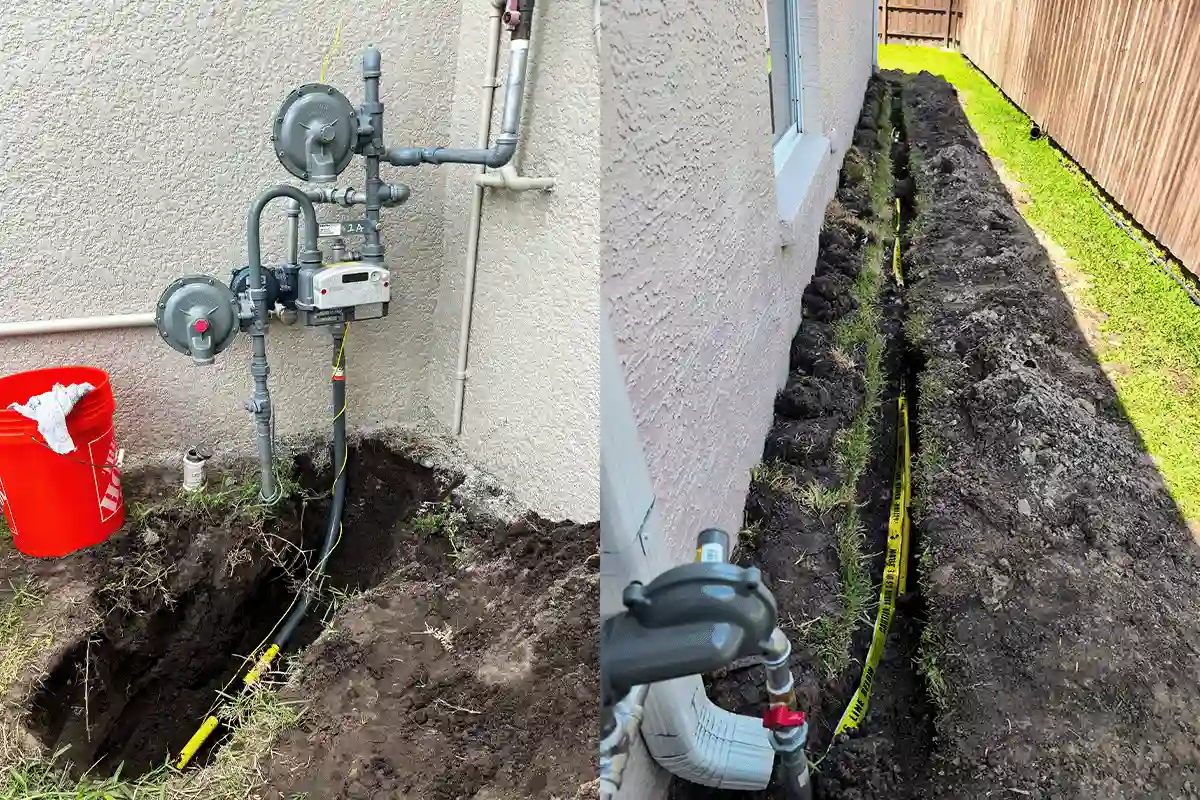
After the gas company has isolated the leak and cleared the structure, call EVERYDAYPLUMBER.com to locate and repair the failed fitting, connector, or gas line. Gas line repair in Tampa requires a master-licensed plumber with the correct equipment and certifications — this is not a DIY repair under any circumstances, regardless of the apparent scale of the problem.
FAILED BACKFLOW PREVENTER
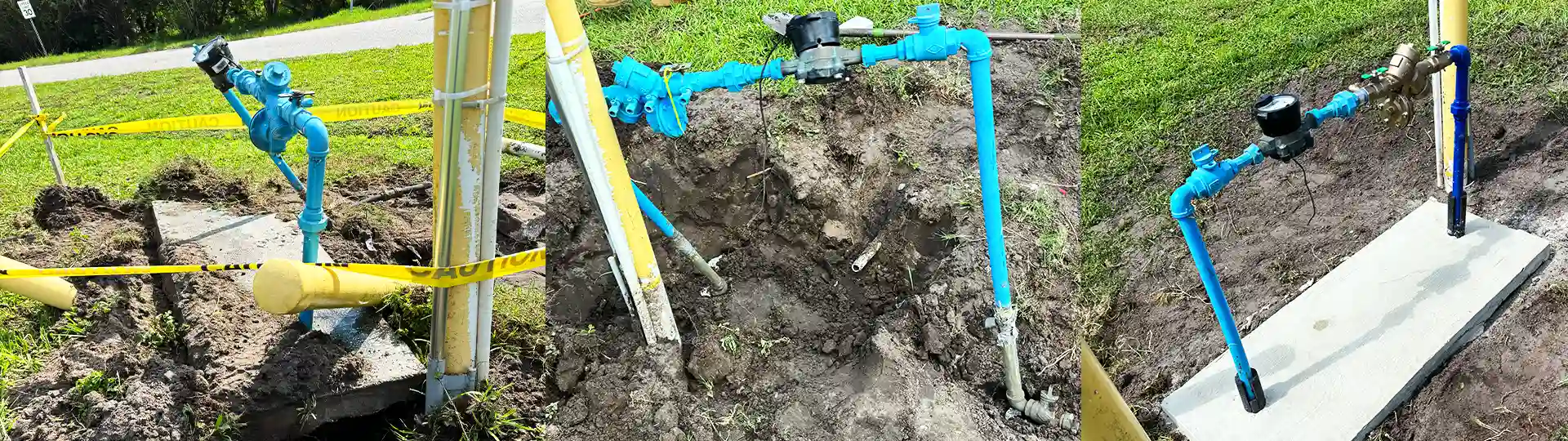
A backflow preventer is a mechanical safety device that stops contaminated water from flowing backward into your clean water supply when pressure in the system drops or reverses. When it fails, you may not notice immediately — which makes this one of the more insidious emergencies on this list.
Warning signs of a failing backflow preventer include: discolored water at taps connected to an irrigation or commercial water system, a sudden unexplained drop in water pressure, visible leaking or discharge from the preventer assembly itself, or a failed annual inspection report from a certified tester.
What to do:
- If you have any reason to suspect backflow contamination — particularly if you have an irrigation system, a pool, a commercial facility, or any secondary water connection — stop using tap water for drinking or cooking and call us immediately.
Backflow preventer testing and repair in Tampa Bay must be performed by a licensed plumber certified in backflow testing. Florida law requires annual testing of all commercial backflow prevention assemblies, and many municipal water utilities require documentation for residential assemblies as well. A failed device must be repaired before the water authority will restore full service.
FLOODING AND WATER INTRUSION
Whether the source is a burst pipe, a failed water heater, a ruptured washing machine supply hose, a storm surge, or a blocked drain during heavy rainfall, active flooding inside a structure requires fast action to minimize structural damage and prevent mold.
What to do:
- Identify the source and stop it. If it is plumbing-related, shut off the main water supply immediately. If it is storm-related flooding, your priority shifts to protecting electrical systems.
- Turn off electrical breakers for any circuits that serve the flooded area before entering standing water. Standing water and live electricity are a fatal combination.
- Remove standing water as quickly as possible using wet/dry vacuums, mops, or a sump pump if one is available.
- Move furniture, area rugs, and electronics off wet floors and into dry areas.
- Open windows and run fans to begin drying immediately. In Tampa Bay’s humidity, mold can begin developing in saturated porous materials within 24 to 48 hours.
- Document everything with photos and video before cleanup for insurance purposes. An adjuster cannot process a claim for damage that has already been cleaned up without documentation.
- Call EVERYDAYPLUMBER.com to locate and repair the plumbing source. Water intrusion from storm events that has affected sewer lines, drain systems, or supply connections is also in our scope.
SEWAGE ODOR WITHOUT VISIBLE BACKUP
If you are smelling sewage inside your home but no drains are backing up and no water is visible, the cause is usually one of three things: a dry P-trap in a rarely-used drain, a cracked or disconnected vent pipe in a wall or attic, or a failing wax ring seal beneath a toilet.
Sewer gas contains hydrogen sulfide, which is toxic in high concentrations and deeply unpleasant even at low levels. It is not something to mask with air freshener and ignore.
What to do:
- Pour a full cup of water down every floor drain, utility sink, and shower drain that is rarely used. If the smell fades within a few hours, a dry P-trap was the problem — the water re-establishes the seal and blocks sewer gas from entering.
- Check all toilets for any rocking, movement, or soft flooring at the base. A loose toilet is frequently a failed wax ring, which is a straightforward repair.
If the smell persists after ruling out dry P-traps, call us. A sewer camera inspection can locate a cracked vent stack, a disconnected fitting, or a deteriorating drain line inside a wall or under a slab — without demolition.
EMERGENCY PLUMBING SERVICES WE HANDLE IN TAMPA BAY
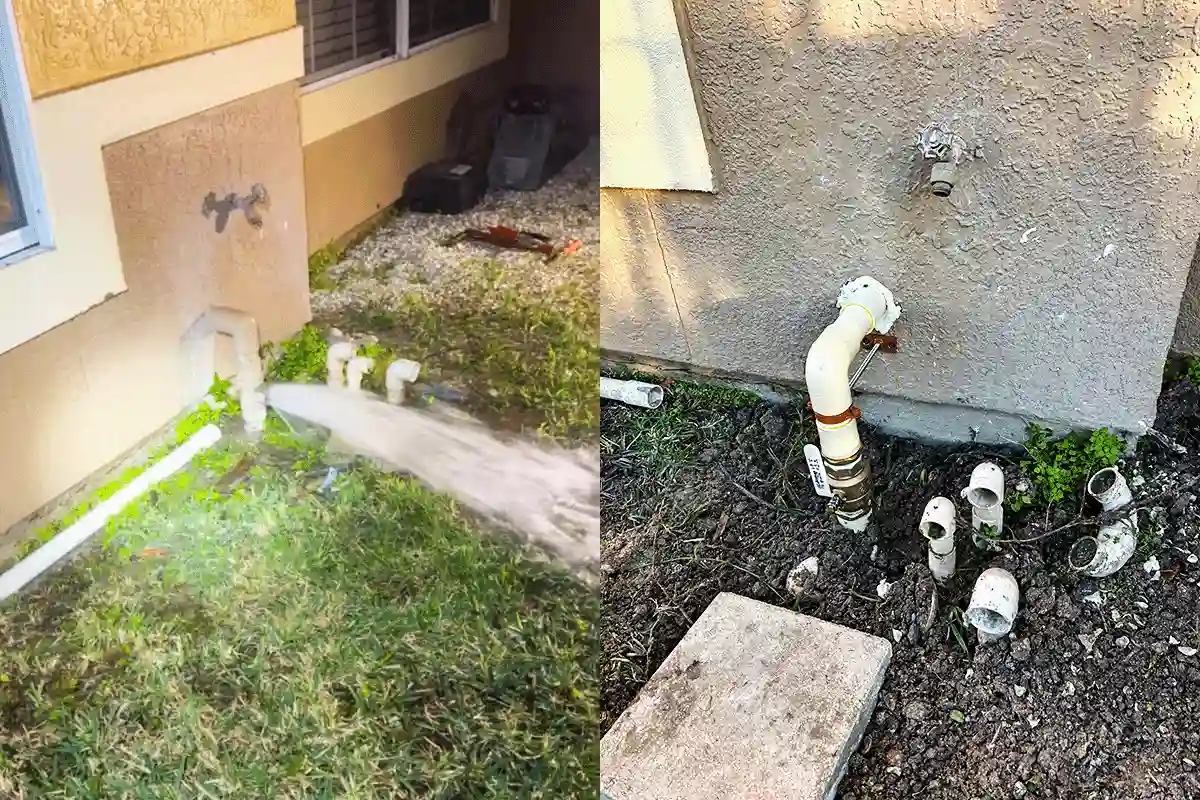
EVERYDAYPLUMBER.com dispatches licensed plumbers 365 days a year across Hillsborough, Pinellas, and Pasco counties for the full range of residential and commercial plumbing emergencies. Emergency service is available after hours — a real person answers when you call (813) 872-0200. Here is what our team handles.
RESIDENTIAL EMERGENCY PLUMBING
Tampa Bay homeowners call us for burst and broken supply lines, emergency slab leak detection and repair, water heater repair and replacement for all fuel types and configurations, emergency drain cleaning and main sewer line clearing, gas line leak repair and isolation, toilet repair and replacement, faucet and fixture failures, and whole-home repiping when the scope of the problem calls for it. Our service vehicles carry the parts most commonly needed for same-trip repairs. The goal is always to resolve the problem as quickly as possible — not to diagnose today and schedule the repair for next week.
COMMERCIAL EMERGENCY PLUMBING
Commercial plumbing emergencies do not just damage property — they cost you customers, close kitchens, and shut down operations. Our commercial team handles high-pressure hydro jet drain cleaning, commercial water heater repair and replacement including high-capacity tank and tankless systems, backflow preventer testing, repair, and installation, restroom fixture and flush valve failures, grease trap emergencies, sewer line collapses and blockages, and commercial water filtration and softener systems. We have served restaurants, property management companies, apartment complexes, retail centers, and professional facilities throughout Tampa Bay. Commercial calls are dispatched with the same urgency as residential calls.
PREVENTATIVE MAINTENANCE TO AVOID PLUMBING EMERGENCIES
The best emergency call is the one that never happens. Most plumbing emergencies in Tampa Bay are not random bad luck — they are the predictable result of aging systems, deferred maintenance, and warning signs that were easy to miss or easy to ignore. Here is what proactive homeowners and property managers do to stay ahead of the call.
KNOW WHERE YOUR WATER MAIN SHUTOFF IS
This sounds basic. It is not basic when you are standing in three inches of water at midnight trying to find it. A surprising number of Tampa Bay homeowners have never located their main shutoff valve, and even more have never tested it to confirm it actually turns. In most Tampa Bay homes, the main shutoff is in the front yard inside or near the street-side meter box — lift the plastic lid and the valve is on the house side of the meter. Find it today. Test that it turns. Make sure every adult in the household knows where it is and what to do with it.
FLUSH YOUR WATER HEATER ANNUALLY
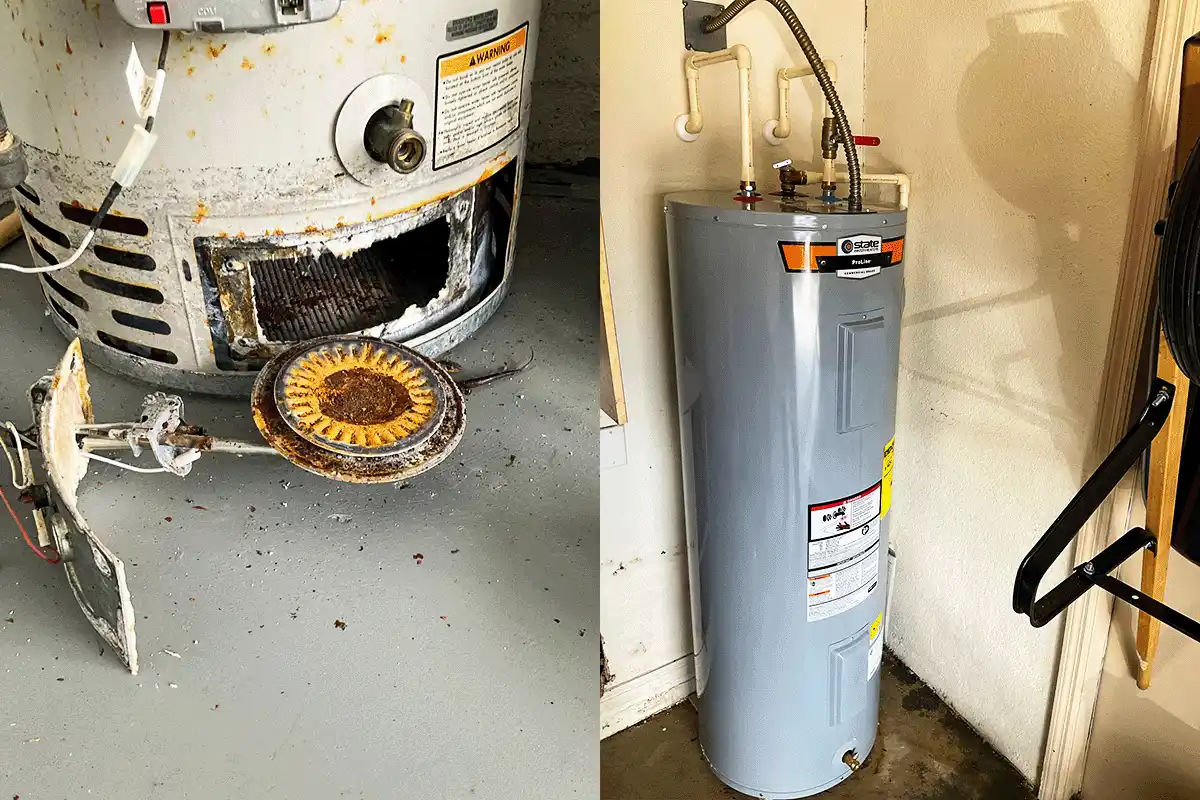
Tampa Bay’s water is hard, meaning it carries elevated dissolved mineral content that settles as sediment inside your tank water heater over time. That sediment layer insulates the water from the heating element, forcing the unit to run longer and harder to reach temperature — reducing efficiency, increasing your utility bill, and shortening the unit’s life. An annual flush removes that sediment buildup and takes about 30 minutes. If your tank has never been flushed and is more than five years old, the sediment layer may already be substantial. Our water heater service team can perform this as part of a routine maintenance visit. It is one of the highest-return maintenance tasks a Tampa Bay homeowner can do.
INSPECT YOUR WATER HEATER ANODE ROD
The anode rod is a sacrificial metal rod suspended inside your tank water heater specifically to corrode so the tank steel does not have to. Most homeowners have never heard of it. When the rod is fully depleted, the tank begins corroding from the inside — the first visible symptom is often rust-colored or foul-smelling hot water, by which point the tank lining is already compromised. Anode rods should be inspected every three to five years and replaced when necessary. This single inexpensive maintenance task can add years to a water heater’s functional lifespan and prevent a tank failure that requires emergency same-day replacement.
SCHEDULE A SEWER CAMERA INSPECTION IF YOUR HOME IS OVER 30 YEARS OLD
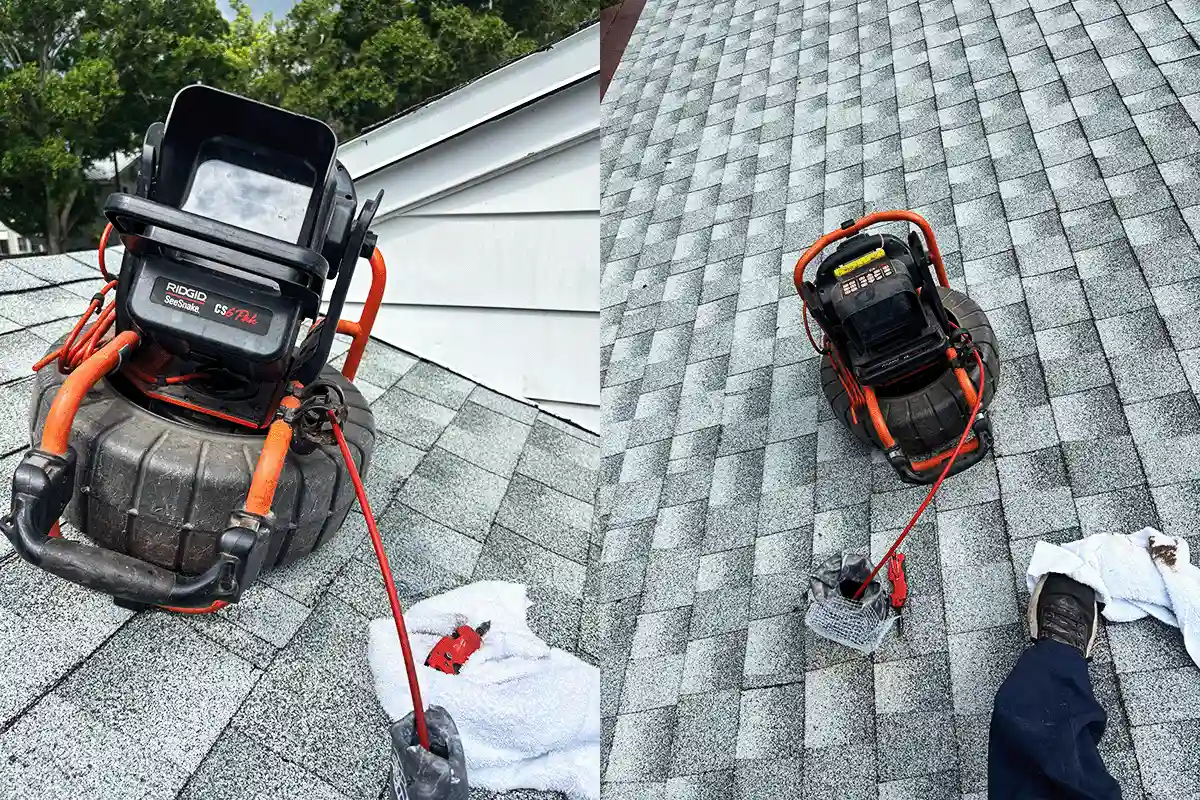
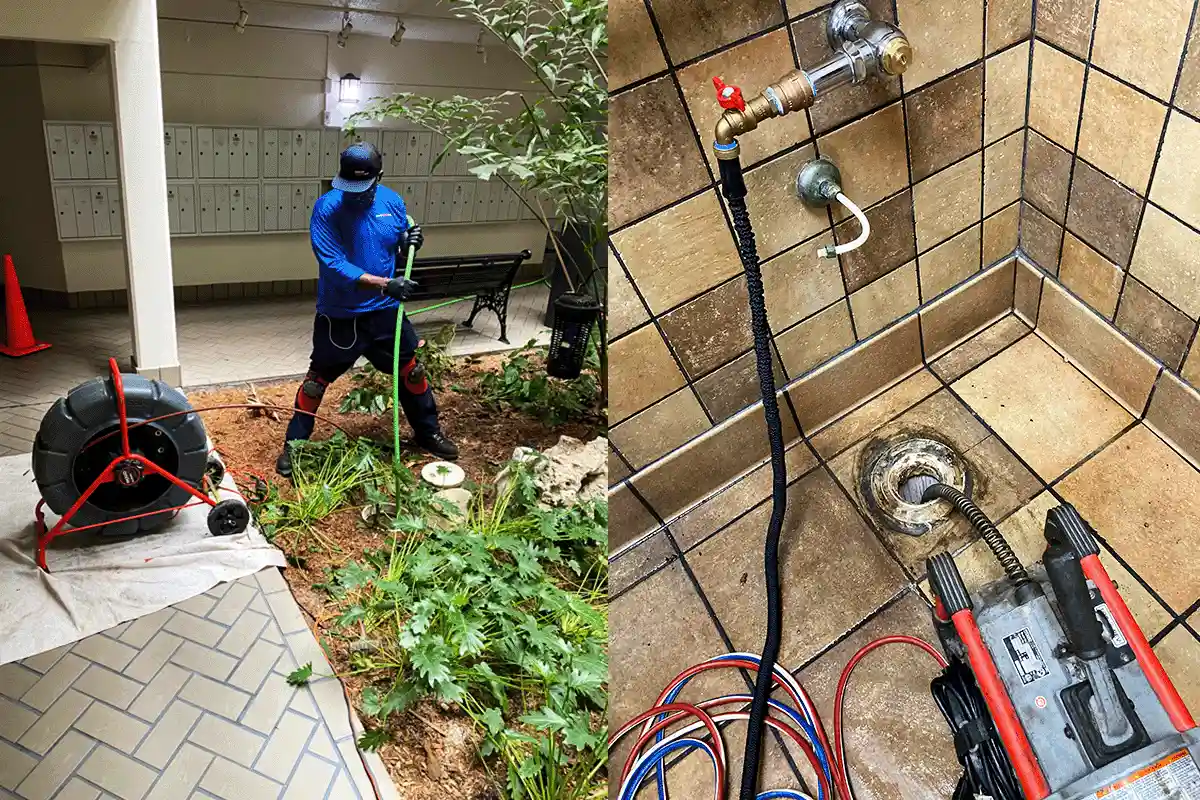
This is the single most important preventative recommendation we make for homeowners in South Tampa, Seminole Heights, Hyde Park, Ybor City, Carrollwood, and the older neighborhoods of Pinellas County. If you have never had a camera run through your main sewer line and your home predates 1990, you are operating without any visibility into the condition of one of the most expensive systems on your property. A sewer camera inspection identifies root intrusions, developing bellies in the line, cracked pipe sections, and early-stage Orangeburg or clay deterioration before they collapse and force an emergency excavation. The cost of a camera inspection is a fraction of the cost of an emergency sewer replacement.
INSTALL A WHOLE-HOME WATER SOFTENER
Tampa Bay’s hard water does not just scale up your fixtures and leave rings in your sinks — it accelerates the deterioration of every pipe, fitting, water heater, and water-using appliance in your home. Scale builds up inside tankless water heater heat exchangers — the primary failure mode for tankless units in this area — inside supply lines, and inside the valves that control your fixtures. A whole-home water softener extends the functional life of your entire plumbing system. It is compatible with all water heater types — tank, tankless, and hybrid — and is one of the best long-term investments a Tampa Bay homeowner can make in their property.
TEST YOUR BACKFLOW PREVENTER ANNUALLY
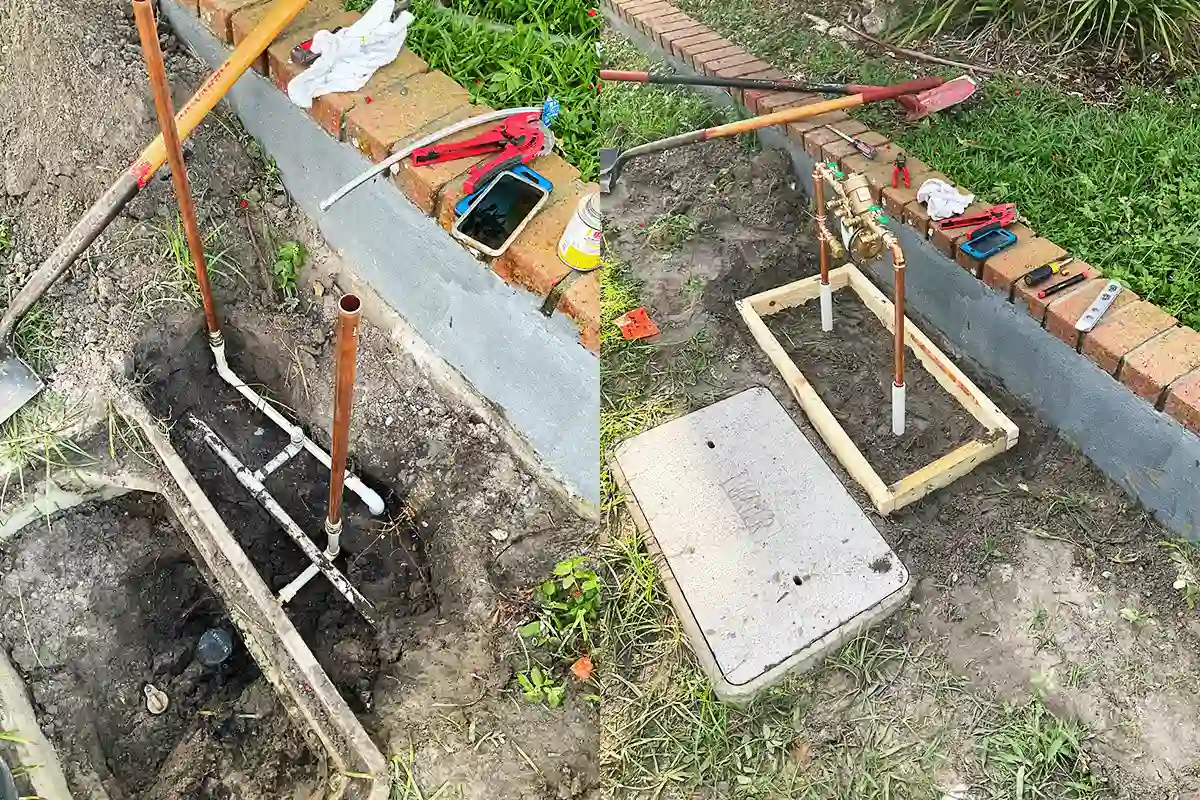
Florida law requires annual testing of commercial backflow prevention assemblies. Residential backflow preventers — installed on virtually every home with an irrigation system — are rarely tested until they fail. A failed backflow preventer puts your drinking water at risk of contamination from irrigation water, pool water, or any other secondary water system connected to your property. Backflow testing and certification by a licensed plumber takes less than an hour, costs very little, and is required documentation for many municipal water utilities in Hillsborough, Pinellas, and Pasco counties. If yours has not been tested since installation, schedule it before hurricane season.
HURRICANE SEASON PLUMBING: PREP AND EMERGENCY RESPONSE
Tampa Bay is not hypothetically at risk from hurricanes. In fall 2024, the region took two direct hits within two weeks: Hurricane Helene made landfall on September 26, 2024, and Hurricane Milton struck on October 9, 2024, making it the most active back-to-back hurricane event the area had experienced in a generation. Both storms caused widespread flooding, water main breaks, sewer system overloads, and infrastructure failures that left thousands of residents without safe water for days at a time.
Hurricane season runs June 1 through November 30. If your plumbing is not prepared before a storm arrives, it will not be prepared at all — post-storm service demand stretches wait times from hours to days, and the failures that occur during a storm are rarely simple.
BEFORE THE STORM — PLUMBING PREP CHECKLIST
Know your shutoff. Every adult in your household should know where the main water shutoff is and how to turn it off. If a storm surge or flood event threatens your home, shutting off the main prevents contaminated flood water from back-pressuring into your supply lines. This one step can mean the difference between a flood cleanup and a contaminated plumbing system that requires a full flush and disinfection.
Inspect your water heater. Any water heater that floods and attempts to re-fire is a fire and explosion hazard. If flooding is anticipated, turn off the water heater at the breaker (electric) or gas valve (gas) and shut off the cold water supply inlet to the tank before the storm arrives. Do not restart the unit until a licensed plumber has confirmed the tank is dry, the connections are intact, and — for gas units — that there is no compromise to the gas valve or venting system.
Inspect your backflow preventer before every hurricane season. Storm flooding and overwhelmed municipal sewer systems create exactly the kind of pressure reversal events that backflow preventers are designed to stop. A device that has not been tested in years may not perform when it is needed most. Backflow testing and certification is inexpensive and takes under an hour. Schedule it before June 1, every year.
Clear your exterior drains. Roof drains, floor drains, and any outdoor French drains or area drains should be cleared of leaves, debris, and buildup before storm season. A blocked drain during Tampa Bay rainfall rates — which can exceed three inches per hour during a major storm — becomes an indoor flooding source fast.
DURING THE STORM — WHAT TO AVOID
Do not run your washing machine or dishwasher during heavy rainfall. Municipal sewer systems in Tampa Bay routinely become overwhelmed during major storm events as storm water infiltrates the sewer infrastructure. Additional household discharge during peak system load increases the likelihood of a sewer backup occurring inside your home.
Avoid flushing anything other than toilet paper during an active storm event for the same reason. This is not a permanent change — it is a 12 to 24 hour precaution during the peak of the storm.
If you lose power and have a well pump, do not attempt to restart the pump until power has been restored stably and you have confirmed the well casing has not been flooded. Voltage fluctuations during generator startup can damage pump motors, and a flooded well introduces contamination that requires professional treatment before the water is safe to use.
AFTER THE STORM — EMERGENCY RESPONSE
Check your water supply before using it. Do not assume your tap water is safe to drink after a major storm event until Hillsborough County, Pinellas County, or Pasco County utilities have issued a confirmed all-clear. Boil water notices are common following major storm events and can remain in effect for 48 to 72 hours or longer. When in doubt, use bottled water.
Inspect your water heater before restarting it. Any water heater that was partially or fully submerged in flood water must be inspected by a licensed plumber before it is turned back on. This applies with special urgency to gas units — flood water can compromise the gas valve, thermocouple, and venting components in ways that are not visible to the homeowner. A water heater that has flooded and is restarted without inspection is a safety hazard.
Document all plumbing damage before repairs begin. Your homeowner’s insurance policy may cover storm-related pipe failures, water heater damage, and sewer backups caused by flooding. Photograph and video everything — every affected wall, every wet surface, every piece of damaged equipment — before a single repair is initiated. An insurance adjuster cannot reimburse what was not documented.
Call EVERYDAYPLUMBER.com at (813) 872-0200 for storm-related plumbing emergencies across all of Hillsborough, Pinellas, and Pasco County. We prioritize active flooding and water damage calls during and immediately following storm events.
PLUMBING EMERGENCIES YOU MAY NOT KNOW ARE HAPPENING
Not every plumbing emergency announces itself with water on the floor and a call to 911. Some of the most expensive plumbing failures in Tampa Bay homes are quiet, slow, and invisible — right up until the day they are not. If your home was built before 1990, at least one of the conditions below may apply to your property right now.
ORANGEBURG SEWER PIPE
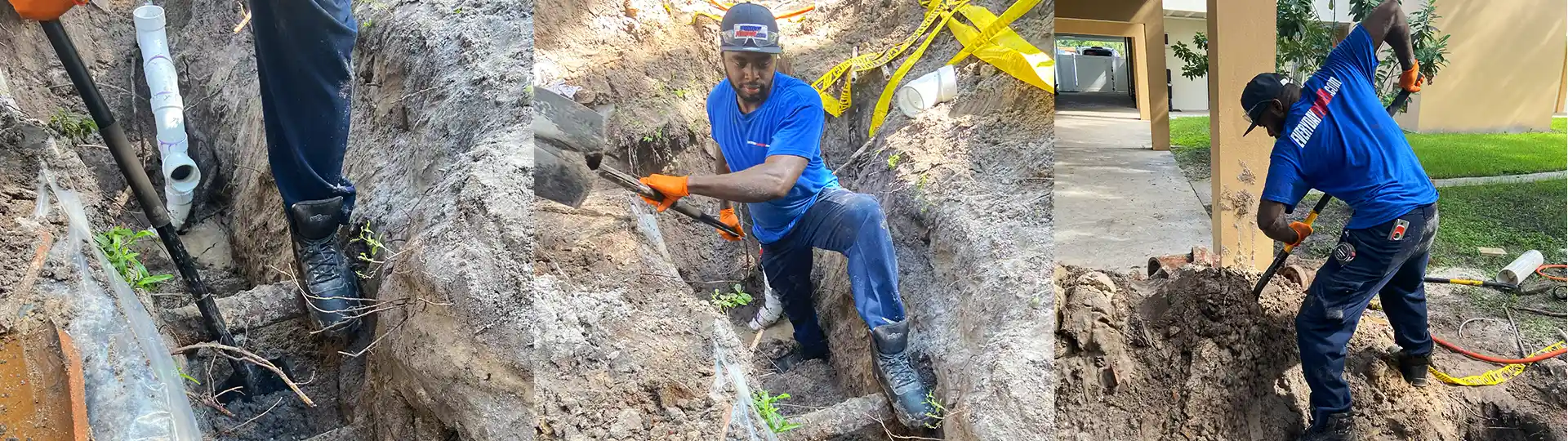
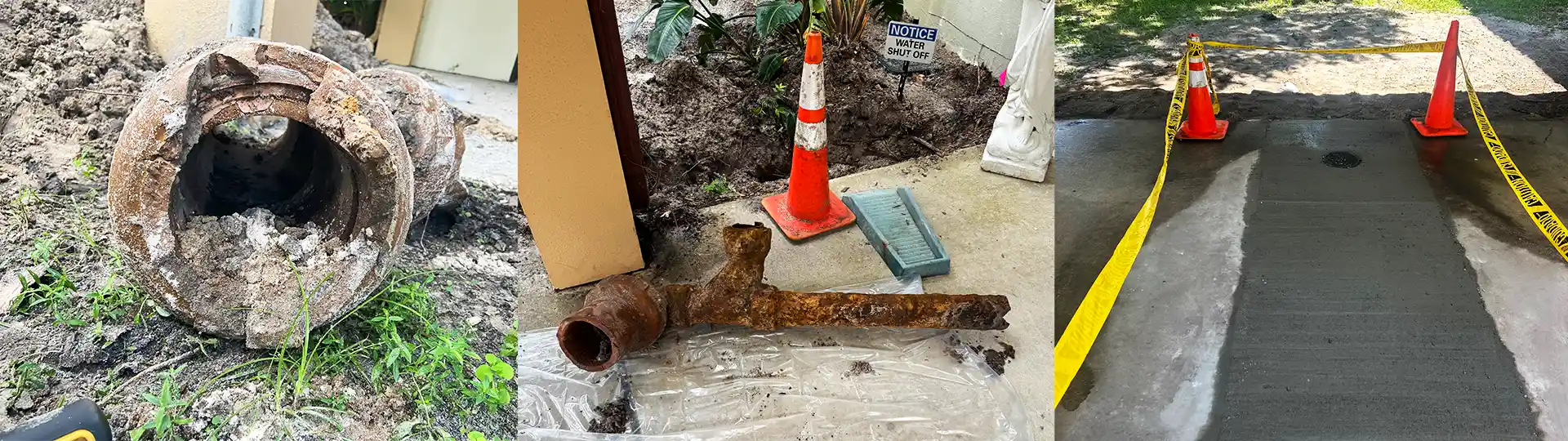
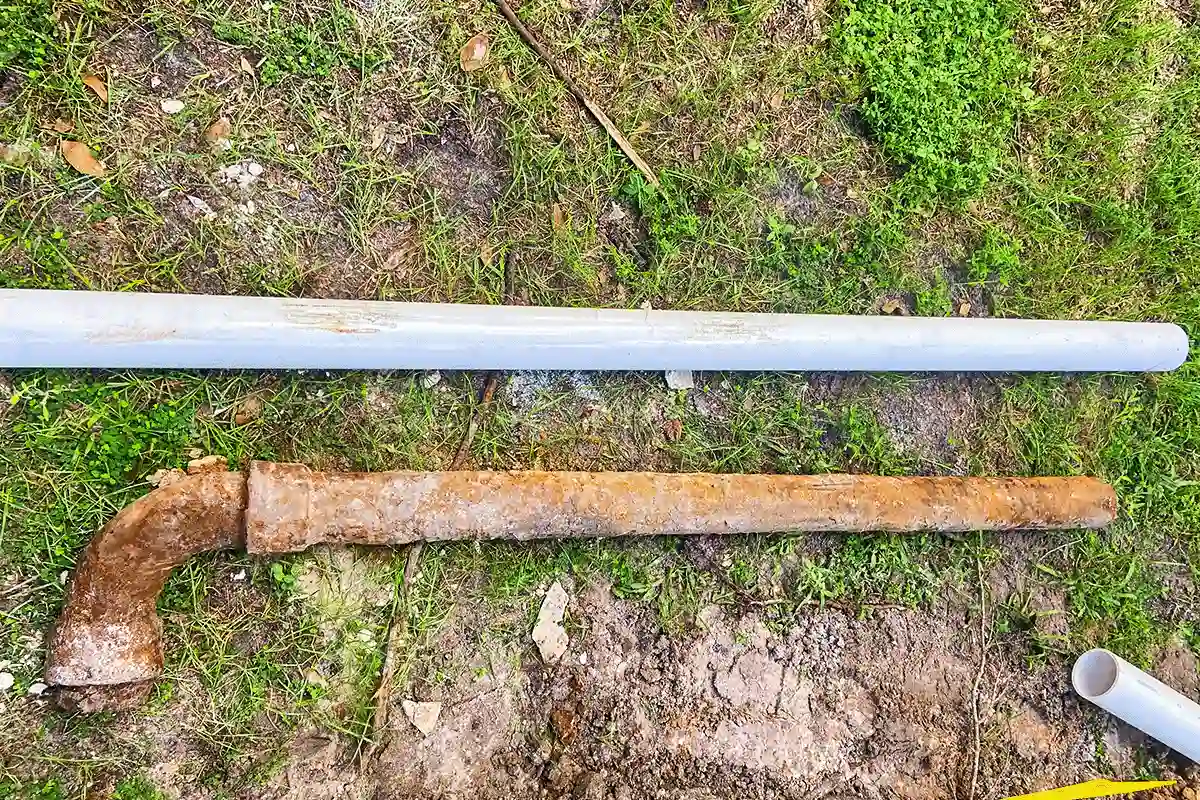
Orangeburg pipe is a paper-based composite material used for residential sewer lines primarily between 1945 and 1972. It was marketed as a 50-year pipe. Many Tampa Bay homes still have it, and many of those homes are now well past that design life. The material deforms over time — the circular cross-section collapses gradually into an oval, then a teardrop, then it fails. It does not telegraph its deterioration with visible symptoms until the collapse is imminent or complete. The first event is often a catastrophic sewer backup with no prior warning.
Neighborhoods most likely to have Orangeburg sewer lines in the ground: South Tampa, Seminole Heights, Hyde Park, Riverside Heights, Ybor City, Temple Terrace, and any neighborhood developed between 1945 and the early 1970s. The same era applies to older Pinellas County neighborhoods in St. Petersburg, Dunedin, and Safety Harbor.
If your home was built during this era and you have never had a sewer camera inspection, you may be years past due for a sewer line replacement. A camera inspection is the only definitive way to know what material is in the ground and what shape it is actually in. The cost of a proactive replacement is usually less expensive than an emergency excavation after a collapse.
GALVANIZED STEEL SUPPLY PIPES
Galvanized steel pipe was the standard for residential water supply lines through most of the mid-20th century. It corrodes from the inside out — meaning a pipe that looks perfectly intact from the outside may have an interior that is heavily occluded with rust and mineral buildup, restricting flow to a fraction of its original capacity. Symptoms of galvanized deterioration include persistently low water pressure throughout the home even when the municipal supply is normal, brown or orange-tinted water — particularly hot water first thing in the morning — and an occasional metallic taste.
Galvanized pipe does not fail all at once. It fails in sections, at fittings, at joints — and each repair is buying time until the next section fails. The economically and practically correct solution for a home with original galvanized supply lines is a whole-home repipe to Uponor PEX or CPVC. Continuing to repair individual galvanized failures costs more over time and never resolves the underlying problem.
CAST IRON DRAIN AND VENT LINES
Cast iron was the standard for drain, waste, and vent lines in Florida construction from the early 20th century through the early 1980s. It is a durable material — but not indefinitely so, and not in Tampa Bay’s environment. Cast iron drain lines corrode from the inside as sulfuric acid produced by biological activity within the pipe etches through the pipe wall over decades. The result is pinholes, hairline cracks, and eventually full section failures — often under or within a concrete slab, where the evidence takes time to reach the surface.
Warning signs of deteriorating cast iron drains: slow drains that do not respond to drain cleaning, sewage odor that originates from flooring or wall areas rather than visible drains, soft or discolored spots in flooring above drain line runs, or unexplained pest activity — roaches and rodents actively enter structures through cracked sewer lines beneath slabs.
A sewer camera inspection can assess the full condition of your cast iron drain system without any demolition. If the lines are deteriorating, targeted section or full replacement can frequently address the problem with minimal disruption to your home and flooring.
POLYBUTYLENE SUPPLY PIPE
If your home was built between 1978 and 1995, there is a meaningful probability that your water supply lines are polybutylene — a flexible gray plastic pipe that was widely installed across Florida before its failure rate became undeniable. Polybutylene reacts with the chlorine compounds in municipal water supplies over time, becoming brittle and fracturing unexpectedly. The failures are sudden and produce significant water damage. A national class-action settlement was reached over this material in the 1990s and it has been out of production since that time.
Polybutylene is identifiable by its gray color and is often found running from the main shutoff to a manifold or directly to fixtures throughout the home. Gray flexible pipe in a home built between 1978 and 1995 should be assumed to be polybutylene until confirmed otherwise. If you have it, a whole-home repipe is not a matter of if — it is a matter of when. Proactive replacement before a failure event is dramatically less disruptive and less expensive than emergency replacement after your living room ceiling has come down.
HOW MUCH DOES AN EMERGENCY PLUMBER COST IN TAMPA?
Quick answer: Emergency plumbing service calls in Tampa typically range in the low hundreds for the service visit itself, with total repair costs varying widely based on the type, severity, and complexity of the problem. What never varies at EVERYDAYPLUMBER.com is this: your plumber explains the problem, presents your repair options, and quotes the work before a single tool comes out of the bag. There are no surprise charges.
WHAT AFFECTS THE COST OF AN EMERGENCY CALL
Time of call. Emergency calls made outside standard business hours — evenings, weekends, and holidays — carry a higher service call fee. This is standard industry practice and reflects the real cost of maintaining licensed plumber availability around the clock. We are transparent about it, and you will know what the service fee is before you commit.
Scope of the repair. A burst pipe in an accessible wall is a fundamentally different job than a slab leak requiring concrete cutting or an emergency sewer replacement requiring excavation. Simple repairs may be completed in an hour. Major repairs may be multi-phase projects. Your plumber assesses the full scope before quoting — never after.
Parts availability. Emergency calls occasionally require parts that are not on the service truck. In those situations, we make every effort to source parts same-day within the Tampa Bay market and return to complete the repair. This is the exception, not the rule, but it is worth knowing.
Insurance and documentation. Many emergency plumbing situations are at least partially covered by homeowner’s insurance. See the question below. Document everything before any repair begins.
DOES HOMEOWNER’S INSURANCE COVER EMERGENCY PLUMBING?
It depends on the cause. Most standard homeowner’s insurance policies cover sudden and accidental water damage — meaning a pipe that fails without warning is typically covered for the resulting property damage. What is usually not covered is the cost to repair the pipe itself, or any damage resulting from a long-standing condition that was not addressed.
Sewer backup coverage is a separate endorsement that many Tampa homeowners carry as an add-on. If you have ever worried about a sewer backup, call your insurance agent and ask whether you have this rider. It is typically inexpensive to add and extremely valuable when a sewer backup event occurs.
Our recommendation: document everything, call your insurance company, and let the adjuster work. Our team can coordinate with your adjuster to ensure the plumbing scope is accurately represented in your claim.
IS FINANCING AVAILABLE FOR EMERGENCY PLUMBING REPAIRS?
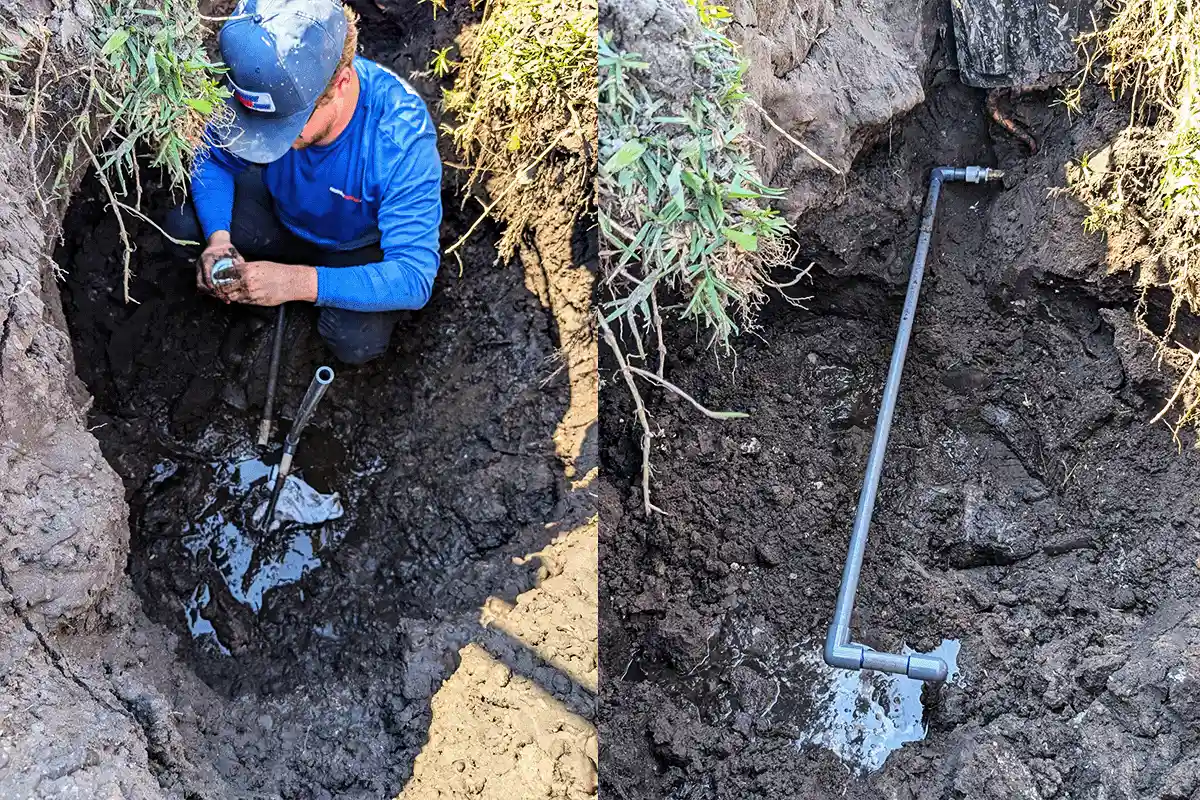
Yes. Easy monthly payments are available for qualifying repairs. Major plumbing work following an emergency — slab leak repairs, whole-home repiping, water heater replacement, sewer line replacement — can represent significant unexpected cost at a time when budgets are already under stress. Spreading out the final amount on the invoice allows you to authorize and complete the repair without delaying because of the upfront cost. Ask about payment options when you call.
FREQUENTLY ASKED QUESTIONS — EMERGENCY PLUMBERS TAMPA
What qualifies as a plumbing emergency?
A plumbing emergency is any situation where a failure in your plumbing system creates an immediate risk to your property, your safety, or your ability to use your home or business. Burst pipes, active sewer backups, complete water heater failures, gas line leaks, flooding from a plumbing source, and sewage odor inside a structure all qualify. When in doubt, call — it costs nothing to describe the situation to a licensed plumber over the phone and get an informed assessment of whether it needs immediate attention.
How quickly can an emergency plumber reach me in Tampa Bay?
Response times depend on current call volume, your specific location within the service area, and the time of day, but EVERYDAYPLUMBER.com dispatches to emergency calls as quickly as possible across all of Hillsborough, Pinellas, and Pasco counties. Emergency service is available 365 days a year. Active flooding and gas events are prioritized at the top of the dispatch queue.
What should I do while waiting for an emergency plumber to arrive?
If water is actively flowing, locate your main water shutoff — in most Tampa Bay homes it is near the street-side meter box — and turn it off clockwise. If the emergency involves your water heater, turn it off at the breaker or gas valve. If you smell gas, leave the building before calling anyone. Document all visible damage with photos and video before cleanup begins. Keep people and pets away from sewage or standing water. Do not attempt repairs beyond shutting off the supply unless you are certain of what you are doing.
Does EVERYDAYPLUMBER.com handle commercial plumbing emergencies?
Yes. Commercial plumbing emergencies are handled with the same urgency as residential calls. Our commercial team responds to restaurant drain failures, commercial water heater outages, backflow preventer failures requiring testing or repair, sewer line collapses, restroom fixture emergencies, grease trap failures, and any situation where a plumbing failure is interrupting business operations. We have experience working with property management companies, apartment complexes, restaurants, and commercial facilities throughout Tampa Bay.
Do you charge extra for emergency or after-hours service calls?
After-hours emergency calls carry a higher service fee than standard business-hours calls — this is standard industry practice that reflects the cost of maintaining licensed plumber availability outside of normal working hours. EVERYDAYPLUMBER.com is transparent about fees before any work begins. You will always know the service call cost before you commit to dispatching.
How do I know if I have a slab leak?
Common indicators of a slab leak include warm or hot spots on tile or concrete floors, the sound of running water when every fixture in the home is off, a sudden unexplained increase in your water bill, new cracks appearing in walls or flooring, and reduced water pressure throughout the home. Slab leaks are particularly common in Tampa Bay due to the region’s soil conditions and the age of many homes’ original copper supply lines running beneath the slab. A licensed plumber with leak detection equipment can confirm a slab leak without opening any walls or cutting concrete.
What causes sewer backups in Tampa Bay?
The most common causes of sewer backups in Tampa Bay are grease and debris accumulation in drain lines, root intrusion from the area’s established tree canopy into clay and Orangeburg sewer lines, structural failures in aging pipe materials — particularly in neighborhoods built before 1980 — and municipal sewer system overload during major storm events. Homes with original clay or Orangeburg sewer lines that have never been inspected are at the highest risk. A camera inspection is the only accurate way to determine the cause and the correct repair.
What are the most common plumbing emergencies in Tampa Bay?
The most common emergency calls we receive across Hillsborough, Pinellas, and Pasco counties are burst or corroded pipe failures in older homes, sewer line blockages and backups in neighborhoods with aging clay and Orangeburg sewer infrastructure, water heater failures across all types and ages, slab leaks in homes with copper supply lines beneath concrete foundations, and post-storm flooding and sewer surges following major rain events. Homes built before 1980 account for a disproportionately high share of emergency calls due to the age and material composition of their original plumbing systems.
TAMPA BAY’S MOST TRUSTED EMERGENCY PLUMBING TEAM
EVERYDAYPLUMBER.com has been serving Tampa Bay since 2012 — over a decade of showing up when it counts most. We are a family-owned company operated by Master Plumber Mike Haisten (License #CFC1428537), and we have earned over a thousand five-star Google reviews from homeowners and businesses across Hillsborough, Pinellas, and Pasco counties. When you call us for a plumbing emergency, a real person answers, you get honest information, and a licensed plumber arrives prepared to fix the problem — not to assess, estimate, and reschedule.
MASTER LICENSED, INSURED, AND ACCOUNTABLE
Every plumber dispatched by EVERYDAYPLUMBER.com is licensed and insured. Our master plumbing license (#CFC1428537) is active, current, and publicly verifiable. We do not subcontract emergency calls to unlicensed labor or third-party crews. The team you see on the truck is the team that shows up at your door — trained, professional, and accountable for every repair they make.
HONEST PRICING BEFORE WORK BEGINS
We explain the problem, walk you through your options, and quote the repair cost before a single tool comes out of the bag. There are no hidden trip charges revealed after the fact, no bait-and-switch estimates, and no pressure to approve scope beyond what the situation actually requires. If a non-urgent repair can reasonably be scheduled rather than handled as an emergency, we will tell you that too. Honest service means telling you what you need to hear, not what generates the largest invoice.
RESIDENTIAL AND COMMERCIAL DEPTH
We serve both homeowners and businesses throughout Tampa Bay, and we do not treat commercial work as a secondary specialty. Our commercial client experience spans restaurants, property management firms, apartment complexes, retail centers, and professional facilities. That depth of experience means our plumbers have encountered nearly every scenario — and they arrive equipped to handle it without a learning curve at your expense.
EMERGENCY SERVICE AVAILABLE 365 DAYS A YEAR
Plumbing emergencies do not observe holidays, weekends, or the calendar. EVERYDAYPLUMBER.com maintains emergency service availability 365 days a year. Call (813) 872-0200 and you will reach a real person — not a voicemail system, not an answering service that takes a message for the morning.
FAMILY OWNED. TAMPA BUILT.
We are not a national franchise. We are not a private equity rollup acquiring local plumbing companies for market share. We are a family-owned operation built in Tampa Bay, serving Tampa Bay, since 2012. The owner is the master plumber who built this company from the ground up — and that accountability runs through everything we do.
EMERGENCY PLUMBING SERVICE AREAS — TAMPA BAY
EVERYDAYPLUMBER.com responds to plumbing emergencies across all of Hillsborough County, Pinellas County, and Pasco County. Our licensed plumbers are dispatched from Tampa and serve every corner of the region — from Westchase and Carrollwood in northwest Hillsborough to Wesley Chapel and Land O’ Lakes in Pasco, from St. Petersburg and Clearwater in Pinellas to Brandon, Riverview, and Sun City Center in southeast Hillsborough. We serve Tampa, Temple Terrace, Plant City, Lutz, Odessa, New Port Richey, Trinity, Dunedin, Safety Harbor, Largo, Seminole, and every community in between.
SOUTH TAMPA AND HYDE PARK
South Tampa and Hyde Park contain some of the most valuable residential real estate in the region — and some of the oldest plumbing infrastructure in the county. Homes built in the 1920s through 1950s in Palma Ceia, Hyde Park Village, Bayshore, Davis Islands, and Ballast Point frequently have clay sewer lines, galvanized supply pipes, and Orangeburg drain lines that have been in the ground for 70 to 80 years. Emergency calls from South Tampa tend to involve sewer backups from root-infiltrated or deformed clay and Orangeburg lines, burst galvanized supply pipes that have corroded to failure at a fitting, and slab leaks in homes where copper was retrofitted over the original supply system.
The age and value of the housing stock in this area make proactive camera inspections particularly important. A sewer collapse under a 1940s South Tampa home is not a minor repair — it is a complex excavation involving mature landscaping, tight lot lines, and aging infrastructure that requires experienced hands.
SEMINOLE HEIGHTS, RIVERSIDE HEIGHTS, AND YBOR CITY
Seminole Heights, Ybor City, Riverside Heights, and Tampa Heights were developed aggressively during the early-to-mid 20th century and represent the densest concentration of cast iron and galvanized era plumbing in the county. Cast iron drain lines in these neighborhoods have been exposed to decades of internal biological corrosion in Tampa Bay’s climate, and the deterioration is often well advanced before any surface symptom appears. Persistent slow drains that resist professional drain cleaning, sewage odor concentrated near flooring rather than drain openings, and unexplained pest activity are all signals that cast iron lines in these neighborhoods deserve a camera inspection before they fail during a heavy-use event. Summer thunderstorm seasons — Tampa Bay averages more lightning strikes than anywhere else in the United States, and the associated rainfall events can overwhelm aging drain systems — and the back-to-back hurricane seasons of recent years compound the demand on these aging lines.
NEW TAMPA, WESLEY CHAPEL, AND LAND O’ LAKES
The newer construction communities of New Tampa, Wesley Chapel, and Land O’ Lakes present a different and often misunderstood risk profile. These neighborhoods were built primarily from the late 1980s through the 2000s on slab foundations with copper supply lines running through and beneath the concrete. Tampa Bay’s mildly acidic soil composition and the region’s hard water combine to accelerate pinhole corrosion in those buried copper lines over time. Slab leaks in these neighborhoods frequently present subtly — a slightly warm area on a tile floor, a water bill that has quietly increased by 15 to 20 percent, a soft sound of running water with all fixtures off — before developing into an active leak event that damages flooring, drywall, and the slab itself. Slab leak detection in these communities is a core part of our service workload.
Wesley Chapel and Land O’ Lakes are also in the primary growth corridor of Pasco County, with a large inventory of homes now crossing the 20 to 25 year mark on original water heaters and supply fixtures — an age window where proactive water heater replacement before failure is consistently less disruptive than an emergency replacement after.
CARROLLWOOD, NORTHDALE, AND CITRUS PARK
Carrollwood and the surrounding northwest Hillsborough communities were developed from the 1960s through the 1980s, producing a wide range of pipe materials depending on the specific subdivision and build year. Some homes have cast iron drain lines, some have galvanized supply pipes, some transitioned to PVC and CPVC — and many have a mix of two or three materials from different repair and renovation generations. Emergency calls from this area tend to cluster around water heater failures in a demographic that installed units a decade ago and has not replaced them, tree root intrusion in sewer lines running under large established oak and magnolia canopies, and tankless water heater failures driven by scale accumulation in the heat exchanger — the dominant failure mode in Tampa Bay’s hard water environment.
BRANDON, RIVERVIEW, GIBSONTON, AND BLOOMINGDALE
The eastern Hillsborough communities of Brandon, Riverview, Gibsonton, and Bloomingdale occupy lower elevation areas that are particularly susceptible to sewer system overload during major storm events. After Hurricanes Helene and Milton struck in fall 2024, these communities experienced widespread sewer backup events as the municipal system became overwhelmed by storm water infiltration. Backflow preventer failures during these events resulted in sewage contamination of home supply systems in cases where devices had not been maintained or tested. If you are in this area and your backflow preventer has not been inspected since the 2024 storm season, scheduling a test before the next June 1 hurricane season opens is strongly advisable.
The summer rainy season — June through September, when Tampa Bay averages over seven inches of rain per month — is also the period when drain and sewer emergencies spike across eastern Hillsborough. Hydro jet drain cleaning performed before summer is one of the most effective ways to reduce the risk of a sewer backup during peak rainfall season.
PINELLAS COUNTY — ST. PETERSBURG, CLEARWATER, DUNEDIN, AND SAFETY HARBOR
Pinellas County’s peninsula geography creates plumbing conditions that interior Hillsborough does not face at the same intensity. Salt air corrosion at exterior pipe connections, hose bibs, and gas line fittings is a real factor — particularly for homes within a mile of the Gulf or the Bay. The county’s flat topography creates shallower drain gradients, which means accumulation and root intrusion in sewer lines tends to produce blockages faster than in areas with more natural fall. And the density of pre-1970 housing stock in St. Petersburg’s historic neighborhoods — Roser Park, Historic Kenwood, Crescent Lake, and the Grand Central District — mirrors the same Orangeburg, cast iron, and galvanized era plumbing challenges found in South Tampa and Seminole Heights, across the water.
Clearwater and Dunedin specifically have neighborhoods with original Orangeburg sewer lines that have not been systematically replaced. Safety Harbor’s housing stock from the postwar development era carries the same risk profile. Emergency drain and sewer calls are among the most frequent services we provide across Pinellas County.
PASCO COUNTY — TRINITY, NEW PORT RICHEY, AND ZEPHYRHILLS
Pasco County’s emergency plumbing calls divide fairly cleanly by geography and development era. The western Pasco communities of Trinity and New Port Richey lean toward newer construction with slab foundations and a copper-through-slab supply profile similar to New Tampa — slab leak risk increases as these homes age into the 20 to 30 year range. The water supply in parts of western Pasco carries elevated mineral content compared to Hillsborough, which accelerates scale buildup in water heaters and tankless units and makes whole-home water softener installation a particularly high-value investment for homeowners in this area.
The eastern Pasco communities — Zephyrhills, Land O’ Lakes, and Wesley Chapel — track closely to the Hillsborough County weather and geology profile. One condition worth noting specifically in Pasco County is the occasional winter cold snap: the region experiences brief sub-40°F events every few years, and pipes in uninsulated exterior walls and under-belly sections of mobile homes and older manufactured housing are vulnerable to freeze events that simply do not occur in the more urban core of Tampa Bay. When these events hit, burst pipe emergency calls from Pasco County spike within 24 to 36 hours of the freeze.
HILLSBOROUGH COUNTY ADDITIONAL COVERAGE
Our emergency plumbing service extends throughout all of Hillsborough County, including Plant City, Seffner, Dover, Thonotosassa, Valrico, Sun City Center, Ruskin, Apollo Beach, Wimauma, and Lutz. Plant City and the eastern agricultural communities sit on different water chemistry than Tampa proper, with higher iron content in some areas that accelerates water heater element failure and pipe corrosion. Sun City Center’s retirement community demographic means a significant concentration of homes with original 1970s and 1980s plumbing infrastructure that is reaching or past the end of its design life. We serve all of these communities with the same response standard.
READY TO SCHEDULE EMERGENCY PLUMBING SERVICE?
EVERYDAYPLUMBER.com has been Tampa Bay’s most trusted emergency plumbing team since 2012. With over a thousand five-star Google reviews, a master-licensed crew, and emergency service available 365 days a year — we are the call you make when it cannot wait. Family owned. Tampa built. There when it matters.
EVERYDAYPLUMBER.com
3912 W South Ave, Tampa, FL 33614
Florida License #CFC1428537
A+ BBB Rated | 1,000+ Five-Star Google Reviews
Call (813) 872-0200 right now. A real person answers. We will dispatch a licensed plumber to your location as quickly as possible.
We serve all of Hillsborough, Pinellas, and Pasco counties — from South Tampa to Wesley Chapel, from St. Petersburg to New Port Richey. No area of our service territory gets better or slower treatment. One standard.
Easy monthly payments made available by EVERYDAYPLUMBER.com — ask about payment options when you call. Do not let cost delay a repair that is getting more expensive by the hour.