Sewer Line Repair & Replacement
365 Days Emergency Service Across Hillsborough, Pinellas, and Pasco
- Tampa | St. Petersburg | Clearwater | Brandon | Wesley Chapel
- Cast Iron, Clay, Orangeburg & Failed PVC — We Replace It All
- SCH 40 PVC Only — No Thin-Wall Shortcuts
- Residential & Commercial | Emergency Services
Sewer Line Repair & Replacement in Tampa Bay
Quick answer: When your sewer line is cracked, collapsed, root-invaded, or corroded past the point that drain cleaning can fix, it needs to be repaired or replaced. EVERYDAYPLUMBER.com has been the Tampa Bay Area’s trusted sewer line contractor since 2012 — diagnosing the actual problem with a camera inspection, recommending the most practical solution, and doing the work right with materials that hold up in Tampa’s demanding soil and water conditions.
Sewer problems don’t telegraph themselves until they’re already expensive. The drain that’s been running slow for a year, the toilet that gurgles when the washing machine drains, the soggy patch of grass in the front yard that no one can explain — these aren’t isolated nuisances. They’re a single broken underground pipe sending signals that most homeowners ignore for months longer than they should.
We operate across Hillsborough, Pinellas, and Pasco counties. Main sewer lines, lateral lines, drain lines under slabs, sewer cleanouts, and everything from a pinhole spot repair to a complete street-to-house replacement. We pull the permits, we schedule the inspections, and we use Schedule 40 PVC — not the thin-wall pipe other companies spec to protect their margin at the expense of yours.
Sewer Repair vs. Sewer Replacement — What’s the Difference?
In short: repair fixes a specific damaged section; replacement removes and reinstalls the entire pipe run. Which one you need depends entirely on what the camera shows — not what anyone can guess from symptoms alone.
A spot repair makes sense when the damage is isolated — one cracked joint, one small section of root intrusion, one localized collapse. It’s faster, less disruptive, and costs a fraction of a full replacement. But spot repairs on a pipe that’s failing in multiple places are a slow bleed. We’ve seen Tampa homeowners spend $800 on a spot repair every 18 months for six years on a cast iron line that needed to be replaced on the first visit. Camera inspection eliminates the guesswork and tells you which situation you’re actually in.
WHAT & WHERE WE SERVICE
Residential and commercial sewer lines across Tampa Bay — from single-family homes in Carrollwood and South Tampa to multi-unit apartment complexes in Brandon and Wesley Chapel. We repair and replace main sewer lines, interior drain lines, lateral connections to the city main, and sewer cleanouts. We service pipe diameters from 3-inch residential drain lines to 6-inch and larger commercial main lines.
SIGNS YOUR SEWER LINE IS FAILING
The most important thing to understand about sewer line failure: by the time it’s obvious, it’s already serious. These are the warning signs that warrant a camera inspection — not a wait-and-see approach.
Multiple Drains Backing Up or Running Slow Simultaneously
One slow drain is likely a clog. Every drain in the house running slowly at the same time — or sewage backing up into a tub when you flush the toilet — is a main sewer line problem. The backup doesn’t originate at the fixture. It originates underground, and every drain in the building is telling you the same thing. This is the single most reliable indicator of a main line issue, and it’s the one most homeowners call the wrong people about — plunging toilets and snaking drains while the real problem sits four feet underground getting worse.
Sewage Smell Inside the House or in the Yard
Sewer gas escaping inside your home means there’s a crack, gap, or failed seal somewhere in the drain system between your fixtures and the municipal main. Outside, a sewage odor in the yard — especially combined with ground that feels unusually soft or wet — almost always means active sewage leaching into the soil from a broken underground line. In Tampa Bay’s sandy, porous soil, a leaking sewer line can erode a significant amount of ground beneath a foundation or driveway before any surface sign appears.
Other Symptoms Worth Acting On Immediately
Gurgling noises from drains or toilets after fixtures are used.
- This is the sound of air being displaced by water that’s moving through a partial blockage or a line with compromised venting — it means flow is already restricted somewhere in the system.
Rodent or insect activity increasing without another obvious source.
- Cracked sewer lines are entry points. Rats, cockroaches, and drain flies find pipe breaks before a camera does.
Abnormally lush or green patches in the yard.
- Leaking sewage is fertilizer. A section of grass that’s greener than everything around it, particularly in a straight line across the yard where a sewer line runs, is a textbook sign of an underground leak.
Foundation cracks appearing without an obvious cause.
- Sustained underground water from a broken sewer line washes away soil and creates voids beneath concrete foundations and slabs. Tampa Bay’s predominantly sandy soil composition makes this process faster here than in much of the country.
WHY TAMPA BAY SEWER LINES FAIL FASTER
In short: Tampa Bay’s combination of sandy, porous soil, aggressive subtropical root systems, hard mineral-laden water, and a residential housing stock where the median home age now exceeds 40 years creates conditions where sewer line failure is not an if — it’s a when. The question is whether you find it on your terms or the sewer’s terms.
The Soil Problem: Sandy, Porous, and Unforgiving
Florida’s sandy soil composition — unlike the compacted clay soils in most of the country — does not support buried pipe the way installers assume. Pipe bedding shifts. Settling occurs unevenly. The result, over decades, is pipe belly: sections of sewer line that sag below the natural flow gradient, creating low points where waste accumulates, solids drop out of suspension, and the blockage cycle begins. A pipe belly won’t clear with drain cleaning because it’s a structural problem, not a clog problem. The only fix is to dig, re-bed, and re-grade the affected section.
This is the problem EVERYDAYPLUMBER.com encounters constantly in established neighborhoods across Tampa, St. Petersburg, and Clearwater — and it’s the reason we run a camera before we run anything else. You cannot diagnose a belly without seeing inside the sewer.
The Root Problem: Year-Round Growing Season
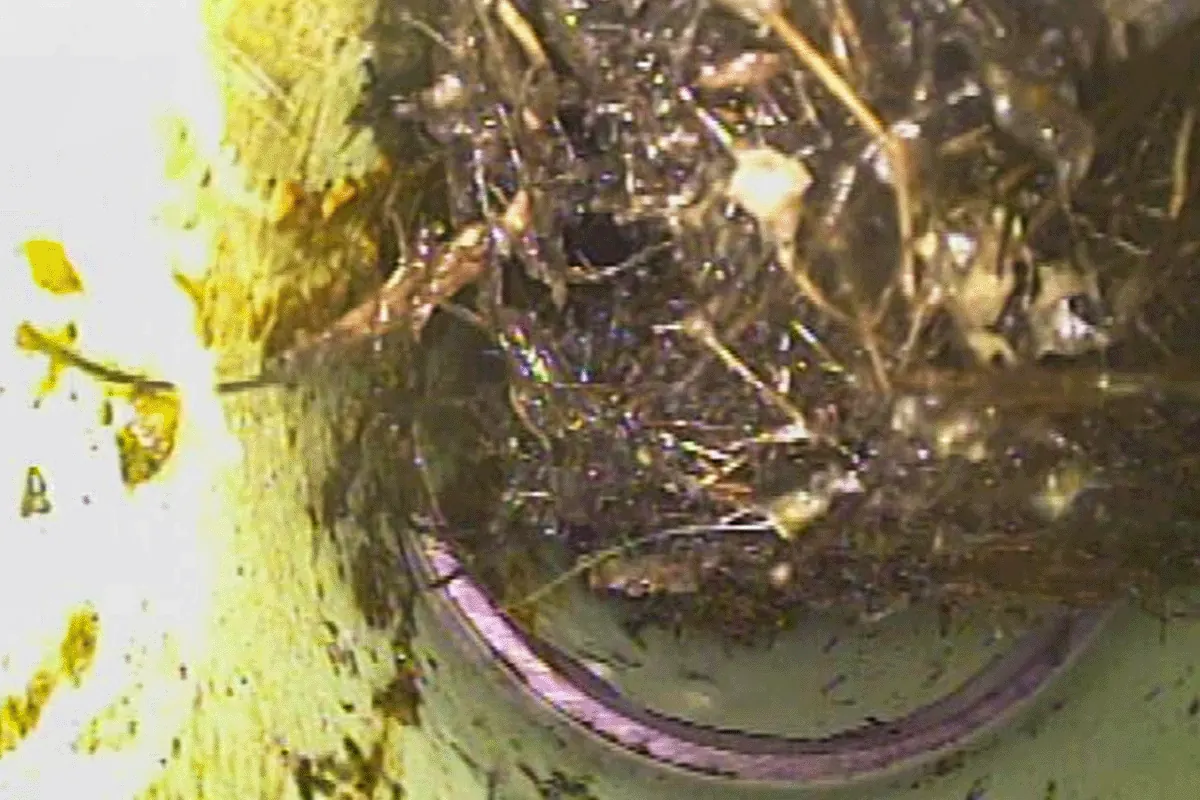
In the midwest, for example, tree roots go dormant in winter. In Tampa Bay, they don’t. Florida’s subtropical climate keeps root systems actively seeking moisture through all twelve months of the year, and the oak trees, ficus, and Chinese fan palms planted in virtually every Tampa Bay neighborhood are specifically among the most aggressive pipe-hunters in the root kingdom. They find clay pipe joints and cast iron seams, they find PVC joints installed with inadequate solvent weld, and once inside, they don’t stop. The pipe is warm, it’s wet, and it’s full of nutrients. Root intrusion doesn’t present as a sudden failure — it presents as a drain that gets slower every six months until one day it stops entirely.
Neighborhoods like Seminole Heights, Carrollwood, and South Tampa — where the tree canopy has had sixty or seventy years to develop — have some of the highest root intrusion rates in the Tampa Bay Area. If your home is under a mature oak, the question about your sewer line is not whether roots have found it. It’s how far in they’ve grown.
The Age Problem: Tampa Bay’s Housing Stock Is Old
According to U.S. Census data, the median age of housing in Tampa Bay now exceeds 40 years — meaning a substantial portion of the residential housing stock was built during the era of clay tile and cast iron sewer infrastructure. Cast iron pipes have a service life of 50 to 75 years under ideal conditions. Tampa Bay’s conditions are not ideal. Clay tile pipes — still present in large numbers in Ybor City, Hyde Park, and pre-war sections of St. Petersburg — fail faster than that. Orangeburg pipe, a compressed wood-fiber material used as a cheap wartime substitute through the late 1950s, has a theoretical service life of 50 years that almost nothing built with it has actually reached. If your home was built before 1970 and you’ve never had a sewer camera inspection, you are operating on assumptions about your underground infrastructure that may not survive first contact with reality.
This is not alarm-industry fearmongering. This is engineering and math. The pipes are old and the physics of Tampa Bay’s environment accelerate the timeline.
What’s in the Ground — and What We Replace It With
Quick answer: The material in your sewer line determines how it fails, how fast it fails, and what the repair strategy looks like. EVERYDAYPLUMBER.com replaces every failed material with Schedule 40 PVC — the thickest-walled, most root-resistant, longest-lasting sewer pipe material available for residential and light commercial installation.
Clay Tile Pipe
Clay sewer pipe was the standard material in Tampa Bay from the late 1800s through approximately the 1950s and is still in the ground under a significant percentage of homes in established neighborhoods like Ybor City, Hyde Park, Seminole Heights, and pre-war St. Petersburg. Clay pipe itself is durable — the material doesn’t corrode. What kills it is the jointing system. Clay tile was installed in short sections with open joints packed with oakum or lead, and those joints are tree root magnets. Once roots penetrate a clay joint, the joint fails, sections shift, and the pipe begins to misalign. By the time a clay line shows up on a camera, it usually has active root intrusion at multiple joints, offset sections from ground movement, and confirmed bellies. Spot repair on clay pipe is rarely the honest recommendation.
Cast Iron Pipe
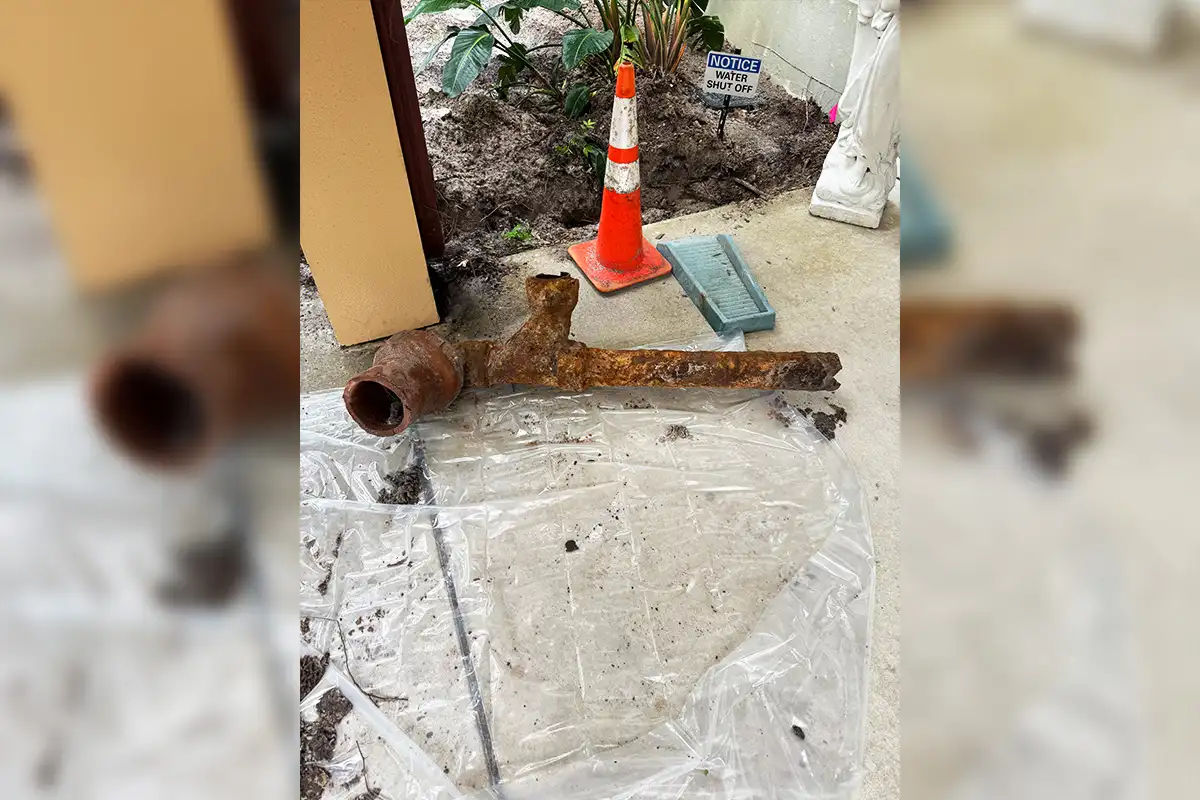
Cast iron sewer pipe was installed from the 1940s through the early 1980s and remains in the ground under hundreds of thousands of Tampa Bay homes built during the postwar boom. Cast iron corrodes from the inside out — wastewater creates hydrogen sulfide gas, which produces sulfuric acid, which eats the pipe wall from the interior. The outside is attacked simultaneously by soil moisture and Tampa Bay’s aggressive groundwater. The failure mode is gradual: the pipe wall thins, becomes porous, develops pinhole leaks, begins to flake scale into the flow path, and eventually collapses in sections. By the time a homeowner notices symptoms, the pipe typically has significant wall loss throughout its length. Cast iron from the 1960s and earlier is past its design service life. Full stop.
Common locations in the Tampa Bay Area: Lake Magdalene, Town ‘N’ Country, Carrollwood, North Tampa, and most neighborhoods developed during the 1950s–70s construction era.
Orangeburg Pipe
Orangeburg is the pipe material nobody wants to find. It was manufactured from compressed wood pulp, pitch, and water — essentially a structural-grade cardboard — and was used extensively during and after World War II when cast iron was rationed. It was never intended to be a permanent installation. Orangeburg softens and deforms when it’s wet, which means it’s been softening and deforming in the soil since the day it was installed. Orangeburg pipe doesn’t crack — it collapses. It develops oval cross-sections, then figure-eights, then it closes entirely. If your home was built between 1945 and 1960 and you’ve had recurring drain problems without a clear explanation, there is a meaningful probability that Orangeburg is involved. It cannot be repaired. It has to be replaced.
Why We Use Schedule 40 PVC — and Why It Matters
Not all PVC is the same — and the difference between SCH 40 and thin-wall PVC is the difference between a sewer line that lasts decades and one that fails faster than what it replaced.
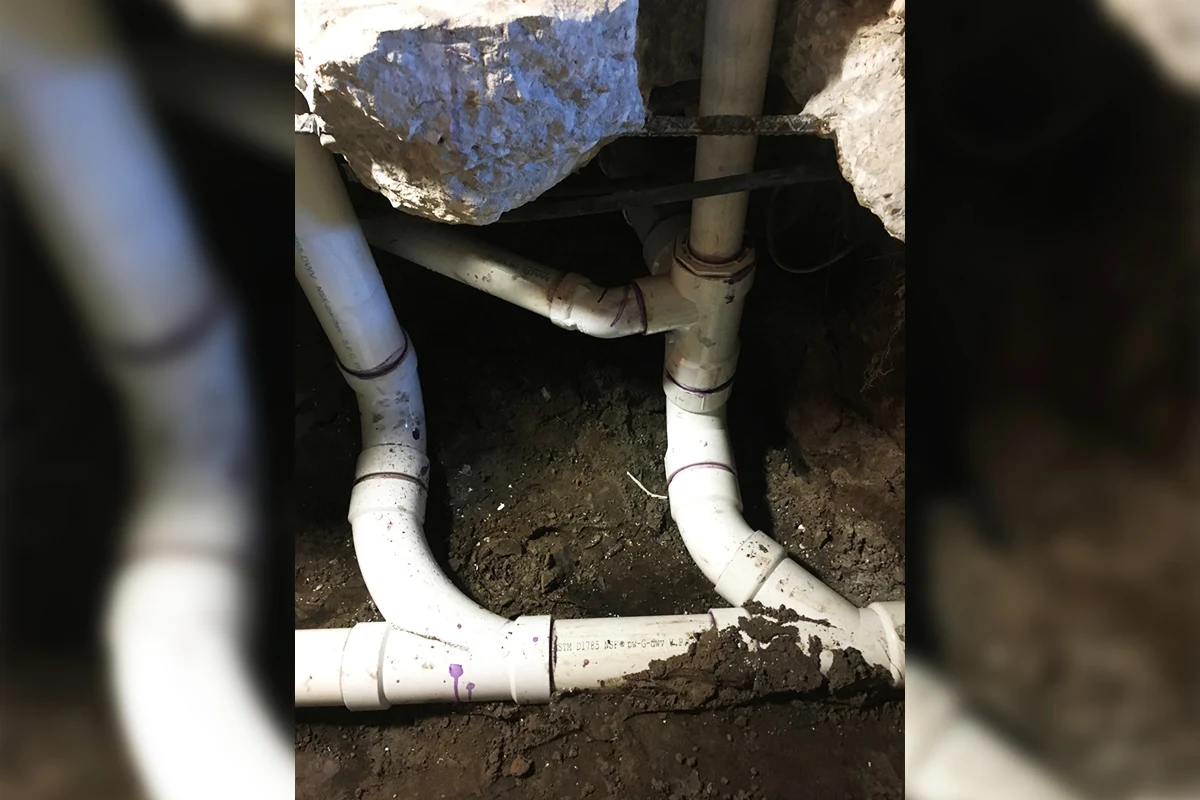
Thin-wall PVC — technically called SDR-35 or sewer-and-drain PVC — is cheaper, easier to cut, and lighter to carry. It’s also what a lot of plumbing companies use to protect their margin. Thin-wall pipe has thinner walls by design, which means it’s more susceptible to crushing under soil load, more prone to deflection that creates bellies, and significantly easier for roots to penetrate at joints. EVERYDAYPLUMBER.com uses Schedule 40 PVC exclusively for all sewer line repairs and replacements. SCH 40 has substantially thicker walls, higher crush resistance, and tighter joint tolerances that roots can’t exploit as easily. Combined with proper bedding material, correct slope, and installed cleanouts — work that we do on every job because it’s what the permit requires and what the inspection confirms — SCH 40 sewer line is the closest thing to a permanent fix that underground plumbing offers.
Every replacement we do is permitted through the City of Tampa, Hillsborough County, Pinellas County, or Pasco County as required, and every job gets a final inspection before we close it out. If a company isn’t pulling permits on your sewer replacement, they’re not doing it to code — and you’re absorbing that risk.
Spot Repair vs. Full Sewer Line Replacement — How We Decide
In short: we recommend the minimum intervention that solves the actual problem. Spot repair when the damage is genuinely isolated. Full replacement when the pipe material, the extent of failure, or the number of problem areas makes anything less than a full replacement a temporary fix dressed up as a permanent one.
This is where you find out what kind of plumber you’re working with. Some companies upsell full replacements on pipes that need a few-hundred-dollar spot repair. Others patch a pipe that’s failing systemically and leave you calling them again in eighteen months. EVERYDAYPLUMBER.com runs the sewer inspection camera, shows you what it found, explains exactly what the image means, and gives you a straight recommendation with the reasoning behind it. No pressure, no manufactured urgency. Just the truth about what’s in the ground and what it’ll take to fix it.
When Spot Repair Is the Right Call
Spot repair makes sense when a camera inspection confirms that the damage is limited to a specific section — one cracked joint, one localized root intrusion point, one offset caused by ground settlement — and that the surrounding pipe is in structurally sound condition. The work involves excavating to the damaged section, cutting out the bad pipe, and installing new SCH 40 PVC with properly glued, bedded connections. When the camera shows clean, intact pipe on both sides of the repair zone, spot repair is the answer and we’ll tell you that.
When Full Replacement Is the Honest Recommendation
Full sewer line replacement is the right call when the pipe material itself is at or past end of service life — cast iron with significant wall loss throughout, clay tile with root intrusion at multiple joints, any Orangeburg, or thin-wall PVC with confirmed bellies in multiple locations. It’s also the right call when spot repairs have been performed repeatedly on the same line. Three spot repairs on a twenty-year window is the camera telling you something the individual repair bills never did: the whole pipe is failing, not just the parts that have already given way.
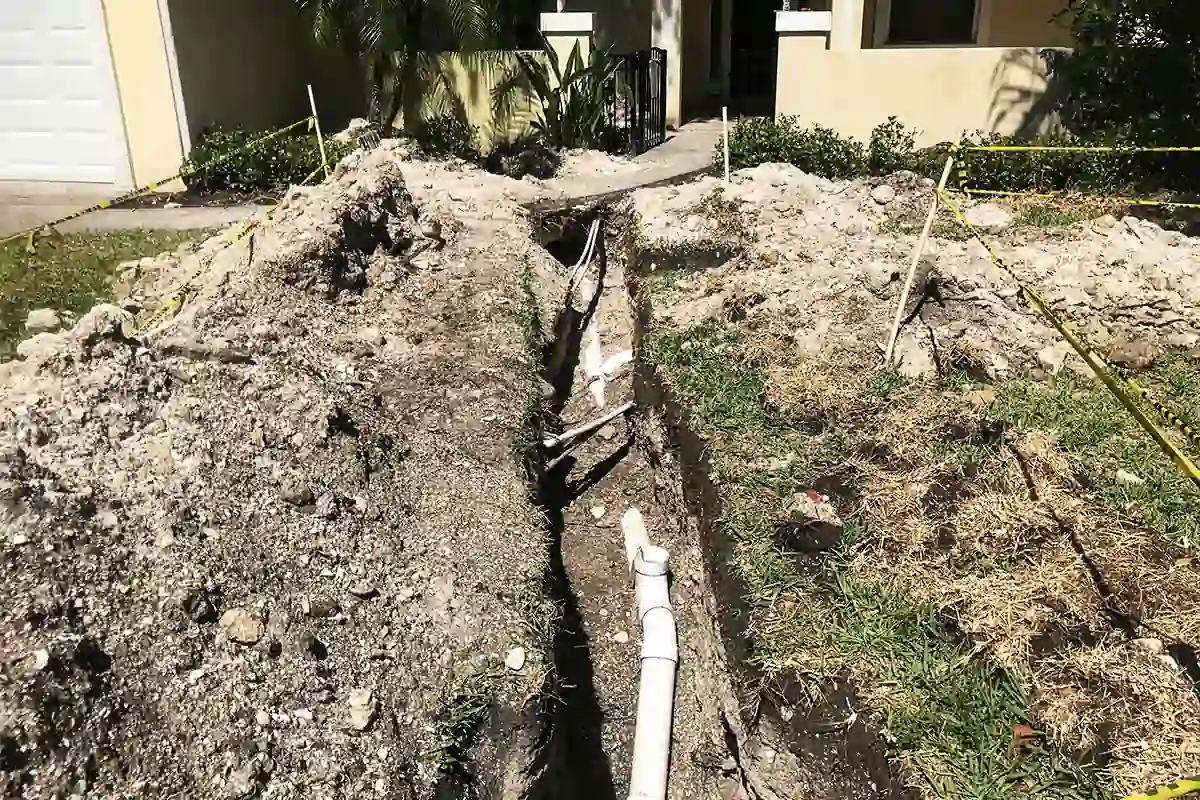
A full sewer line replacement from house to city connection typically takes one to three days depending on pipe length, depth, soil conditions, and whether concrete or hardscape needs to be cut. We handle utility locates, pull the permit, coordinate the inspection, backfill and compact properly, and restore the surface as close to its original condition as the job allows.
The EVERYDAYPLUMBER.com Sewer Repair Process
Sewer line work is not a service where speed should come at the expense of diagnosis. The single most expensive mistake a Tampa Bay homeowner can make is authorizing repair work before a camera inspection — either because the plumber didn’t recommend one, or because the homeowner decided to skip it. We don’t skip it. Every sewer repair or replacement job at EVERYDAYPLUMBER.com follows the same four-step process, in this order, without shortcuts.
Step 1 — Camera Inspection and Diagnosis
Before a single shovel goes in the ground, we run a high-resolution video camera through the sewer line from the nearest accessible cleanout. The camera shows us exactly what’s in the pipe — root intrusion, pipe belly, cracks, corrosion, offset joints, collapsed sections — and exactly where it is. We show you the footage. We explain what we’re seeing in plain terms, not plumbing jargon designed to make you nod along without actually understanding. The camera inspection is the entire foundation of an honest recommendation. Without it, everything else is a guess.
Step 2 — Scope, Pricing, and Permitting
Once we know what’s in the pipe, we scope the work accurately and give you upfront pricing before anything begins. No estimate that doubles when we’re already excavated. No surprise add-ons for work that was always going to be required. If the job needs a permit — and most sewer repairs and replacements do — we pull it. We do not ask homeowners to pull their own permits, and we do not perform sewer replacement work without one. The permit is not a formality. It’s the mechanism that guarantees the work gets inspected and signed off to code.
Step 3 — Excavation, Repair, and Installation
We locate underground utilities before we dig. We excavate to the affected pipe section, remove the damaged material, and install Schedule 40 PVC with proper bedding, correct slope toward the city main, and cleanouts positioned where the code requires and the homeowner’s future plumber will need them. The installation is done the way the permit requires it to be done, because the inspector is going to verify it before we close the trench.
Step 4 — Inspection, Backfill, and Closeout
We don’t backfill until the inspection passes. After the municipal inspector signs off on the new installation, we compact the trench in lifts, restore the surface, and clean up the site. Where hardscape was cut — concrete, pavers, asphalt — we patch it to a workmanlike standard. The job isn’t done when the pipe is in the ground. The job is done when the inspection is approved and the yard looks like we were there for a purpose, not a disaster.
Emergency Sewer Line Repair in Tampa Bay — 365 Days a Year
A sewer backup inside a home or business is not a situation that waits for a scheduled appointment. EVERYDAYPLUMBER.com provides emergency sewer repair response across Hillsborough, Pinellas, and Pasco counties every day of the year. When you call, you reach a live dispatcher — not a voicemail box, not an answering service.
A sewage backup is a health hazard. Category 3 water — what the restoration industry calls black water — contains bacteria, viruses, and pathogens that make the affected area unsafe for occupants until it’s professionally remediated. The longer a sewer backup sits, the deeper the contamination penetrates into flooring, drywall, and substructure. Speed matters here. Not just for comfort — for your health and the structural integrity of the property.
What Qualifies as a Sewer Emergency
If sewage is actively backing up into your home or business, call now. Other situations that warrant immediate response:
- Main sewer line completely blocked — no fixtures draining in the building
- Sewage backing up into tubs, toilets, or floor drains
- Active sewage smell inside the home from a drain or wall
- Wet, sunken, or actively seeping ground directly over a sewer line run
- Sewage visible at a cleanout opening
- Complete failure of a sewer line serving a multi-unit property
What to Do Before We Arrive
Stop using all water in the building. Every flush and every drain discharge adds volume to a backup that is already at capacity. Turn off the main water supply if needed to prevent accidental use. Do not attempt to clear a main sewer backup with a residential plunger or drain snake — if the line is completely blocked, you’re pushing material into a confined space with nowhere to go. Get people and pets away from affected areas, and if sewage has surfaced inside the building, don’t let anyone walk through it. We’ll be there. The fastest thing you can do right now is call:
Common Questions About Sewer Line Repair & Replacement
How do I know if I need sewer line repair or just drain cleaning?
If a single drain is slow and the rest of the house is fine, drain cleaning is the likely starting point. If multiple drains are slow or backing up simultaneously, if sewage is coming up in a tub or floor drain when you flush a toilet, or if drain cleaning fixes the problem temporarily but it returns within weeks, the issue is almost certainly in the main sewer line — not the individual drain. The only way to know for certain is a camera inspection. EVERYDAYPLUMBER.com runs the camera first on every job because the difference between a few-hundred-dollar drain cleaning and a few-thousand-dollar sewer repair starts with an accurate diagnosis.
How much does sewer line repair or replacement cost in Tampa Bay?
Spot repairs on isolated damage typically run in the low-to-mid hundreds for simple access situations and more for deep pipe or areas requiring concrete cutting. Full sewer line replacement from house to city connection varies significantly based on pipe length, depth, soil conditions, and whether hardscape or landscaping needs to be disturbed — it’s not a number that means anything without a camera inspection and a site assessment first. What we can tell you: EVERYDAYPLUMBER.com prices jobs based on what the work actually costs, not what the market will bear on a homeowner who’s panicking. We give you upfront pricing before anything begins, and the price you agree to is the price on the invoice.
Do you pull permits for sewer line repairs in Tampa Bay?
Yes — for all work that requires one. Sewer line replacements require permits in Hillsborough County, Pinellas County, and Pasco County, and we pull them for every job. We handle the permit application, coordinate the inspection schedule, and ensure the work passes final inspection before we close out the job. If a plumber is performing a full sewer line replacement without pulling a permit, they are either unaware of the requirement or choosing not to comply with it. Either way, you are the one absorbing the risk — through code violations, failed future home inspections, and insurance complications.
What is a sewer pipe belly and how do I know if I have one?
A sewer pipe belly is a section of pipe that has sagged below the natural flow gradient — typically due to improper bedding, soil settlement, or ground movement beneath the pipe. When a sewer line has a belly, waste flows downhill to the low point and stops. Solids drop out of suspension, accumulate at the belly, and create a chronic blockage that returns consistently after every drain cleaning because cleaning removes the accumulated material but doesn’t fix the slope. The telltale sign is a blockage that clears with drain cleaning and comes back within weeks or months, in the same location, every time. A camera inspection confirms a belly definitively and identifies its location. Repair requires excavation and re-grading — there is no non-invasive fix for a belly.
What is Orangeburg pipe and should I be worried about it?
Orangeburg is a sewer pipe material manufactured from compressed wood pulp and pitch, used extensively between the mid-1940s and late 1950s as a substitute for cast iron during wartime material rationing. It was never engineered for permanent installation. Orangeburg softens when wet and deforms under soil pressure — it collapses into oval, then figure-eight cross-sections that restrict flow until they close entirely. If your home was built between 1945 and 1960, there is a meaningful probability that Orangeburg is present in your sewer line. It cannot be repaired and cannot be lined. It has to be replaced. The good news: if you find it and address it proactively, the replacement is a planned, scheduled project. If you wait until it fails, it’s an emergency.
How long does a sewer line replacement take?
Most residential sewer line replacements take one to three days from excavation to final inspection, depending on pipe length, depth, soil conditions, utility locations, and whether any hardscape needs to be cut and patched. Jobs that involve concrete cutting, deep pipe, or complex access situations take longer. We give you a realistic project timeline before work begins — not an optimistic estimate designed to get the job and expand later. The permit inspection adds a scheduling variable we don’t fully control, but we coordinate with the county inspection office to schedule it as efficiently as possible.
Will you need to dig up my yard or driveway?
In most cases, yes — traditional sewer line repair and replacement requires excavation. The extent of the dig depends on where the damaged section is located, how deep the pipe runs, and whether any hardscape sits over the repair zone. EVERYDAYPLUMBER.com takes surface disturbance seriously: we locate utilities before any digging begins, we compact the trench backfill in lifts to minimize settlement, and we patch concrete and hardscape to a workmanlike standard.
My neighbor just had their sewer line replaced. Should I have mine inspected too?
That’s actually one of the more useful pieces of information you can have about your own plumbing. If your home was built in the same era as your neighbor’s and you’ve never had a sewer camera inspection, the conditions that failed their line are quite possibly present in yours. Clay tile, cast iron, and Orangeburg infrastructure from the same construction period fails on similar timelines. Getting a camera inspection doesn’t mean you’re committing to a repair — it means you’re making decisions about your sewer line based on what’s actually there instead of assuming everything is fine because you haven’t had a backup yet. EVERYDAYPLUMBER.com runs sewer camera inspections across Tampa Bay; call (813) 872-0200 to schedule one.
Service Areas — Sewer Line Repair & Replacement Across Tampa Bay
EVERYDAYPLUMBER.com provides licensed sewer line repair and replacement services throughout the Tampa Bay Area. Our crews operate out of our Tampa headquarters at 3912 W South Ave and cover all of Hillsborough, Pinellas, and Pasco counties — from the aging clay-tile neighborhoods of Ybor City and Hyde Park to the postwar cast iron infrastructure of Carrollwood, Lake Magdalene, and Town ‘N’ Country, to the newer developments in Wesley Chapel, Riverview, and Land O’ Lakes where improperly bedded PVC and sewer belly problems are increasingly common.
Cities and communities we serve for sewer repair:
Tampa | St. Petersburg | Clearwater | Brandon | Wesley Chapel | Riverview | Lutz | Land O’ Lakes | Largo | Dunedin | New Port Richey | Spring Hill | Temple Terrace | Plant City | South Tampa | Carrollwood | Seminole Heights | Ybor City | Hyde Park | Town ‘N’ Country
Why Choose EVERYDAYPLUMBER.com for Sewer Line Repair?
There is no shortage of plumbers in Tampa Bay willing to put a camera in your sewer line and recommend work. Here’s what makes the difference between a contractor you hire once under pressure and one you want to call every time:
Master Plumber License — The Highest Level in Florida
Florida Master Plumber License #CFC1428537. Not a journeyman working under a license he doesn’t hold. Not a company that subcontracts sewer work to whoever is available. A licensed Master Plumber who has been doing sewer repair and replacement in Tampa Bay since 2012, knows this market’s soil conditions, pipe materials, and code requirements from direct experience, and signs off on every permitted job with his license on the line.
SCH 40 PVC on Every Job — No Exceptions
Some plumbing companies use Schedule 40 on some jobs. EVERYDAYPLUMBER.com uses it on every sewer replacement, every time, period. The material costs more. It takes longer to work with. We use it anyway because the alternative is saving fifty dollars on pipe while creating a sewer line that fails faster than what it replaced. You’ll know what pipe went in the ground because the permit and inspection record will confirm it.
Camera Inspection Before Every Recommendation
We do not recommend sewer repair or replacement based on symptoms alone. We run the camera, show you the footage, explain what it means, and base the recommendation on what the inspection confirmed. If the camera shows something that can be fixed with drain cleaning, we’ll tell you that too. An honest diagnosis sometimes means a smaller job. That’s fine with us.
EMERGENCY ServiceS, 365 Days a Year
Sewer emergencies don’t respect weekends or holidays, and EVERYDAYPLUMBER.com doesn’t either. Fast emergency response across Hillsborough, Pinellas, and Pasco counties every day of the year. Live dispatcher, no answering service.
Over a Thousand Five-Star Google Reviews
Over a thousand five-star Google reviews and an A+ rating with the Better Business Bureau — earned over thirteen years of sewer repair, replacement, and plumbing work across Tampa Bay. The reviews aren’t from people who had an acceptable experience. They’re from people whose problem got solved, whose yard was left clean, and who understood what they were paying for before the first shovel went in the ground.
Ready to Schedule Sewer Line Service?
Don’t guess about what’s in the ground. EVERYDAYPLUMBER.com runs the camera, gives you a straight answer, and fixes the problem with materials and workmanship that hold up in Tampa Bay’s demanding environment. Licensed, permitted, inspected — every job.
For non-emergency service: Book online or call (813) 872-0200.
For sewer emergencies: Call (813) 872-0200 now. Live dispatcher available 365 days a year.
EVERYDAYPLUMBER.com
3912 W South Ave, Tampa, FL 33614
Florida License #CFC1428537
A+ BBB Rated | 1,000+ Five-Star Google Reviews
EVERYDAYPLUMBER.com is a family-owned Tampa Bay plumbing company providing licensed sewer line repair and replacement services across Hillsborough, Pinellas, and Pasco counties since 2012.