
Water Heater Installation in Tampa Bay
Tank, tankless, and hybrid water heater installation from a licensed Master Plumber. Code-compliant, correctly sized, and built for Tampa's hard water. Over a thousand five-star Google reviews.

What Is Water Heater Installation?
Water heater installation is the process of removing your old unit and replacing it with a new one — a traditional storage tank model, an on-demand tankless system, or a hybrid heat pump water heater. It's one of the most impactful plumbing upgrades a Tampa Bay homeowner can make, affecting everything from your monthly energy bill to the quality of your morning shower.
EVERYDAYPLUMBER.com installs all major water heater types and configurations for homes and businesses throughout Tampa Bay, with every installation code-compliant, correctly sized, and built to perform in Tampa's hard water environment.
How Water Heater Installation Works
A professional water heater installation takes most technicians two to four hours from arrival to hot water running through your taps. Our technician evaluates your current setup, shuts off the water supply and power or gas, drains and disconnects the old unit, and hauls it away. The new unit is set in place, connected to your water lines and gas or electrical supply, and every connection is tested for leaks before we confirm proper temperature and pressure and leave a clean work area.
What's Not Included
A new water heater performs best alongside clean supply lines and treated water. See our water heater repair, water filtration systems, and whole-home repiping services.
Signs You Need Replacement, Not Repair
Tank, Tankless, or Hybrid: Which Is Right for You?
Tank Water Heaters — The Reliable Standard
Storage tank units hold 30–75 gallons of preheated water ready at any time — the lowest upfront cost, compatible with existing gas or electric connections, and straightforward to service. We install Bradford White, Rheem, and AO Smith tank units, all proven performers in Florida's water conditions.
Tankless Water Heaters — On-Demand Efficiency
Tankless systems heat water only when you need it, running 24–34% more efficiently than tank units for households using 41 gallons or less per day, with nearly double the service life. Hard water scale buildup inside the heat exchanger is the primary failure mode here — a whole-house water softener upstream eliminates that risk entirely.
Hybrid Heat Pump Water Heaters — The Efficiency Leader
Hybrid units use up to 70% less electricity than a standard electric tank by pulling ambient heat from the surrounding air. They need a minimum 10×10 space with 7-foot ceiling clearance and a dedicated 240V circuit, but in Florida's warm climate that ambient heat is essentially free year-round.
The Brands We Install
We don't push a single brand — we match the right manufacturer to your home's needs, water conditions, and budget.
State Water Heaters
State Water Heaters brings contractor-grade build quality with heavier anode rods and better insulation than box-store units.
Navien
Navien's condensing technology sets the standard for high-efficiency tankless, with the NPE-2 series a frequent top recommendation.
Stiebel Eltron
Stiebel Eltron, manufacturing in Germany since 1924, leads on electric tankless and heat pump systems.
We can install a big-box unit you've already purchased, but a contractor-grade unit is usually a comparable total investment — ask us about the actual cost difference.
What Size Water Heater Do You Need?
We size every installation individually based on actual fixture count and usage, not a one-size chart.
Tank Sizing by Household
Most Tampa households of 1–2 people do well with a 30–40 gallon tank; 3–4 people need 40–50 gallons; households of 5 or more should look at 50–75 gallons or a tankless system sized for simultaneous demand.
Tankless Sizing by Flow Rate
Tankless sizing works by flow rate and temperature rise — in Tampa, incoming water averages around 72°F, so a quality whole-home unit in the 9–11 GPM range handles most households comfortably.
Hybrid Space Requirements
Hybrid units need the most room — minimum 10×10 with 7-foot ceiling clearance and a dedicated 240V circuit.
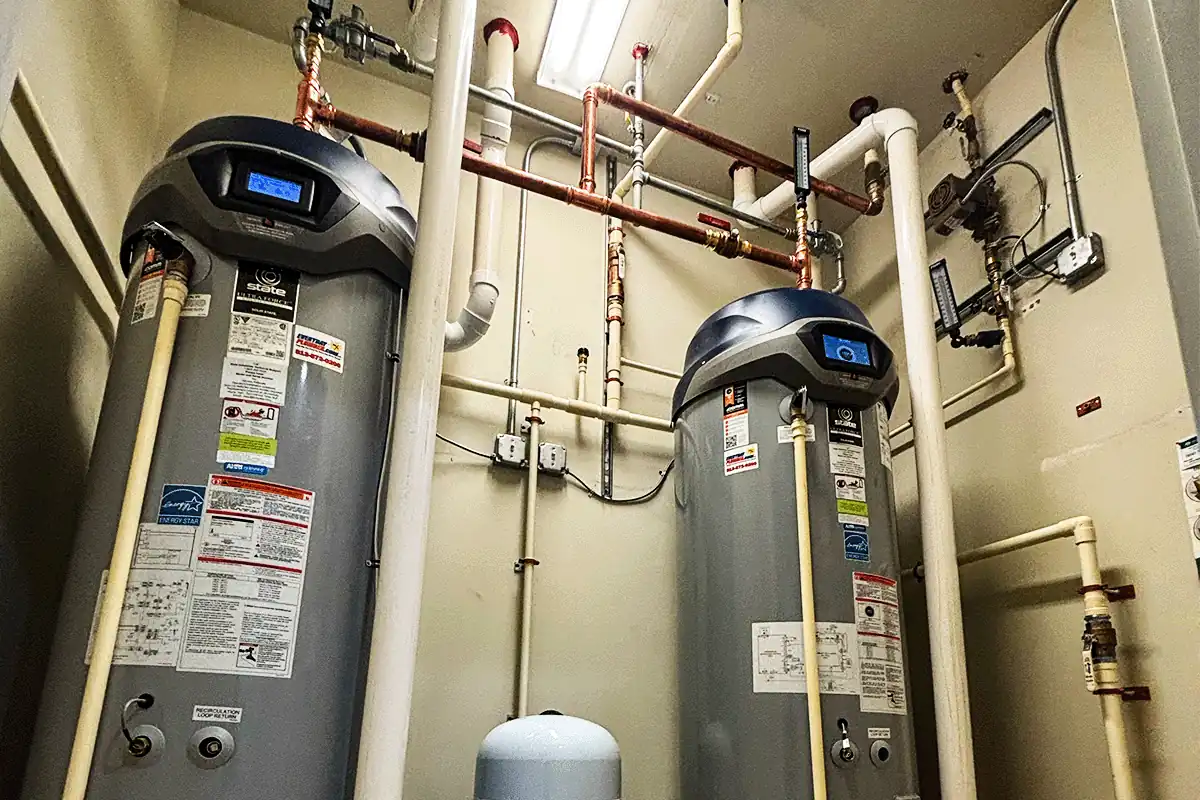
The EVERYDAYPLUMBER.com Installation Process
1. Assessment & Unit Selection
We evaluate your current unit, installation space, fuel source, and hot water demand, and walk you through the right options — no pressure, no upselling.
2. Disconnect & Removal
We shut off water and power or gas, fully drain the tank, disconnect it, remove it, and protect your floors and work area throughout.
3. Installation & Connection
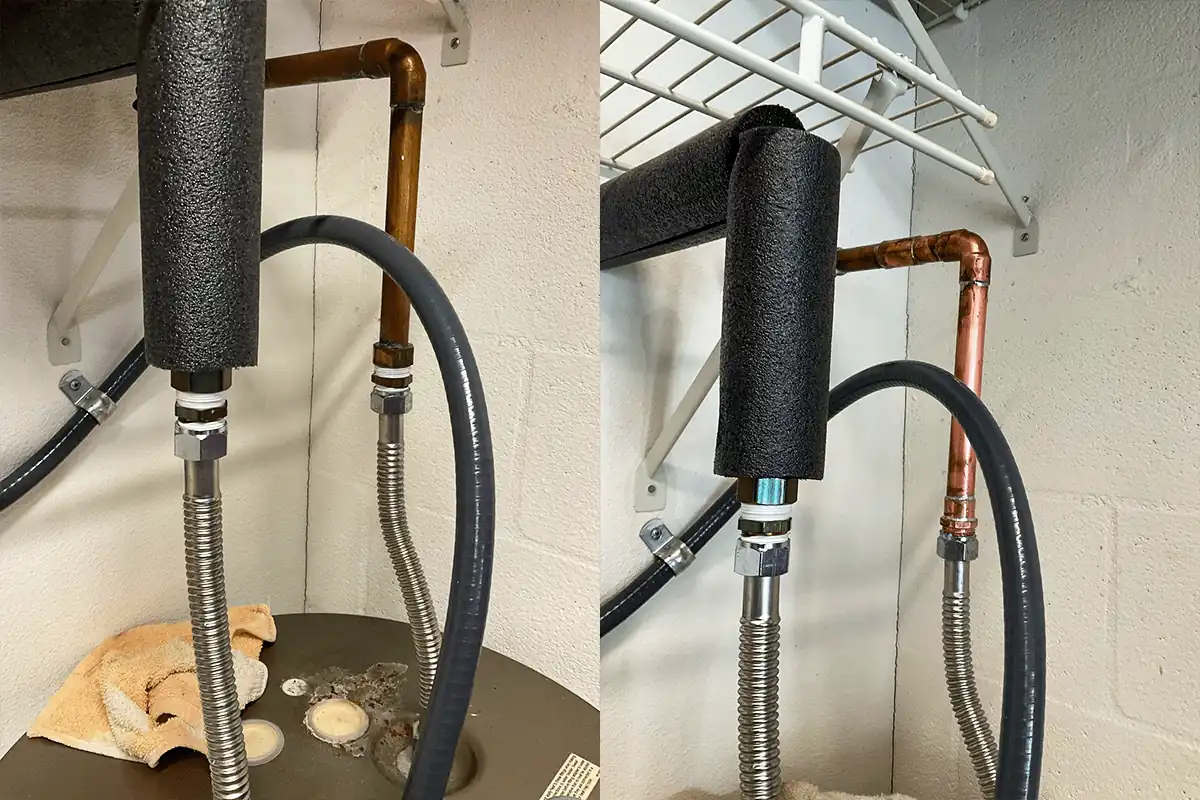
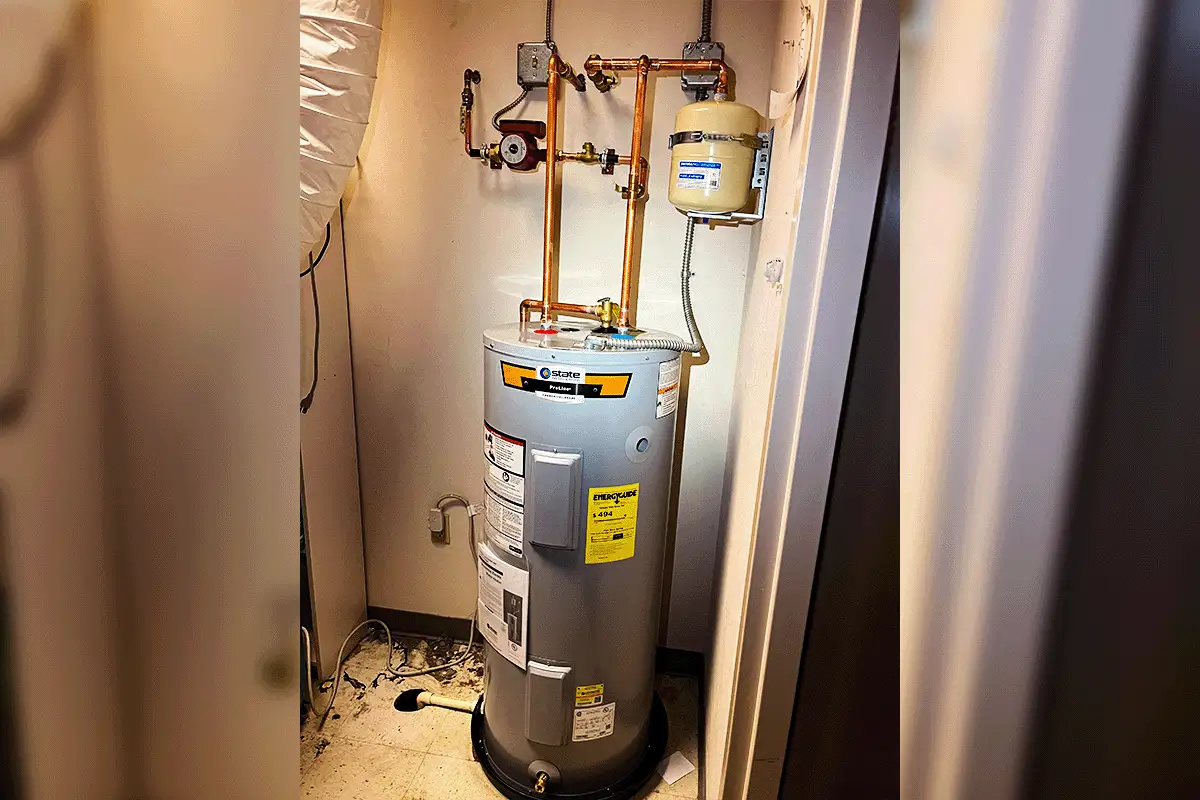
The new unit is positioned, anchored, and connected. Gas fittings are leak-checked before activation; electric units are wired to a dedicated circuit; expansion tanks are added where Hillsborough County code requires one.
4. Testing & Final Inspection
We fill the tank, check every connection for leaks, set temperature to 120°F, test the pressure relief valve, and confirm hot water flow before calling the job done.
5. Cleanup & Walkthrough
We clean the work area and walk you through the shutoff valve, temperature dial, and who to call if anything comes up — part of the job, not an extra.
Permits, Code & What Hillsborough County Requires
Permit Requirements
Water heater replacement in Hillsborough County requires a permit in most cases, pulled by a licensed contractor — not a homeowner and not an unlicensed handyman. Unpermitted work is a code violation, creates liability that falls on the homeowner, and means the installation was never inspected.
Expansion Tank Requirement
Hillsborough County code also requires an expansion tank on any closed water supply system, which includes virtually every home with a pressure-reducing valve at the meter — we identify this during assessment and include it upfront.
Every EVERYDAYPLUMBER.com installation is performed under Master Plumber License CFC1428537, held personally by owner Mike Haisten.
Tampa's Hard Water and Your New Water Heater
Tampa's water carries elevated calcium and magnesium.
Effect on Tank Units
In a tank, minerals settle as sediment that insulates the heating element, forcing it to work harder — the rumbling sounds you hear are steam bubbling through that sediment.
Effect on Tankless Units
In tankless units, scale buildup inside the heat exchanger is the primary failure mode and can void the manufacturer warranty without maintenance.
A whole-home water softener installed upstream eliminates scale formation at the source and protects any water heater type. Ask about combining a softener with your new water heater on the same visit.
Flexible Payment Options
A new water heater is an investment, and we want cost to never be the reason a family goes without hot water. EVERYDAYPLUMBER.com offers financing through GreenSky, letting you get your installation done now and pay over time. Ask your technician about flexible payment options before your appointment.
Commercial Water Heater Installation
EVERYDAYPLUMBER.com handles commercial water heater installation for restaurants, hotels, office buildings, medical facilities, multi-family properties, and retail locations throughout Tampa Bay, including the Tampa Bay Buccaneers, Eddie V's, Ruth's Chris Steakhouse, Chick-fil-A, Planet Fitness, and property managers like University Realty and Boardwalk Apartments. We size high-recovery tank units, commercial tankless systems, and bank configurations based on actual load calculations, and prioritize commercial calls to minimize downtime — emergency service is available 365 days a year. Learn more about our commercial plumbing services.
Watch a Real Water Heater Installation
Water Heater Installation FAQs
What Tampa Bay Homeowners Say
"Explained tank vs. tankless honestly, no upsell, and had our new water heater running the same afternoon."
— Verified Google review"Pulled the permit, hauled away the old unit, and left the space cleaner than they found it."
— Verified Google review"Installed a hybrid heat pump unit in our garage — our electric bill dropped noticeably the next month."
— Verified Google reviewWater Heater Installation Service Areas
We install water heaters throughout Tampa Bay, including Tampa, St. Petersburg, Clearwater, Brandon, Wesley Chapel, and surrounding Hillsborough, Pinellas, and Pasco County communities.
Ready to Schedule Your Water Heater Installation?
Licensed, permitted, and installed right the first time — 365 days a year across Tampa Bay.