

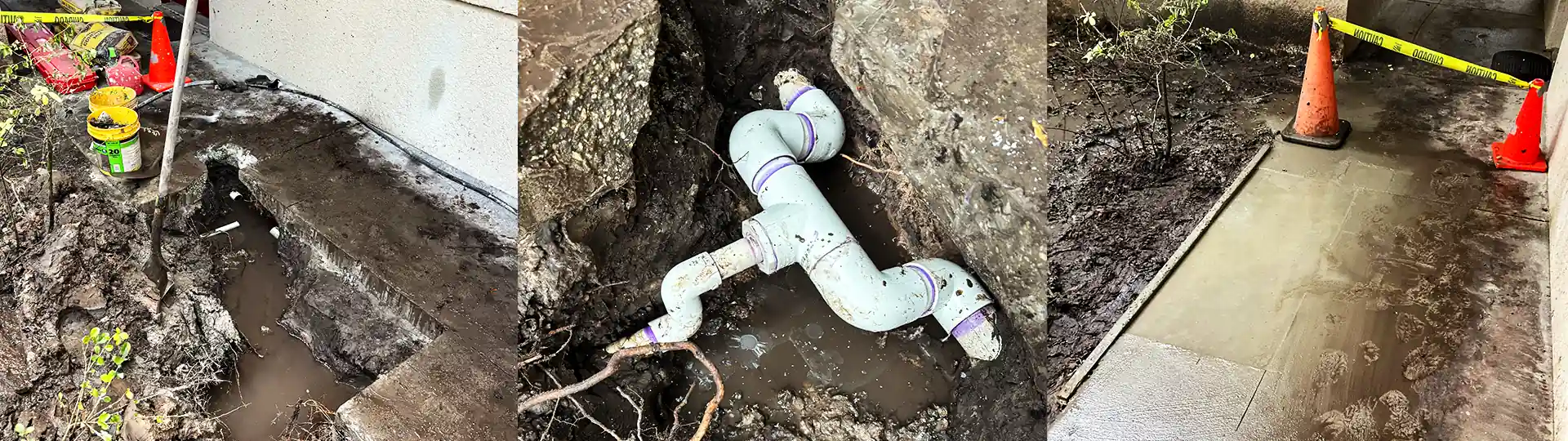
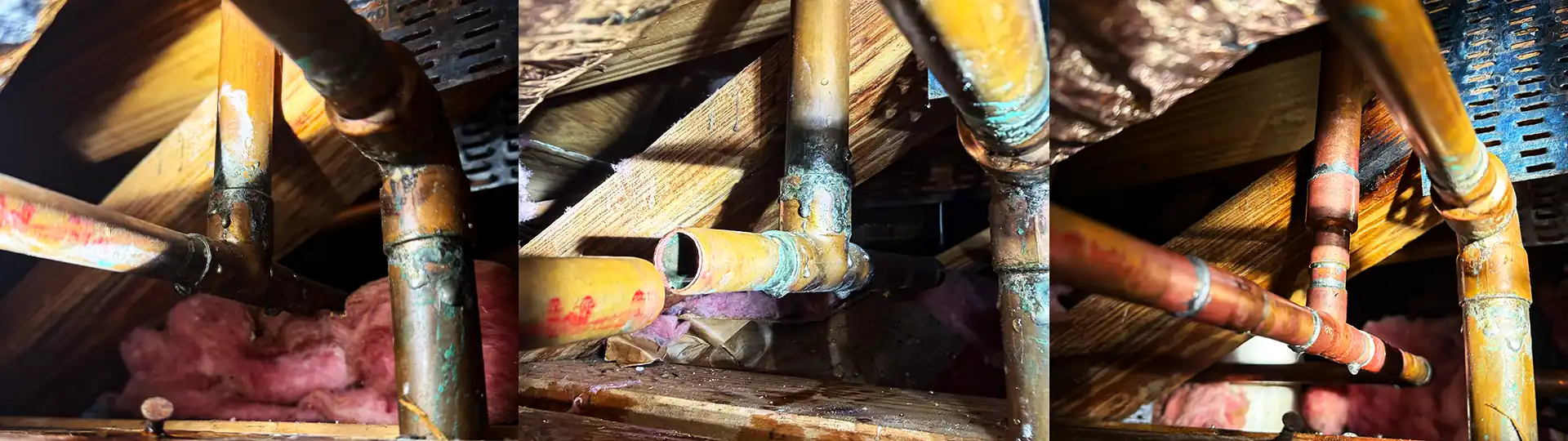
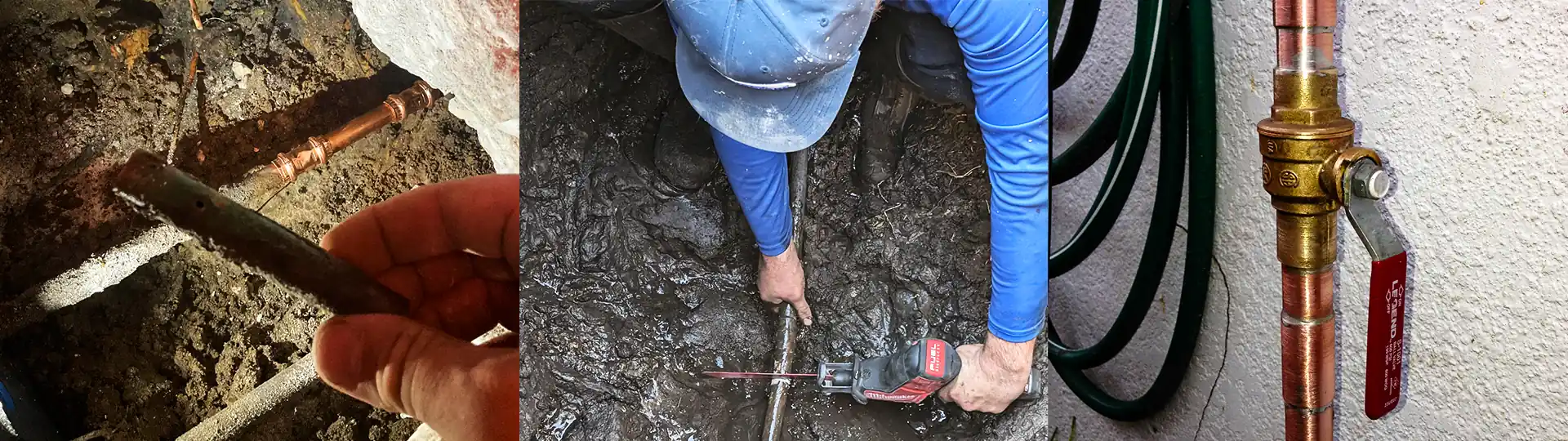

PIPE REPAIR SERVICES
365 Days Emergency Service Across Hillsborough, Pinellas, and Pasco
- Tampa | St. Petersburg | Clearwater | Brandon | Wesley Chapel
- We fix slab leaks, pinhole leaks, burst pipes & more
- Whole-home repiping when repair isn’t enough
- Residential & commercial | Emergency Service
WHAT IS PIPE REPAIR?
Quick answer: Pipe repair is the process of diagnosing, accessing, and fixing a leak, crack, or failure in a water supply or drain line — without necessarily replacing the entire plumbing system.
A leaking pipe is rarely just a leaking pipe. What looks like a dripping fitting under your kitchen sink might be the first sign of a system under stress. What appears to be a damp spot on your floor might be a slow-developing slab leak that has been building for months. At EVERYDAYPLUMBER.com, we have been repairing pipes in Tampa Bay homes and businesses since 2012 — and what twelve years of working through this region’s housing stock has taught us is that every building tells its own story. The age of the structure, the pipe material originally installed, Tampa Bay’s hard water chemistry, and how the building has been maintained all factor into the diagnosis and the solution. We don’t show up with a predetermined answer. We show up and evaluate what’s actually there.
We repair leaks and pipe failures in all materials — galvanized steel, copper, CPVC, PVC, and PEX — across Tampa, St. Petersburg, Clearwater, Brandon, Wesley Chapel, and throughout Hillsborough, Pinellas, and Pasco counties. Whether you have a single failed fitting on an otherwise sound line or a system showing signs of widespread deterioration, we assess the full picture before we recommend anything.
EVERYDAYPLUMBER.com offers easy monthly payment options on applicable work — ask about payment options when you call.
HOW PIPE REPAIR WORKS
In short: A licensed plumber diagnoses the source and scope of the leak, accesses the failed section, repairs or replaces the affected pipe or fitting, tests the repair under pressure, and documents the condition of the surrounding system before leaving.
Here is the process we follow on every pipe repair call:
- Locate the true source. Water shows up where gravity and building materials take it — not necessarily where the failure occurred. A slab leak beneath your foundation or a slow pinhole leak inside a wall can present water damage several feet from the actual failure point. We trace the source before we do anything.
- Assess the surrounding system. One failed joint on an otherwise healthy line is a very different situation from a pattern of failures indicating system-wide deterioration. We look at the bigger picture and tell you what we find.
- Access the pipe. Depending on location — under a sink, inside a wall, beneath a concrete slab, in an attic — the access method varies. We use the least invasive approach available.
- Repair or replace the failed section. Material matched to the job. We explain the options and the reasoning before we start.
- Pressure test the repair. The work is tested before we close anything up. You don’t find out it held three weeks later — you know before we leave.
Document and advise. If we see early indicators of future failures elsewhere in the system, we tell you. You deserve the full picture, not just a receipt.
WHAT & WHERE WE SERVICE
We repair supply lines, drain lines, water mains, hose bibs, water heater connections, irrigation lines, and service lines — in residential homes, commercial buildings, multi-family properties, and light industrial facilities throughout Tampa Bay. If it moves water in your home, we service it.
Emergency pipe repair services are available every day of the year. If you are dealing with an active leak anywhere in the Tampa Bay area — call us now.
PIPE MATERIALS — WHAT’S IN YOUR WALLS AND WHY IT MATTERS
In short: The pipe material installed when your home or building was built largely determines how your plumbing fails, how it can be repaired, and when repair stops making sense and a full replacement becomes the honest recommendation.
Tampa Bay’s housing stock spans more than a century of construction. Understanding what’s in your walls — and what that material’s track record looks like — is the starting point for every pipe repair or replacement conversation. Here is how we rank the common materials from highest failure risk to most reliable, along with what each means for your building today.
GALVANIZED STEEL — HIGHEST RISK
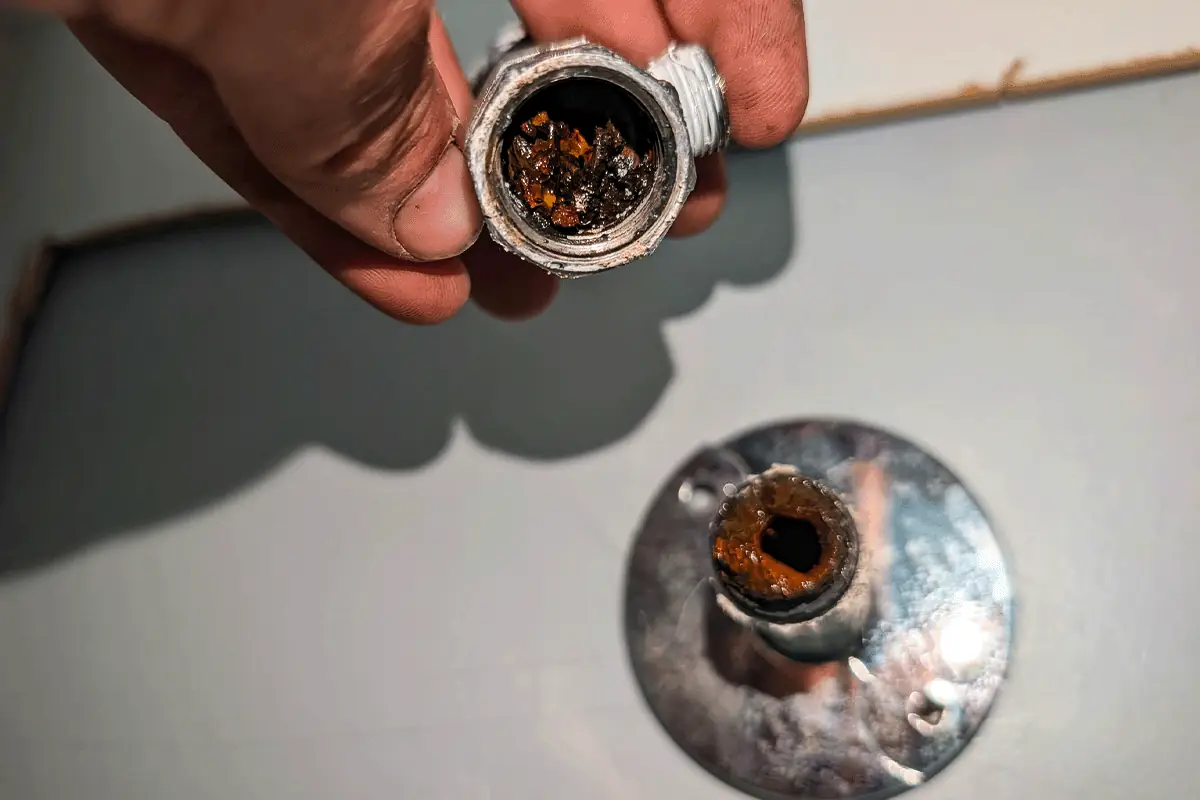
Galvanized pipes were the standard in homes built before the 1960s — steel pipes coated in zinc to resist corrosion. The problem is that the zinc coating degrades over decades, leaving bare steel exposed to Tampa Bay’s water chemistry. As the interior corrodes, mineral scale accumulates and narrows the bore, restricting flow and placing increasing stress on every fitting and joint in the system. Galvanized pipe rarely fails in one clean location — it tends to fail in a sequence, as scale and corrosion work through the system progressively.
If you have galvanized supply lines and you’ve had your first leak, it is rarely your last. Neighborhoods most likely to still have original galvanized supply lines include Seminole Heights, Ybor City, Hyde Park, Tampa Heights, and Palmetto Beach — areas with pre-1960s housing stock where no whole-home repipe has been completed.
POLYBUTYLENE — HIGH RISK AND NOT ALWAYS VISIBLE
Polybutylene is a gray flexible plastic pipe installed in homes built between approximately 1978 and 1995. It was widely used as a lower-cost alternative to copper during that period — and it was the subject of a major class-action settlement after widespread, documented failure patterns emerged nationally. The problem with polybutylene is not that it fails immediately; it is that it degrades from the inside out in reaction to chlorine in municipal water supplies. The pipe interior deteriorates progressively, often without visible exterior signs, until failure occurs.
If your home was built between 1978 and 1995 and has never been repiped, there is a meaningful chance polybutylene is present. A licensed plumber can usually identify it at exposed fittings without opening walls — it is gray, with aluminum or copper crimp fittings. Carrollwood, Town ‘N’ Country, Brandon, Temple Terrace, and older sections of Wesley Chapel and New Tampa carry significant concentrations of polybutylene from this installation window.
COPPER — A STRONG TRACK RECORD WITH ONE LOCAL CAVEAT
Copper has a long, legitimate history as a plumbing material, and we are not going to tell you it is a bad choice — because it isn’t. Copper is durable, handles temperature extremes well, and has performed reliably in millions of homes for decades. In certain applications — outdoor supply runs that require UV resistance, for example — copper remains a practical and appropriate choice.
Tampa Bay’s hard water is copper’s main adversary in this region. The Floridan Aquifer that supplies most of the area’s water is high in calcium and magnesium. Over time, mineral scale deposits on the interior wall of copper pipe, gradually thinning it from the inside until pinhole leaks develop. This pattern is common in Tampa Bay homes with original copper systems installed in the 1960s through 1980s.
This does not mean copper requires replacement at the first sign of trouble. A single failed fitting on an otherwise sound copper system is often best repaired in copper — matching the existing material avoids unnecessary transition points and keeps the repair clean. We assess the condition of the surrounding pipe before recommending anything beyond the immediate repair.
CPVC — THE RIGHT MATERIAL FOR THE RIGHT LOCATION
CPVC — chlorinated polyvinyl chloride — is a rigid plastic pipe with genuine strengths. Most importantly, it handles direct UV exposure without degrading, making it the appropriate choice for outdoor supply lines, exposed runs, and any installation where PEX would be damaged by sunlight. It handles hot water lines well and has a solid performance history when properly installed.
The caveat that matters specifically in Tampa Bay: CPVC is rigid, and rigid pipes become brittle in cold temperatures. During a freeze event — and Tampa Bay does get them — CPVC outdoor runs and attic-run supply lines are among the first to fail. When CPVC fails in a hard freeze, it does not crack at a single joint. It shatters. Florida homes are commonly built with supply lines routed through the attic rather than through a basement (we do not have basements), which means attic-run CPVC is a real freeze vulnerability in this market.
We use CPVC where UV exposure or outdoor installation makes it the appropriate call. For interior runs and whole-home repipes, we reach for PEX.
PEX — THE MODERN STANDARD
PEX — cross-linked polyethylene — is our default recommendation for new supply line runs, whole-home repipes, and any situation where we are already opening walls. Its smooth, non-reactive interior resists the mineral scale adhesion that causes so much of Tampa Bay’s pipe failure. It is flexible, which means it is the most freeze-resistant pipe material available — it expands as water freezes rather than splitting. And unlike metal pipes, it does not corrode.
PEX cannot be installed outdoors in direct sunlight. UV exposure degrades it over time, making it brittle. That is a specification to respect, not a flaw — it simply means PEX belongs inside, and CPVC handles what it cannot. When we use both materials on the same job, it is because each is in the location where it performs best.
The honest bottom line: No single pipe material is correct for every situation, and any plumber who tells you otherwise is not giving you a real assessment. EVERYDAYPLUMBER.com has been evaluating Tampa Bay plumbing systems since 2012 — through homes built in 1945, subdivisions built in 1987, and commercial facilities built last year. We look at what is in your building, what condition it is in, and what makes sense for your specific situation. Then we tell you the options.
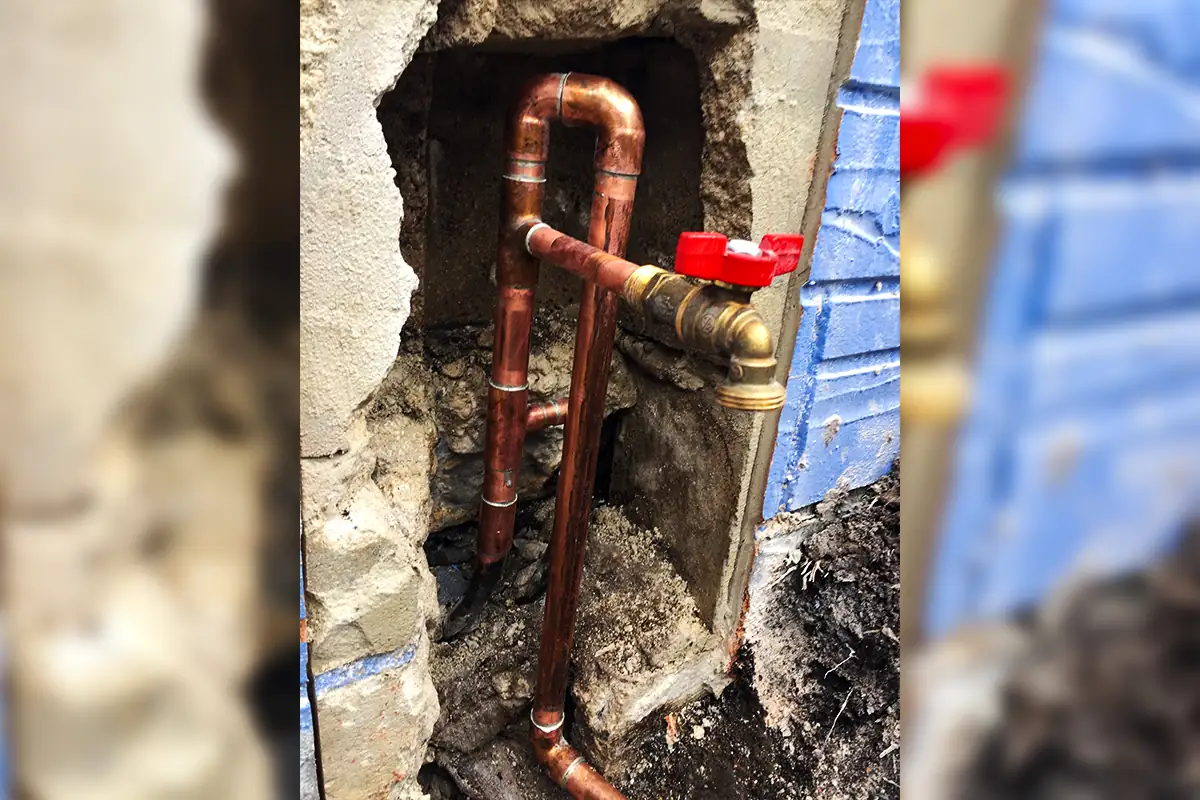
WHICH TAMPA BAY HOMES ARE MOST AT RISK — AND WHY
Quick answer: Pipe failure risk in Tampa Bay is largely predictable based on when a neighborhood was built, what material was in use at the time, and how decades of the region’s hard water and weather have acted on it since.
We have been repairing pipes across this metro since 2012. The call volume is not random — it concentrates in specific neighborhoods, in specific pipe materials, for reasons that are consistent and well understood. Knowing where your home or building falls in that picture is useful before a failure occurs.
OLDER CONSTRUCTION — GALVANIZED AND EARLY COPPER
Homes built before 1970 in Seminole Heights, Ybor City, Hyde Park, Tampa Heights, Palma Ceia, Bayshore Beautiful, Ballast Point, and Palmetto Beach are the most likely to have original galvanized steel supply lines that have never been replaced. These are the neighborhoods where we most frequently find system-level deterioration — not isolated leaks, but multiple points of failure developing in sequence, indicating a plumbing system that has outlived its serviceable life. A whole-home repipe conversation is almost always worth having in these homes. Continuing to patch a deteriorating galvanized system typically costs more over three years than replacing it cleanly.
POST-WAR AND 1970S–1990S CONSTRUCTION — POLYBUTYLENE RISK
Homes built between 1978 and 1995 in Carrollwood, Town ‘N’ Country, Brandon, Temple Terrace, and older sections of Wesley Chapel and New Tampa carry significant concentrations of polybutylene supply lines from that installation window. If your home was built during this period and has never been professionally assessed or repiped, the polybutylene question is worth answering before the material answers it for you.
INLAND AREAS — FREEZE EVENT VULNERABILITY
During Tampa Bay’s rare but real freeze events — temperatures dropped into the mid-20s across inland communities in December 2022, producing burst pipe calls across the metro for days — pipe failures concentrated in the communities furthest from the moderating thermal influence of Tampa Bay and the Gulf of Mexico.
Highest freeze risk: Plant City, Dover, Valrico, Zephyrhills, Dade City, Wesley Chapel, Land O’ Lakes, Lutz, and inland Brandon. These areas record the coldest temperatures in the metro during hard freeze events and have the least coastal buffering.
Lowest freeze risk (relatively): Waterfront areas of St. Petersburg, Clearwater Beach, Dunedin, and South Tampa — the thermal mass of the bay and Gulf meaningfully moderates overnight lows. Not immune, but historically the last to see freeze-related pipe failures.
If you are in a high-risk inland community and have CPVC attic runs, older rigid supply lines, or outdoor copper fittings — knowing where your main water shutoff is located before a freeze event is not optional. It is essential. And if a freeze has already found a line, call us immediately. Emergency pipe repair services are available across Hillsborough, Pinellas, and Pasco counties 365 days a year.
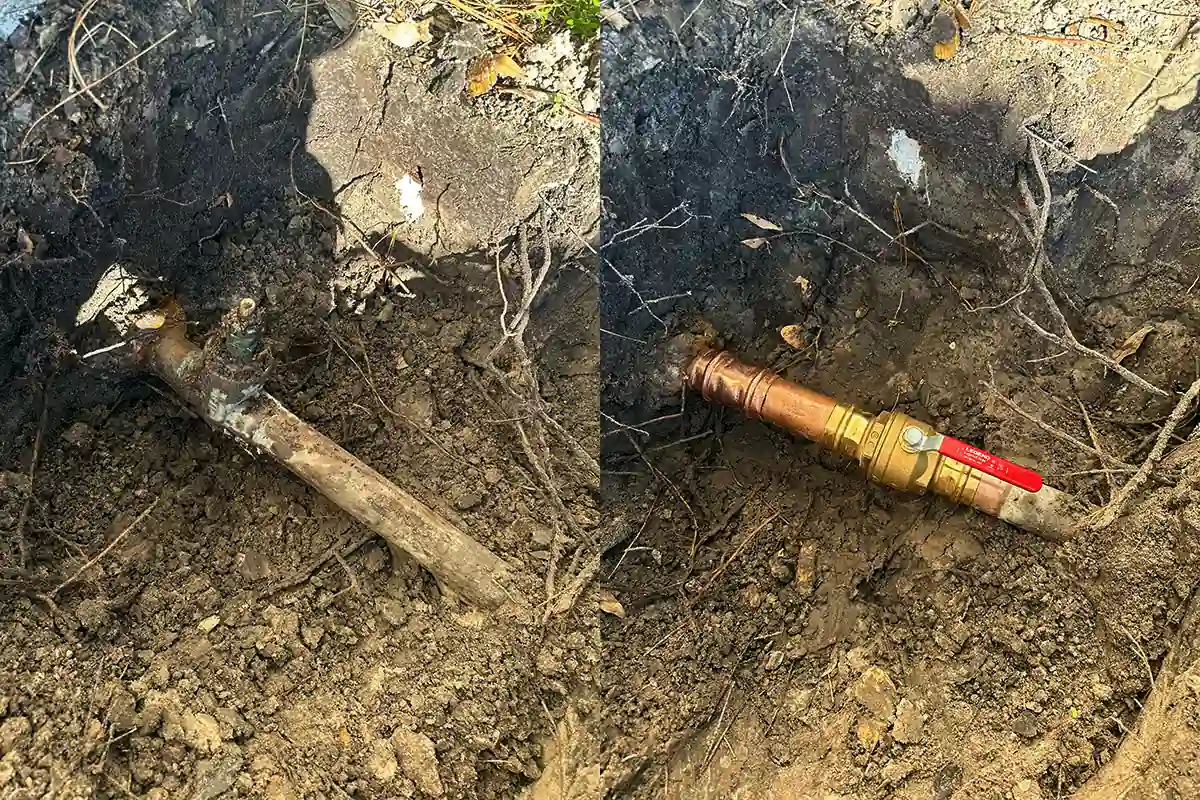
LEAK SEVERITY — FROM MINOR NUISANCE TO STRUCTURAL EMERGENCY
In short: Not all pipe leaks are equal. A dripping hose bib will not flood your home tonight. A slow slab leak you have been ignoring for six months might already have caused significant damage you cannot yet see.
Understanding the category of leak you are dealing with — and acting proportionally — is the difference between a straightforward repair and a major restoration project involving flooring, drywall, and foundation work. Here is how we categorize what we find.
MINOR LEAKS — ACT BEFORE THEY BECOME MAJOR
Dripping hose bibs, slow drips at shutoff valves, minor compression fitting failures, and small pinhole leaks in accessible locations fall into this category. They will not cause immediate catastrophic damage, but they compound reliably over time — increased water bills, moisture attracting mold, wood rot developing behind walls, and mineral damage to the surrounding area. A repair that costs a few hundred dollars today can become a several-thousand-dollar water damage restoration if left unaddressed for months. The lesson from minor leaks is simple: visible water that should not be there is a signal, not a coincidence.
MODERATE LEAKS — DAMAGE IS ACCUMULATING NOW
Leaks inside walls, slow joint failures behind appliances, and supply line leaks under slabs that have not yet broken the surface are actively causing damage you may not be able to see. Damp spots on walls, discoloration on ceilings, soft or buckling flooring, an unexplained spike in your water bill, and the sound of running water when every fixture is off are all indicators that a moderate or developing leak may be present. These situations call for prompt professional diagnosis — not a wait-and-see approach.
MAJOR AND EMERGENCY LEAKS — IMMEDIATE ACTION REQUIRED
Burst pipes, major slab leaks that have surfaced, water main failures, and sudden significant water intrusion are emergencies. The first action is always the same: locate your main water shutoff and turn it off. In most Tampa Bay homes, the main shutoff is at the meter box near the street or at the main shutoff valve inside the home — often near the water heater or under the kitchen sink. Turn it off. Turn off the water heater. Open a faucet to bleed pressure from the lines. Then call a licensed plumber. Emergency pipe repair services are available 365 days a year.
WHAT YOU CAN DO RIGHT NOW
You do not need a leak to act. A few straightforward steps put you in a much better position when something does happen:
- Know your shutoff. Every adult in the household should know how to locate and operate the main water shutoff.
- Do not ignore wet spots. A damp patch of flooring, soft drywall, or unexplained water pooling near a foundation is not a coincidence — it is a signal.
- Watch your water bill. An unexplained usage spike without any change in behavior is often the first measurable sign of a hidden leak.
- Check exposed pipes before a forecast freeze. Outdoor hose bibs, CPVC runs, and attic supply lines are the highest risk points. Know what you have and where it is.
Get a plumbing assessment in an older home. If your home was built before 1970 and you have never had a licensed plumber evaluate the pipe materials, the information is worth having.
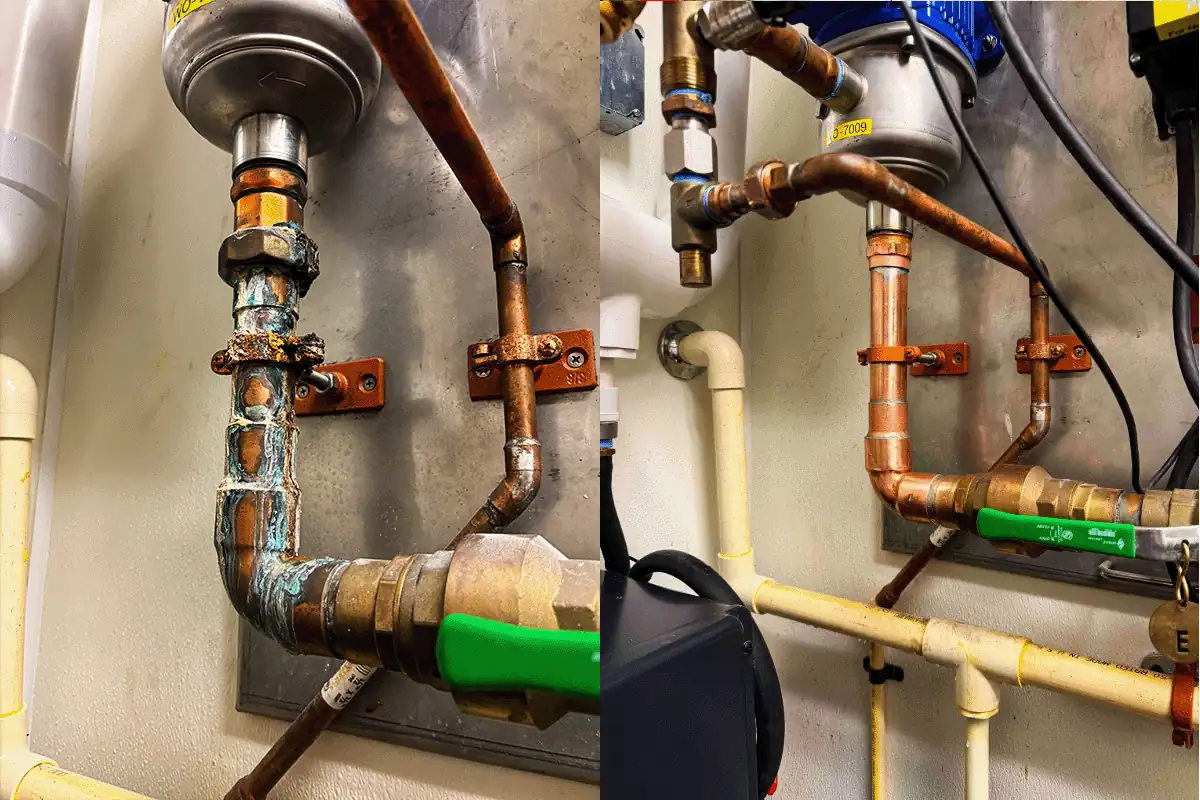
SLAB LEAKS IN TAMPA BAY — WHAT THEY ARE AND HOW WE FIX THEM
Quick answer: A slab leak is a water line or drain line failure beneath your concrete foundation. In Tampa Bay’s aging housing stock, they are one of the most common serious pipe repair situations we handle — and one of the most consequential if left unaddressed.
Most Tampa Bay homes are built directly on a concrete slab. There are no basements, no accessible crawl spaces — the plumbing runs through and beneath the slab itself. When a supply line beneath that slab develops a leak, the water has nowhere to go but laterally through the soil and eventually upward through the concrete, manifesting as damage on the surface long after the failure has begun.
HOW TO RECOGNIZE A SLAB LEAK
Slab leaks are diagnosed by pattern, not a single sign. The most common indicators in Tampa Bay homes include:
- Warm or damp spots on tile or hardwood flooring — often a hot water line failure directly below
- The sound of running water when every fixture in the home is off
- Cracks in tile, flooring, or baseboards without a structural explanation
- Significantly elevated water bills without a change in usage habits
- Water pooling against the exterior foundation
- Mold or mildew odor without a visible source
If you are seeing more than one of these signs in combination, the probability of a slab leak is high. The longer it goes unaddressed, the more extensive the foundation, flooring, and structural damage becomes. Slab leaks do not get better on their own.
HOW WE DIAGNOSE AND REPAIR SLAB LEAKS
We begin with leak detection — pinpointing the source precisely before any slab work begins. Depending on the location, depth, and nature of the failure, there are generally three repair approaches:
- Spot repair — direct access through the slab at the failure point. Appropriate when the failure is isolated and the surrounding pipe is in good condition.
- Pipe rerouting — running a new line through wall and attic space, bypassing the failed section entirely. Often preferred when the failed section is in a difficult access location, or when the pipe material suggests future failures in the buried section are likely.
- Full repipe — when a slab leak is a symptom of system-wide deterioration, particularly in homes with galvanized or polybutylene supply lines, a whole-home repipe addresses the root cause rather than a single symptom. Patching one failure in a failing system is not always the right answer, and we will tell you when it is not.
We assess each situation and present the options with direct recommendations. The right repair depends on the pipe material, the scope of the failure, and the overall condition of the system.
SLAB LEAKS AND TAMPA BAY’S WATER CHEMISTRY
Tampa Bay’s hard water does not just affect the pipes you can see. Mineral deposits accumulate on the interior of copper supply lines buried beneath your slab over decades — gradually thinning the pipe wall until a pinhole develops, then fails. This is why slab leaks tend to concentrate in homes with original copper systems in the 40-to-60-year age range. The water softening and filtration systems that protect your surface plumbing also protect the lines you cannot see — and cannot easily access without significant work. If scale-related deterioration has reached your slab pipes, it is worth a conversation about the condition of the plumbing system as a whole.
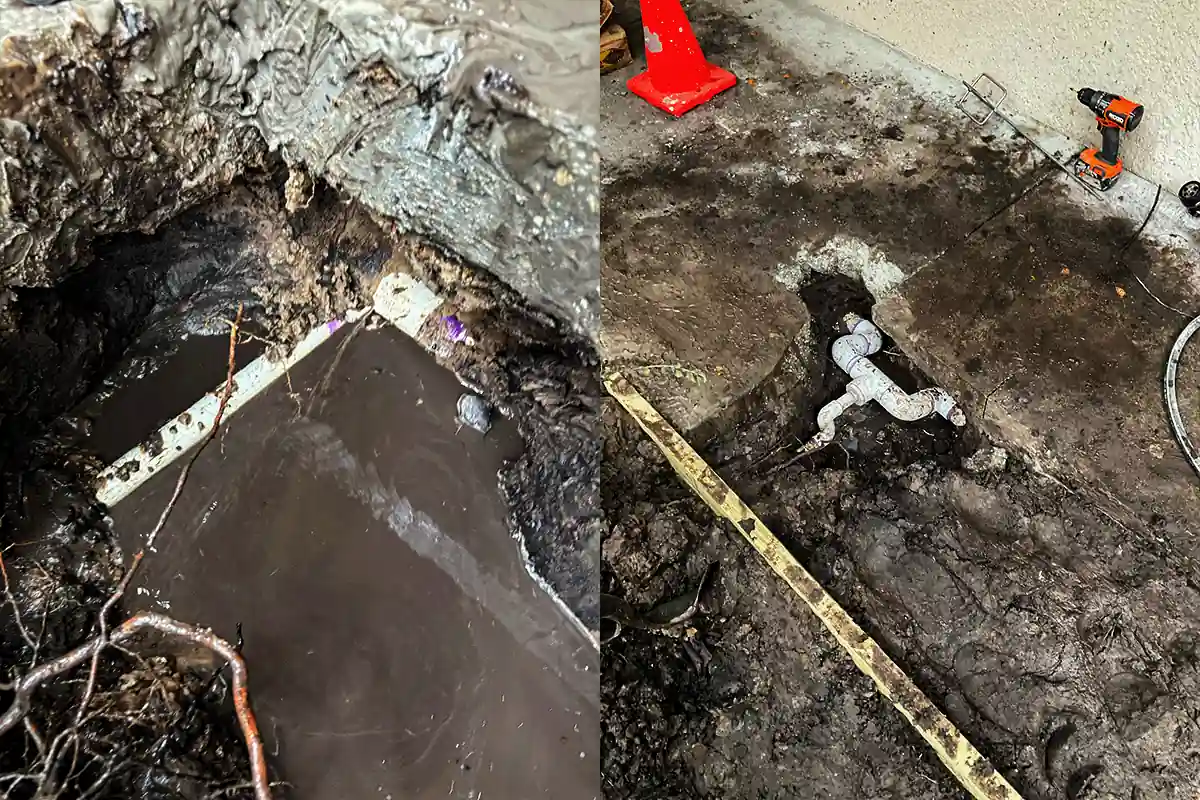
PIPE REPAIR VS. PIPE REPLACEMENT — HOW WE MAKE THE CALL
In short: One leak on an otherwise healthy system is a repair. A pattern of failures in an aging system is a replacement conversation. The difference matters — to your budget today and to your plumbing system’s performance for the next decade.
There is no universal answer to whether a pipe should be repaired or replaced, and any plumber who gives you the same answer regardless of what they find is not giving you a real assessment. Since 2012, we have evaluated Tampa Bay plumbing systems across every era of local construction, and the decision almost always comes down to the same set of factors.
WHEN REPAIR IS THE RIGHT CALL
- The failure is isolated — a single joint, fitting, or section with a clear, contained cause
- The surrounding pipe is in good condition with no signs of additional deterioration
- The pipe material and age do not suggest imminent further failures nearby
- The location is accessible without major disruption
- The material is compatible with a clean like-for-like repair — a single failed copper fitting on an otherwise sound copper system is often best repaired in copper, avoiding unnecessary material transition points
WHEN REPLACEMENT MAKES MORE SENSE
- Multiple leaks have occurred in the same system within a short period
- The pipe material is galvanized steel or polybutylene — both fail progressively, not in isolation
- The repair location would require the same or similar access if an adjacent section fails
- The age and condition of the system means repair costs are approaching the value of a whole-home repipe
- A slab leak diagnosis reveals pipe wall deterioration extending beyond the immediate failure point
THE LIKE-FOR-LIKE PRINCIPLE
When repair is the right call, the choice of replacement material matters. If we are repairing a section of copper in an otherwise sound copper system, we repair it in copper — matching the existing material eliminates unnecessary transition fittings and keeps the system consistent. We do not push material upgrades when the existing pipe is doing its job. Introducing a PEX section in the middle of a healthy copper system for the sake of using newer material is not necessarily better plumbing — it is unnecessary complexity.
That said, we also do not leave a client in a deteriorating system to avoid a difficult conversation. If the evidence in front of us suggests a pattern of failure rather than an isolated event, we say so directly — and we explain why. You make the decision with full information.
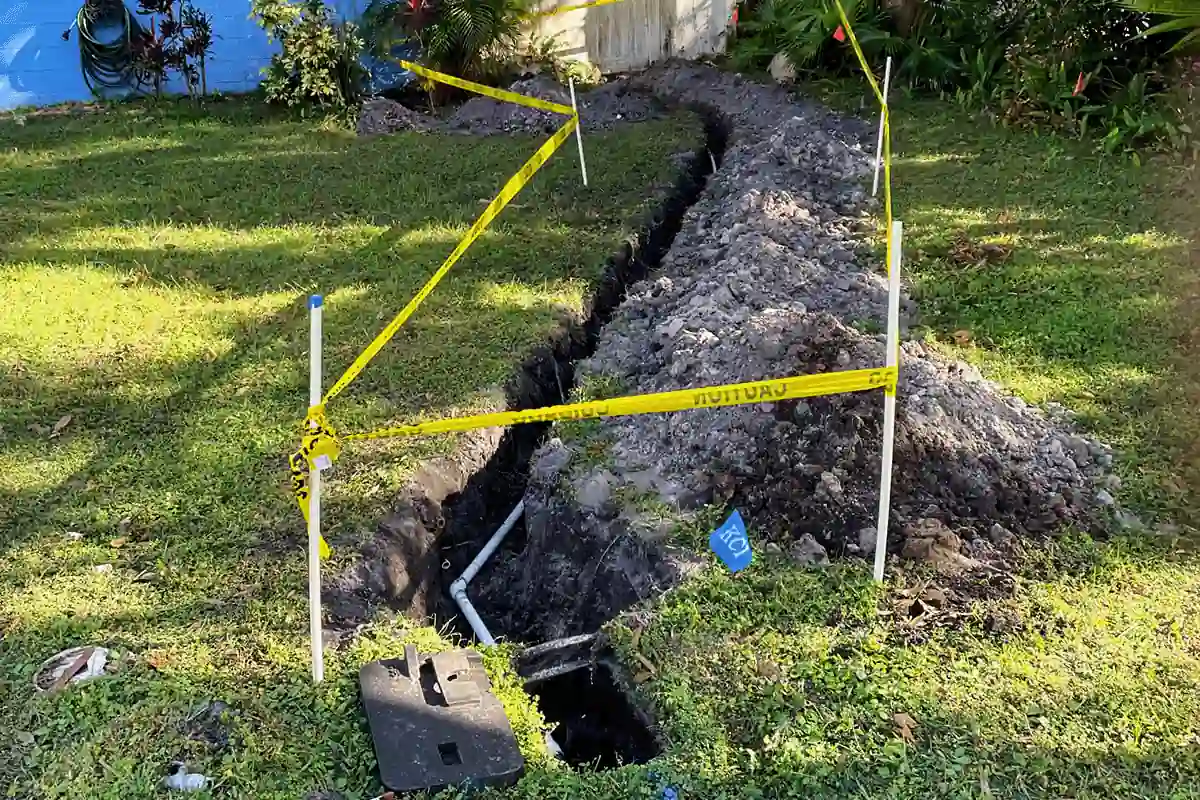
HARD WATER, SCALE BUILDUP, AND YOUR PLUMBING SYSTEM
In short: Tampa Bay’s water supply is hard — high in calcium and magnesium from the Floridan Aquifer. Over years of use, that mineral content doesn’t just affect the pipe that failed. It affects every pipe, every fitting, and every water-using appliance in the building.
A pipe that fails from mineral scale buildup is often the first visible evidence of a system-wide problem. Understanding what that means for the rest of your plumbing — and what can be done about it — is part of the honest assessment we provide on every service call.
WHAT HARD WATER DOES TO YOUR PIPES
Scale accumulates on the interior walls of metal pipes — copper and galvanized in particular. In galvanized pipe, mineral buildup compounds existing corrosion and accelerates the narrowing of the bore until pressure finds a weak point. In copper, it contributes to the pinhole leak pattern that is so common in Tampa Bay homes built in the 1960s through 1980s. The smooth, non-reactive interior of PEX pipe is far more resistant to scale adhesion — one of the primary reasons is that it is the standard recommendation for new runs and repiping in this market. If you are dealing with a mineral-related pipe failure in a copper or galvanized system, the same process has been occurring throughout the rest of the system.
THE WATER HEATER CONNECTION
The calcium and magnesium building up inside your supply lines is doing the same thing to your water heater. In tank units, mineral sediment accumulates at the bottom of the tank — reducing heating efficiency, increasing energy costs, and shortening equipment life. In tankless units, scale builds on the heat exchanger, which is the primary failure mode for tankless water heaters in the Tampa Bay market. A pipe failure caused by scale is not just a pipe problem — it is an indicator that your water heater is under the same mineral stress. The two issues share a root cause, and addressing one while ignoring the other leaves the underlying problem in place.
THE CASE FOR A WHOLE-HOUSE WATER SOFTENER
If scale-related deterioration has surfaced in your plumbing system, a whole-house water softener or filtration system addresses the source rather than the symptoms. Softened water dramatically reduces mineral scale formation throughout the plumbing system — protecting supply lines, water heater components, fixtures, and water-using appliances throughout the building. It works with every pipe material and every water heater type. For tankless water heaters in particular, a water softener is arguably the single highest-impact way to extend equipment life in this hard water market.
We do not repair a pipe and leave the root cause in place without saying something. When scale is a contributing factor, we tell you — and we can discuss what a whole-house water treatment solution looks like for your specific home or facility.
EMERGENCY PIPE REPAIR — BURST PIPES, FREEZE EVENTS & WATER LINE FAILURES
Quick answer: A burst pipe is one of the fastest ways for a building to sustain serious structural damage. The first action is always the same — locate the shutoff and turn it off. The second is calling a licensed plumber.
EVERYDAYPLUMBER.com provides emergency pipe repair services across Tampa Bay 365 days a year. When a line fails, every minute of active water flow is additional damage to flooring, walls, cabinetry, electrical systems, and structural components.
BURST PIPES — CAUSES AND IMMEDIATE STEPS
Burst pipes in Tampa Bay result from several common causes: freeze events that split rigid supply lines, pressure spikes from a failing pressure regulator, severe corrosion in aging galvanized systems, and physical damage from construction or landscaping work near buried service lines. The common thread is sudden, high-volume water release with no shutoff point except the main supply valve.
When a pipe bursts:
- Locate and turn off the main water supply — at the meter box near the street, or the main shutoff valve inside the home
- Turn off the water heater to prevent heating an empty tank
- Open a faucet at the highest point in the home to bleed remaining pressure from the lines
- Call EVERYDAYPLUMBER.com — 813-872-0200 — emergency services available 365 days a year
TAMPA BAY FREEZE EVENTS AND PIPE VULNERABILITIES
Tampa Bay averages fewer than one meaningful freeze event per decade — but when temperatures drop into the mid-20s across inland communities, the damage to unprepared plumbing can be severe and widespread. The December 2022 freeze event produced burst pipe calls across the metro for days as homes with rigid supply lines in attics and outdoor runs failed in sequence.
The freeze vulnerability hierarchy for Tampa Bay pipe materials:
- CPVC carries the highest freeze risk. Rigid and brittle in cold temperatures, CPVC outdoor runs and attic-run supply lines — common in Florida construction where there are no basements — are the most exposed. When CPVC fails in a hard freeze, it does not crack cleanly at a joint. It shatters.
- Copper fails at joints and fittings first, then along the run. Rigid, with no give as water expands.
- Galvanized carries the same rigidity risk as copper, compounded by already-narrowed bore from mineral scale — less room for pressure to find before something gives.
- PEX is the most freeze-resistant material available. It expands as water freezes rather than splitting. Not freeze-proof under all conditions, but dramatically more resilient than any rigid pipe material.
Communities with the highest freeze exposure in the Tampa Bay metro: Plant City, Dover, Valrico, Zephyrhills, Dade City, Wesley Chapel, Land O’ Lakes, Lutz, and inland Brandon. If you are in one of these areas with CPVC attic runs or older rigid supply lines, preparing before a forecast freeze — insulating exposed lines, knowing your shutoff, letting faucets run at a trickle during sub-freezing overnight lows — is practical and worthwhile.
RESIDENTIAL AND COMMERCIAL PIPE REPAIR — BUILT FOR BOTH
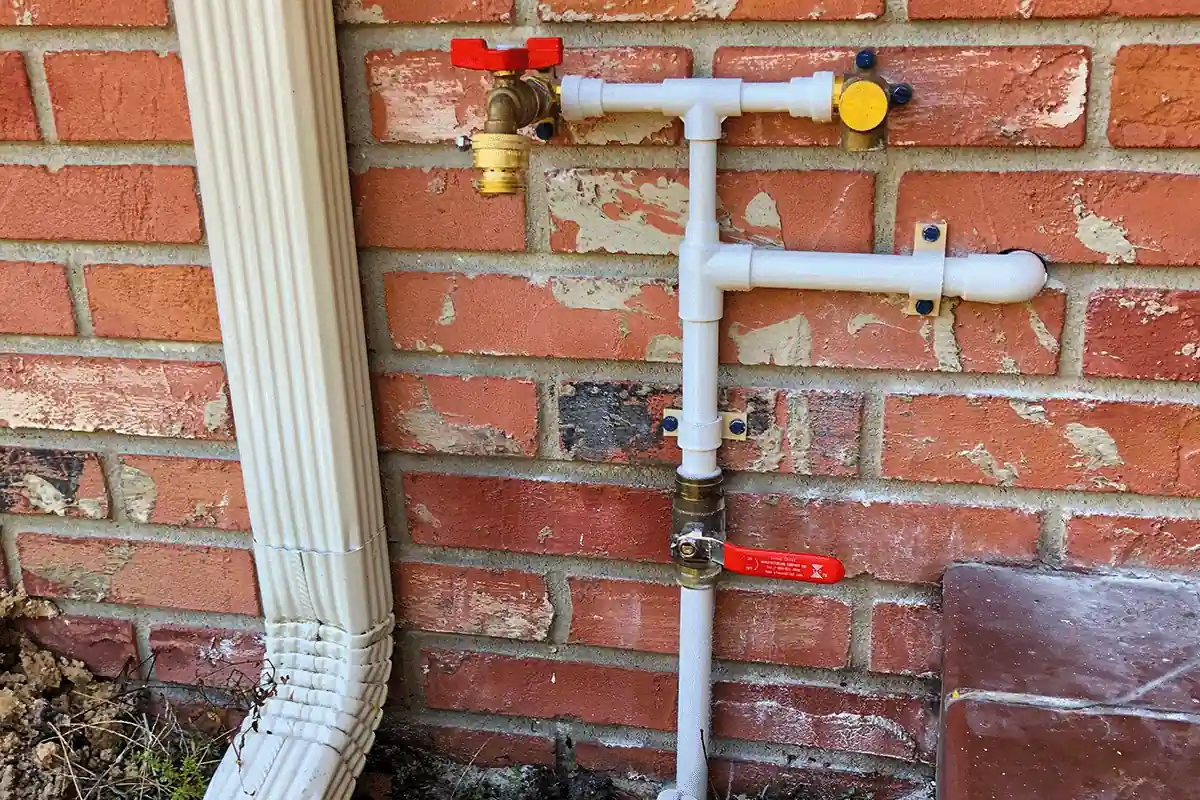
Pipe repair needs in a single-family home in Seminole Heights are not the same as in a commercial kitchen in downtown Tampa, or in a multi-unit apartment building in St. Petersburg. The pipe sizes are different. The code requirements are different. The cost of downtime is different. We have handled both residential and commercial plumbing repair throughout Tampa Bay since 2012 — and the approach we take is shaped by what each type of building actually requires.
RESIDENTIAL PIPE REPAIR
In residential settings, we handle supply line repairs, drain line repairs, slab leaks, hose bib replacements, water heater connection failures, service line repairs, and full whole-home repipes when the situation calls for it. Our approach in a home is shaped by its age, its pipe material history, and what the homeowner’s priorities are. We do not make that decision for you. We present the options, explain what each involves and why, and let you choose with complete information.
COMMERCIAL PIPE REPAIR
Commercial pipe repair involves larger-diameter lines, higher flow volumes, code compliance requirements specific to commercial occupancies, and the straightforward reality that downtime in a commercial facility costs money at a rate a residential leak simply does not. We work with restaurants, property management companies, retail facilities, office buildings, and multi-family properties throughout Tampa Bay. When a kitchen or building cannot afford to be down for an extended period, our ability to diagnose quickly, present options clearly, and execute without unnecessary delays is the service those clients are paying for.
Commercial plumbing maintenance agreements also reduce emergency repair frequency and the budget unpredictability that comes with unplanned failures. If you manage a facility or a portfolio of properties in the Tampa Bay area, we can discuss what a service relationship looks like.
FREQUENTLY ASKED QUESTIONS — PIPE REPAIR IN TAMPA BAY
How do I know if I have a slab leak?
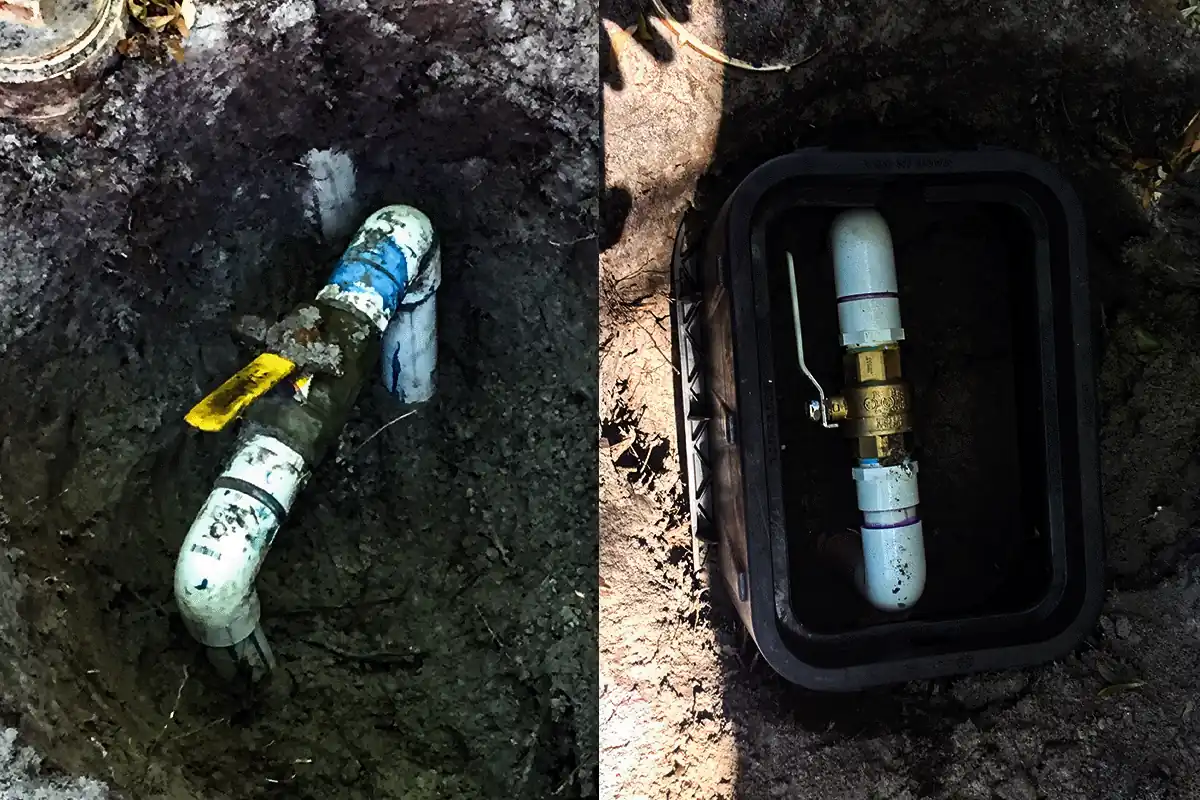
The most common signs of a slab leak in a Tampa Bay home include warm or damp spots on tile or hardwood flooring, the sound of running water when all fixtures are off, unexplained spikes in your water bill, cracks in flooring or baseboards without a structural explanation, water pooling against the exterior foundation, and a mold or mildew odor without a visible source. Because Tampa Bay homes are built on concrete slab foundations — with plumbing running through and beneath the slab — leaks under the foundation are a frequent cause of these symptoms. If two or more of these signs are present together, professional leak detection is the appropriate next step.
What is the best pipe material for Tampa Bay homes?
PEX is the material we recommend most often for new supply line runs and whole-home repipes in Tampa Bay, primarily because its non-reactive interior resists the mineral scale caused by the region’s hard water, and its flexibility makes it the most freeze-resistant pipe material available. For outdoor and UV-exposed runs, CPVC is the appropriate choice because PEX degrades in direct sunlight. Copper remains a durable and legitimate material for certain applications — particularly isolated repairs on existing copper systems in good condition. The right material depends on the application, the location, and the condition of the existing system. A single correct answer for every situation does not exist, and we do not pretend otherwise.
Can a leaking pipe be repaired without replacing the whole line?
In many cases, yes. An isolated failure — a single joint, fitting, or short pipe section with a clear cause and sound surrounding pipe — is repaired without replacing the full line. The repair-versus-replace decision depends on the pipe material, the age and condition of the surrounding system, whether failures have occurred before in the same system, and the location of the failure. Galvanized and polybutylene pipes that have begun failing tend to fail in multiple locations over time, which changes the economics significantly. A licensed plumber can assess the full picture and give you an honest recommendation rather than a default answer.
How much does pipe repair cost in Tampa Bay?
Pipe repair costs in Tampa Bay vary based on the type of leak, the pipe material, the location of the failure — an accessible fitting under a sink versus a line buried beneath a concrete slab — and the extent of the damage. A straightforward exposed fitting repair is considerably less involved than a slab leak requiring concrete access and pipe rerouting. EVERYDAYPLUMBER.com provides upfront pricing before any work begins — you know what the repair costs before we start. Financing is available through GreenSky for larger repair and replacement projects.
What causes pinhole leaks in copper pipes?
Pinhole leaks in copper pipes are primarily caused by mineral scale from hard water — a consistent issue throughout Tampa Bay, where the Floridan Aquifer source water carries high concentrations of calcium and magnesium. Over years of use, mineral deposits thin the interior pipe wall from the inside, eventually creating small perforations. Older copper systems installed in the 1960s through 1980s are the most susceptible, particularly in neighborhoods like Hyde Park, Seminole Heights, and South Tampa. A pinhole leak in an older copper system is often a signal that scale-related deterioration is occurring throughout the pipe, and an assessment of the broader system is worthwhile.
What should I do if a pipe bursts in my home?
If a pipe bursts, locate your main water shutoff immediately and turn it off — in most Tampa Bay homes this is at the meter box near the street or at the main shutoff valve inside the home, often near the water heater. Shut off the water heater as well to avoid heating an empty tank. Open a faucet at the highest point in the home to release remaining pressure from the lines. Then call a licensed plumber. EVERYDAYPLUMBER.com provides emergency pipe repair services 365 days a year. Acting immediately limits water damage to flooring, walls, structural elements, and personal property.
Is polybutylene pipe dangerous and should it be replaced?
Polybutylene is not immediately dangerous in the way a live electrical hazard would be, but it has a well-documented pattern of progressive failure that makes replacement the appropriate recommendation in most cases. Installed in homes built between approximately 1978 and 1995, polybutylene degrades from the inside out when exposed to chlorine in municipal water supplies — often with no visible exterior signs until failure occurs. It was the subject of a major class-action settlement due to widespread failure rates across the country. If your home was built during this period and has never been professionally assessed or repiped, having a licensed plumber evaluate whether polybutylene is present is a reasonable and worthwhile step.
How do I find a reliable pipe repair plumber in Tampa Bay?
A reliable pipe repair plumber in Tampa Bay should be licensed and insured, experienced with the specific pipe materials and building stock common to the region — galvanized steel, polybutylene, copper, CPVC, and PEX — and willing to give honest repair-versus-replace recommendations rather than defaulting to the more profitable option. Look for a company with transparent upfront pricing, a verifiable local track record, and direct communication about what they find. EVERYDAYPLUMBER.com has been serving Tampa Bay residential and commercial customers since 2012, holds Master Plumber license #CFC1428537, and has earned over a thousand five-star Google reviews from customers throughout Hillsborough, Pinellas, and Pasco counties.
SERVICE AREAS — PIPE REPAIR ACROSS TAMPA BAY
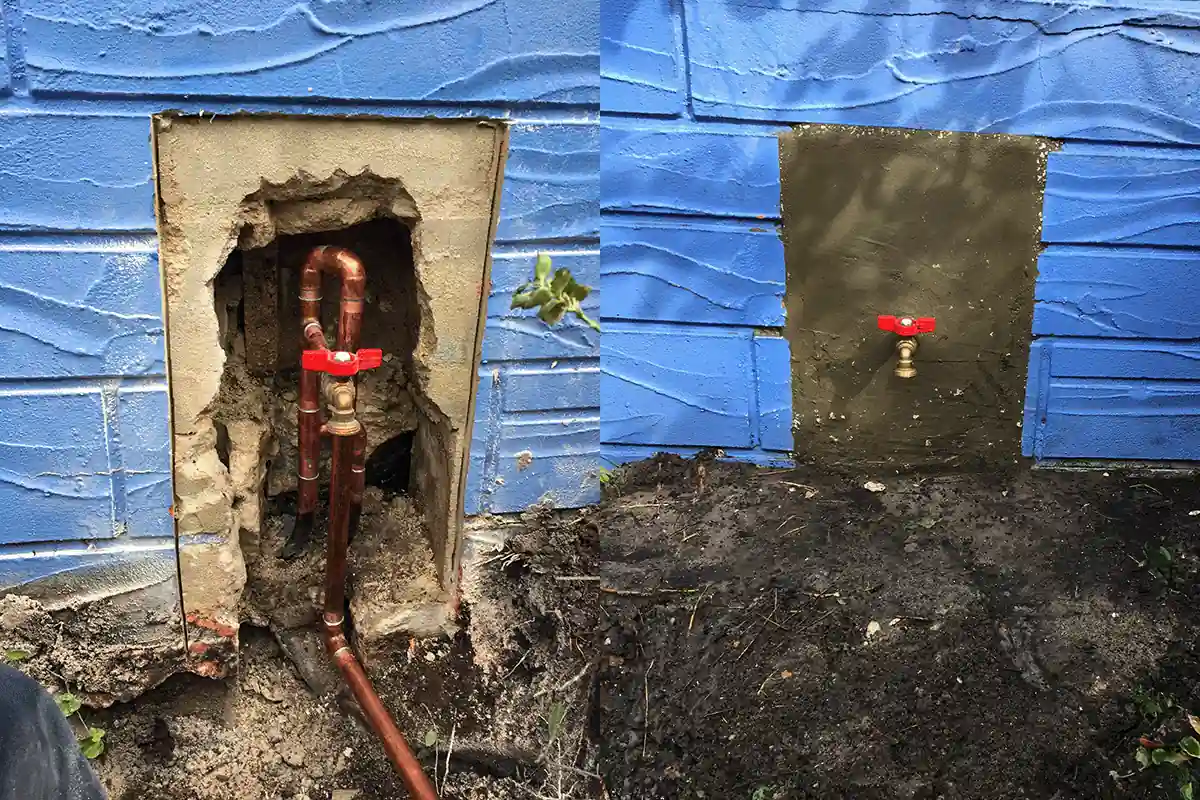
EVERYDAYPLUMBER.com provides pipe repair, slab leak repair, burst pipe response, and emergency plumbing services throughout the Tampa Bay area. We serve Tampa, St. Petersburg, Clearwater, Brandon, Riverview, Gibsonton, Ruskin, Sun City Center, Apollo Beach, Valrico, Plant City, Dover, New Tampa, Temple Terrace, Lutz, Land O’ Lakes, Wesley Chapel, Zephyrhills, Dade City, Seminole, Largo, Dunedin, Safety Harbor, Tarpon Springs, Pinellas Park, Oldsmar, and surrounding communities throughout Hillsborough County, Pinellas County, and Pasco County.
WHY TAMPA BAY CHOOSES EVERYDAYPLUMBER.COM FOR PIPE REPAIR
Tampa Bay homeowners and businesses have trusted EVERYDAYPLUMBER.com with their pipe repair needs since 2012 — and we have earned over a thousand five-star Google reviews by diagnosing honestly, repairing correctly, and communicating clearly at every step. Here is what that looks like in practice.
LICENSED, EXPERIENCED, AND BUILT FOR THIS MARKET
Mike Haisten, EVERYDAYPLUMBER.com’s owner and Master Plumber (license #CFC1428537), has spent more than a decade working through Tampa Bay’s specific plumbing challenges — the hard water chemistry, the galvanized systems in Seminole Heights bungalows, the polybutylene in Carrollwood subdivisions, the CPVC attic runs that do not hold up in a hard freeze. Our team brings that depth of regional knowledge to every service call because you cannot get it from a franchise manual.
NO COOKIE-CUTTER APPROACH
Every building we enter has its own history — its own pipe materials, its own water usage patterns, its own maintenance record, and its own set of constraints. A repair solution that makes perfect sense in a 1958 Hyde Park home does not automatically apply to a 1992 Brandon townhouse or a commercial kitchen on Channelside. We have been evaluating Tampa Bay plumbing systems since 2012 because situational judgment — reading what is actually in front of you and recommending accordingly — is the only way to give people the right answer. We present the options. You decide with complete information.
UPFRONT PRICING, EVERY TIME
You know what the repair costs before we start. Not an estimate that expands once we are inside the wall. Not a quote that shifts after we have already begun. We explain what we found, what the repair options are, and what each costs — then we step back and let you make the decision. No pressure tactics, no surprises on the invoice.
EMERGENCY PIPE REPAIR — 365 DAYS A YEAR
A burst pipe or active slab leak does not wait for business hours. Emergency pipe repair services are available every day of the year across Hillsborough, Pinellas, and Pasco counties. When you call EVERYDAYPLUMBER.com, you reach a real person who can dispatch a licensed plumber to your location.
TRUSTED BY TAMPA BAY’S MOST DEMANDING CLIENTS
EVERYDAYPLUMBER.com serves residential homeowners and commercial facilities throughout the metro — including major hospitality groups, property management companies, and commercial accounts that cannot afford downtime or surprises. When clients whose facilities operate every day of the year call us first, that is a standard we hold to on every residential job as well.
READY TO SCHEDULE PIPE REPAIR SERVICE?
EVERYDAYPLUMBER.com has been diagnosing and repairing pipe failures across Tampa Bay since 2012. Whether you are dealing with a pinhole leak in an older copper system, a burst line from a freeze event, a slab leak that has finally surfaced, or a galvanized system that has given you its last warning — we will evaluate what is actually in front of us and give you honest options to fix it right.
EVERYDAYPLUMBER.com
3912 W South Ave, Tampa, FL 33614
Florida License #CFC1428537
A+ BBB Rated | 1,000+ Five-Star Google Reviews
EVERYDAYPLUMBER.com is a family-owned Tampa plumbing company providing professional pipe repair services across Hillsborough, Pinellas, and Pasco counties since 2012. Licensed, insured, and trusted by thousands of local customers.