


REPIPE SPECIALISTS OF TAMPA BAY
365 Days Emergency Service Across Hillsborough, Pinellas, and Pasco
- Tampa | St. Petersburg | Clearwater | Brandon | Wesley Chapel
- Galvanized, Copper, Polybutylene & CPVC — We Replace It All
- Uponor PEX-A — The Gold Standard in Repiping
- Residential & commercial | Emergency Service
Whole House Repiping in Tampa Bay
Quick answer: A whole house repipe replaces your home’s aging water supply lines — from the main shutoff to every fixture — with new Uponor PEX-A piping. EVERYDAYPLUMBER.com has been completing repipes across Tampa Bay since 2012. Most jobs are done in two to three days. All work is permitted, inspected, and backed by a lifetime labor warranty.
A repipe is not a repair. It’s a permanent solution — the decision you make when pinhole leaks keep returning, when your water pressure has quietly dropped over the years, when your water looks or tastes off, or when a plumber tells you the pipes in your walls are past the point of patching. It’s also the decision you make when your insurance company starts asking questions about galvanized or polybutylene lines.
EVERYDAYPLUMBER.com serves Hillsborough, Pinellas, and Pasco counties. We pull the permits, we schedule the inspections, we leave the site clean and tidy when the job is done, and we back our labor with a warranty that doesn’t expire.
What’s Included in a Whole House Repipe?
A complete repipe with EVERYDAYPLUMBER.com includes:
- Full replacement of all hot and cold water supply lines throughout the home
- New fixture shutoff valves and supply lines at every connection point
- New main shutoff valve where needed
- Uponor PEX-A piping throughout your home — no mixing of materials
- All required permits pulled and inspections scheduled
- Final walkthrough and documentation
Financing is available through GreenSky — ask about payment options when you call.
What a Repipe Does NOT Include
A supply line repipe replaces your water supply pipes — the lines that bring pressurized water to your fixtures. It does not include drain lines, sewer lines, or fixture replacement. If your drains or sewer system have issues, those are separate scopes of work.
How Long Does a Repipe Take?
Most residential repipes in Tampa Bay are completed in two to three days. Larger homes or homes with complex layouts may take longer. We do our best to ensure you have water flow restored at the end of each working day — we never want our customers to go through a night without running water.
SIGNS YOUR PIPES ARE FAILING
Pipe failure in Tampa Bay rarely announces itself all at once. It shows up as a pattern of symptoms that most homeowners ignore for years — until a pipe bursts, a slab leak develops, or an insurance adjuster starts asking questions. If you recognize more than one of the following, it’s time to have your pipes evaluated.
Water Quality & Appearance
- Rust-colored or brown water — especially first thing in the morning after overnight sitting
- Water that tastes metallic or has an odd smell
- White or yellowish buildup on faucet aerators and showerheads that reappears quickly after cleaning
- Discoloration in laundry — particularly whites coming out dingy or stained
Discolored water is corroding pipe material actively entering your water supply. In galvanized steel pipes, that means iron. In copper, it often means oxidation from pinhole leaks or aggressive water chemistry. Neither is something you want to continue running through your family’s taps. If you’re observing these signs in your home, it may also be wise to consider installing a whole-home water filtration system.
Pressure & Flow Problems
- Low water pressure that has developed gradually over months or years
- Pressure that drops noticeably when multiple fixtures run simultaneously
- Slow-filling dishwashers, washing machines, or bathtubs
- Uneven pressure between rooms or floors
Mineral buildup inside galvanized and copper pipes progressively restricts the interior diameter over decades. A pipe that started at ¾” inside diameter can be reduced to a fraction of that by scale and corrosion. No amount of drain cleaning or pressure adjustment fixes this — the restriction is inside the pipe wall itself.
Leak History & Structural Signals
- Pinhole leaks that have required repair more than once — in any location
- Water stains on walls or ceilings with no obvious source
- Unexplained spikes in your water bill
- Warm spots on floors, which may indicate a slab leak from a copper supply line
- Mold or mildew appearing in walls without an obvious moisture source
- Your insurance company flagging or refusing to renew due to pipe material (common with polybutylene)
One pinhole leak is a repair. Two pinhole leaks is a pattern. Three is a system telling you it’s done.
TAMPA BAY’S PIPE PROBLEM — A LOCAL HISTORY
In short: the pipes under Tampa Bay homes were installed in waves tied to specific eras of construction — each with its own material, its own lifespan, and its own failure mode. Knowing when your home was built tells you a great deal about what’s in your walls right now, and what it’s likely doing.
According to U.S. Census Bureau data, the median age of housing in the Tampa Bay Area now exceeds 40 years. That puts the majority of the region’s residential housing stock squarely in the era of galvanized steel, early copper, and polybutylene — three materials that are all failing on predictable timelines right now, across predictable neighborhoods, in predictable ways.
Pre-1960: The Galvanized Era — Hyde Park, Ybor City, Seminole Heights, West Tampa
Galvanized steel pipe was the standard residential water supply material in America from the early 1900s through approximately the late 1950s. It was zinc-coated to resist corrosion — a coating that worked well for a few decades and then stopped working entirely.
The zinc lining depletes over time, and once it’s gone, the steel beneath begins to rust from the inside out. The rust builds up as scale, progressively narrowing the pipe’s interior. Eventually, the pipe wall thins enough that pinhole leaks begin — first one, then several, then many. By the time a home with galvanized supply lines is 60 to 70 years old, the pipes are typically corroded throughout their length.
Tampa Bay neighborhoods with the highest concentration of galvanized infrastructure:
- Hyde Park and Palma Ceia — significant pre-war housing stock, some of the oldest pipes in the city
- Ybor City — 1890s through 1930s construction era
- Seminole Heights — heavy 1920s–1940s bungalow stock
- West Tampa — pre-war residential development
- Parts of downtown St. Petersburg and Gulfport
If your home was built before 1960 and has never been repiped, there is a very strong probability that galvanized pipes are still in the walls. At 60 to 80-plus years of age, they are not failing — they have failed. The question is how visibly.
1960–1978: The Copper Era — Carrollwood, Town ‘N’ Country, Temple Terrace, Early Brandon
Copper replaced galvanized as the dominant residential pipe material through the 1960s and 1970s, and for good reason — it’s more corrosion-resistant, longer-lasting, and doesn’t rust the way galvanized does. A well-maintained copper system in a home with neutral water chemistry can last 50 to 70 years.
Tampa Bay is not a good environment for copper pipe longevity. Hillsborough County’s water supply carries elevated levels of chlorine, chloramines, and dissolved minerals that are chemically aggressive toward copper. The result is accelerated pinhole leak development — the pipe wall thins unevenly, small perforations develop, and the leaks appear with no warning and no pattern. A home with copper pipes installed in the 1960s or early 1970s is now 50 to 60 years into that material’s service life under conditions that stress it more than most of the country.
Tampa Bay neighborhoods with high concentrations of original copper supply lines:
- Carrollwood and Greater Carrollwood — heavily developed in the 1960s and 1970s
- Town ‘N’ Country — major residential buildout in the same era
- Temple Terrace — postwar suburban development
- Original Brandon — early Brandon residential construction
- Parts of St. Petersburg developed in the 1960s–1970s
Tampa Bay’s hard water is the accelerant. A copper pipe that might last 70 years in Denver or Chicago may develop pinhole leaks in Tampa after 40 to 50 years. The chemistry of the water — not just the age of the pipe — determines the timeline.
1978–1995: The Polybutylene Era — The Worst Pipe Material Ever Put in American Homes
Polybutylene — a gray or blue-gray flexible plastic pipe — was installed in millions of American homes between approximately 1978 and 1995. It was cheap, easy to install, and considered a modern alternative to copper at the time. It was also defective.
Polybutylene reacts with chlorine and other oxidants in municipal water supplies. Over time, the pipe becomes brittle, develops micro-fractures throughout its length, and fails — sometimes with catastrophic sudden bursting, sometimes with slow leaks that go undetected inside walls for months. The failure mode is impossible to predict: a polybutylene system can look fine right up until the moment it doesn’t.
The defect was significant enough to result in a class action lawsuit (Cox v. Shell) that settled in 1995 for nearly one billion dollars. The settlement claims period has long since closed. Homeowners with polybutylene today have no legal recourse and only one real option: replacement.
Tampa Bay neighborhoods with high polybutylene concentrations:
- Parts of Wesley Chapel and Land O’Lakes — heavy 1980s–early 1990s development
- New Tampa — significant late-1980s construction activity
- Parts of Riverview and Valrico developed in the same era
- Condominiums and townhome developments built throughout Tampa Bay in the 1980s
If your home was built between 1978 and 1995 and has never been repiped, have it evaluated for polybutylene before it evaluates itself for you.
Tampa Bay’s Hard Water Makes Every Pipe Problem Worse
Hillsborough County’s water supply is classified as hard to very hard — high in calcium, magnesium, and other dissolved minerals. Hard water is not a health hazard, but it is a plumbing hazard. It deposits scale inside pipes, accelerates corrosion in metal pipes, shortens the lifespan of water heaters and appliances, and creates the white crusty buildup on faucets and showerheads that Tampa Bay homeowners deal with constantly.
The practical effect: Tampa Bay pipes fail faster than the same materials installed in most of the country. Galvanized steel that might last 60 years in a low-mineral-content environment may fail at 40 in Tampa. Copper that might survive 70 years elsewhere may start developing pinhole leaks at 45. Hard water is the multiplier applied to every pipe failure timeline in this market.
A whole house water softener addresses the root cause — protecting not just the new pipes from your repipe investment, but every fixture, appliance, and water-using system in the home. We cover this in detail in the Water Softeners section below.
THE PIPE MATERIALS: WHAT’S IN YOUR WALLS
Quick answer: The material your home was built with determines how it fails, how urgently it needs replacement, and what the repipe process looks like. Here’s a plain-language breakdown of every material EVERYDAYPLUMBER.com replaces.
Galvanized Steel
- Era: Pre-1960s
- Appearance: Dull gray, heavy metal pipe — often visible in attics, under sinks, or in utility areas
- How it fails: Zinc coating depletes, interior rusts and scales, pipe walls thin, pinhole leaks develop and multiply
- Warning signs: Rust-colored water, dramatically reduced pressure, visible orange staining on fixtures
- EDP recommendation: Full replacement — no galvanized system of significant age is worth repairing
Copper
- Era: 1960s–present (though largely replaced by PEX in new construction)
- Appearance: Recognizable orange-brown metallic pipe
- How it fails: Pinhole leaks from chloramine and hard water corrosion; Tampa Bay’s water chemistry accelerates this significantly
- Warning signs: Water stains on walls or ceilings, unexplained water bill increases, warm spots on floors indicating slab leaks
- EDP recommendation: Evaluation and camera leak detection first. Widespread pinhole leak history = repipe. Isolated failures in an otherwise sound system = targeted repair.
Polybutylene
- Era: 1978–1995
- Appearance: Gray or blue-gray flexible plastic pipe, typically ½” or ¾” diameter
- How it fails: Oxidant degradation causes internal micro-fracturing; pipe becomes brittle and fails without warning
- Warning signs: Often none until the leak occurs — polybutylene failure is notoriously unpredictable
- Insurance implications: Many Tampa Bay insurance carriers now refuse to write or renew policies on homes with polybutylene supply lines. If your insurer is asking, this is why.
- EDP recommendation: Full replacement. There is no repair for systemic polybutylene degradation.
CPVC
- Era: 1970s–2000s
- Appearance: Cream or off-white rigid plastic pipe
- How it fails: Becomes brittle with age and exposure to certain chemicals; joints fail before the pipe itself in many cases
- Warning signs: Visible cracks at fittings, leaks at joint connections, pipe that snaps rather than bends when stressed
- EDP recommendation: Varies by age and condition. CPVC from the 1970s–1980s warrants evaluation. Widespread joint failures indicate systemic replacement.
Why EVERYDAYPLUMBER.com Uses Uponor PEX-A
Not all PEX is the same — and the difference between PEX-A and standard PEX-B or PEX-C is not a marketing distinction. It’s a material science distinction that affects how the pipe performs, how long it lasts, and how resistant it is to the specific conditions inside Tampa Bay’s water supply.
PEX — cross-linked polyethylene — comes in three grades: A, B, and C. The letter refers to the method of cross-linking used during manufacturing. PEX-A, produced using the Engel method, achieves the highest degree of cross-linking of any PEX variant. That higher cross-linking is what gives it superior flexibility, coil memory (the ability to repair itself at kinks), and the strongest long-term resistance to the chlorine and chloramines in Tampa Bay’s municipal water.
PEX-A vs. PEX-B: What the Difference Means for Your Home
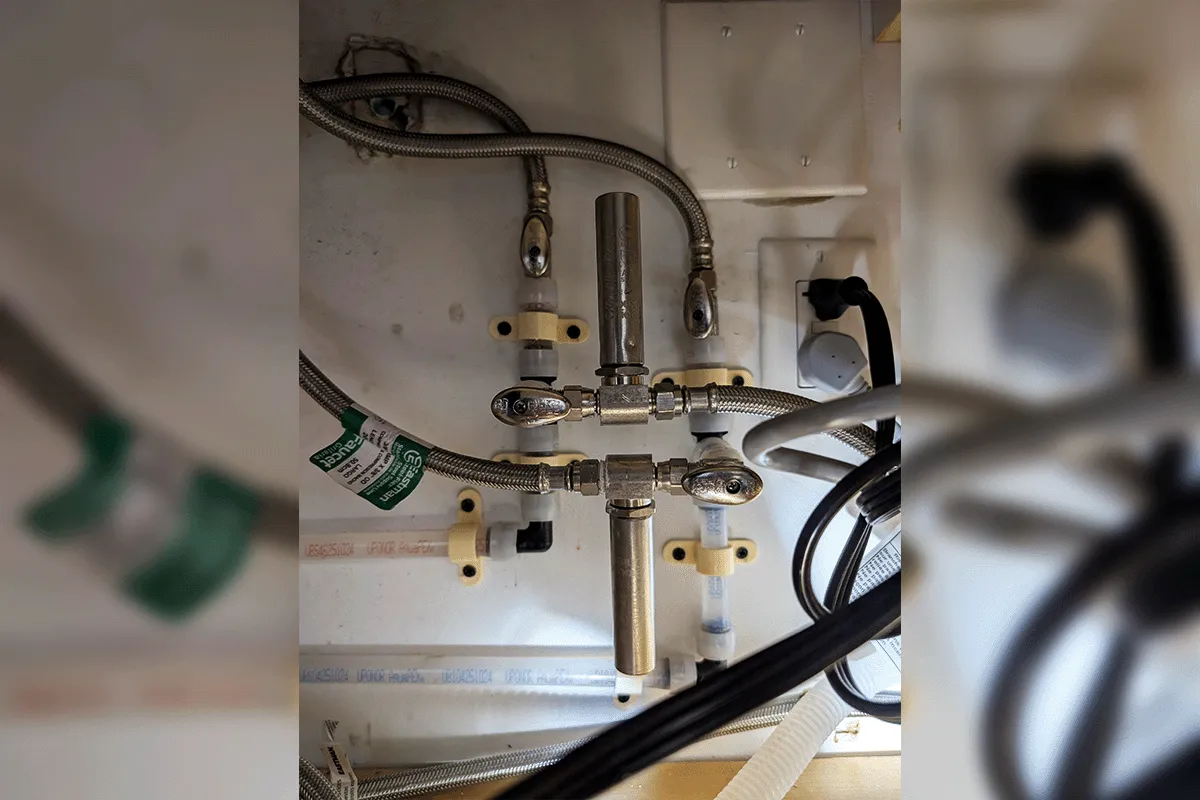
- Flexibility: PEX-A is significantly more flexible than PEX-B, allowing it to navigate tight spaces without additional fittings — fewer fittings means fewer potential failure points
- Kink resistance: PEX-A can be kinked and restored with a heat gun; PEX-B cannot and must be cut out and replaced
- Chlorine resistance: PEX-A carries a chlorine resistance rating of 5 (the highest possible per ASTM F2023) — critical in Tampa Bay where chloramine levels are consistently elevated
- Expansion fittings: Uponor’s ProPEX expansion fitting system creates a joint that actually gets stronger over time as the pipe contracts around the fitting — the opposite of a joint that loosens with age
- 25-year manufacturer warranty on Uponor AquaPEX piping when installed with ProPEX fittings
Why Uponor Specifically
There are multiple PEX-A manufacturers. EVERYDAYPLUMBER.com uses Uponor because of their 30-plus year track record in the North American market, the consistency of their manufacturing quality, and the strength of their warranty program. Uponor has more than 17 billion feet of PEX piping in service worldwide. Their AquaPEX product line is the standard by which other PEX-A products are measured.
We’re not agnostic about materials. You’re making a decades-long investment in your home’s water system. The pipe that goes in the walls should be the best available option for your specific environment — and in Tampa Bay, that’s Uponor PEX-A with ProPEX expansion fittings.
The EDP Repipe Warranty
EVERYDAYPLUMBER.com backs all repipe labor with a lifetime warranty — the strongest labor warranty in the Tampa Bay repiping market.
- Lifetime warranty on all repipe labor — no expiration, no fine print
- 10-year transferable warranty on parts — transfers to the next owner if you sell
- 25-year manufacturer warranty on Uponor AquaPEX piping
- All work permitted and inspected through the appropriate county jurisdiction
A warranty is only as good as the company standing behind it. EVERYDAYPLUMBER.com has been in business since 2012 with a permanent physical address at 3912 W South Ave, Tampa, FL 33614. We’re not a pop-up operation that won’t be here to honor a claim.
Water Softeners — Protecting Your Repipe Investment
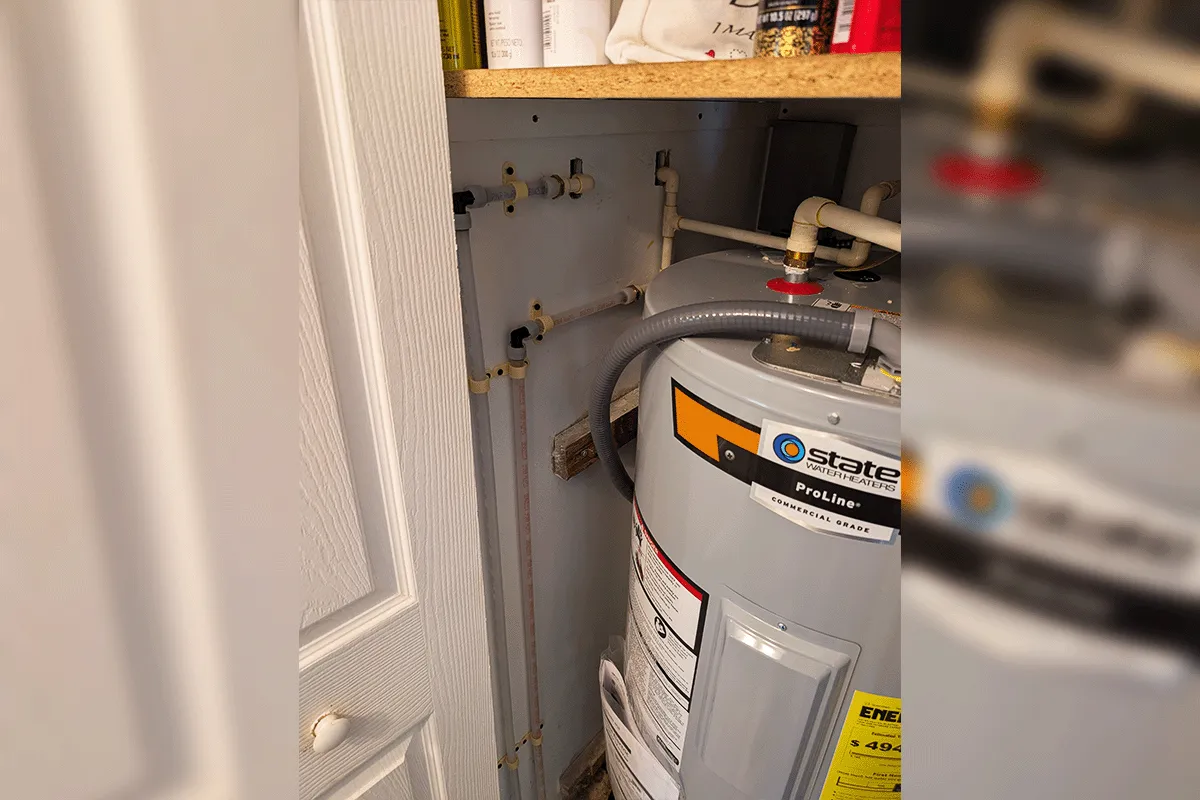
A whole house repipe is one of the most significant plumbing investments a Tampa Bay homeowner can make. A whole house water filtration system is the most effective way to protect that investment — and every other water-using system in your home — from the chemistry of Tampa Bay’s hard water supply.
Hillsborough County’s water supply is classified as hard to very hard. That mineral content is what’s responsible for the white scale on your faucets, the film in your shower, the shortened lifespan of your water heater, and a significant portion of the wear on your pipes over time. Soft water doesn’t fix broken pipes. But it dramatically extends the life of new ones — and it does the same for your fixtures, appliances, and water heater.
What Hard Water Does to Your Plumbing Over Time
- Deposits mineral scale inside supply lines, progressively restricting flow
- Accelerates corrosion in copper pipes through ion exchange at the pipe wall
- Shortens water heater lifespan by building sediment in the tank and on heating elements
- Damages washing machine, dishwasher, and ice maker components
- Reduces soap and detergent effectiveness, increasing usage and cost
- Creates the white calcium deposits on faucets, showerheads, and glass surfaces
The same water chemistry that helped destroy your old galvanized or copper pipes doesn’t stop working just because you installed new PEX-A. A softener addresses the source — not the symptoms.
What a Water Softener Does
A whole house water softener uses an ion exchange process to remove calcium and magnesium from the water supply before it reaches your pipes, fixtures, and appliances. The result is water that is chemically neutral toward your plumbing — water that doesn’t leave scale, doesn’t accelerate corrosion, and doesn’t shorten the service life of the equipment it runs through.
- Extends the life of your new PEX-A repipe
- Dramatically reduces scale buildup in water heaters — extending lifespan and efficiency
- Protects washing machines, dishwashers, and ice makers
- Eliminates white mineral deposits on fixtures and glass
- Improves soap lather and reduces detergent consumption
- Softer skin and hair — a benefit most Tampa Bay homeowners notice within days
The Repipe + Softener Combination
The most logical time to evaluate a water softener is immediately after a repipe — when the supply lines are new, clean, and at their maximum capacity. Installing a softener at this point protects that investment from the first day of service. Waiting until after scale and mineral damage accumulate in the new system costs you years of performance you can’t recover.
EVERYDAYPLUMBER.com installs whole house water softeners and filtration systems across Tampa Bay. If you’re scheduling a repipe estimate, ask us about softener options at the same visit — we can evaluate your water quality and size a system appropriately for your home.
The EVERYDAYPLUMBER.com Repipe Process
A repipe is a significant undertaking in your home. The process should be transparent, organized, and executed with minimal disruption to your household. Here’s exactly how EVERYDAYPLUMBER.com handles every repipe from the first call to the final inspection.
Step 1 — Comprehensive In-Home Estimate
A repipe cannot be accurately quoted over the phone. The size of the home, the number of fixtures, the attic access, the slab or raised foundation configuration, and the location of the existing supply lines all factor into the scope of work. EVERYDAYPLUMBER.com provides complete and comprehensive in-home repipe estimates — a licensed plumber visits the property, assesses the full scope, and provides upfront pricing before any commitment is made.
The estimate visit is also the right time to discuss water softener options, fixture upgrades, and anything else you want to address while the walls are open.
Step 2 — Permitting
Whole house repipes require permits in Hillsborough, Pinellas, and Pasco counties — and EVERYDAYPLUMBER.com pulls every required permit before a tool is picked up. We handle the permit application, coordinate with the county inspection office, and ensure the job is scheduled for final inspection before we close it out. We never ask homeowners to pull their own permits, and we do not perform repipes without them.
If a company offers you a repipe without mentioning permits, that’s not a savings — it’s a liability. Unpermitted work voids manufacturer warranties, creates complications at resale, and leaves you without the inspection that verifies the work was done correctly.
Step 3 — Installation Day(s)
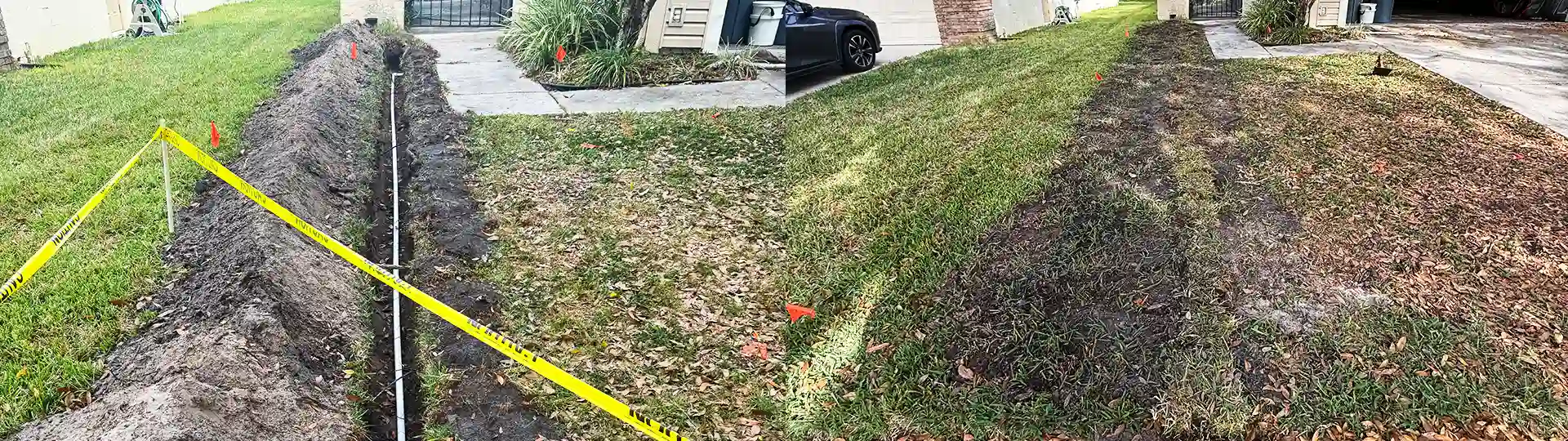
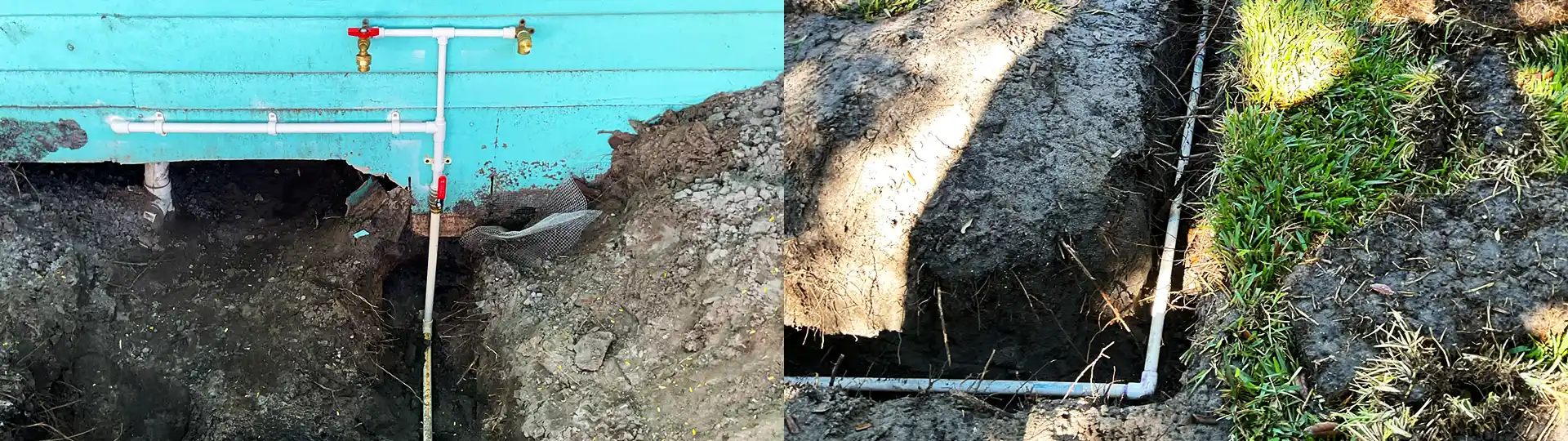
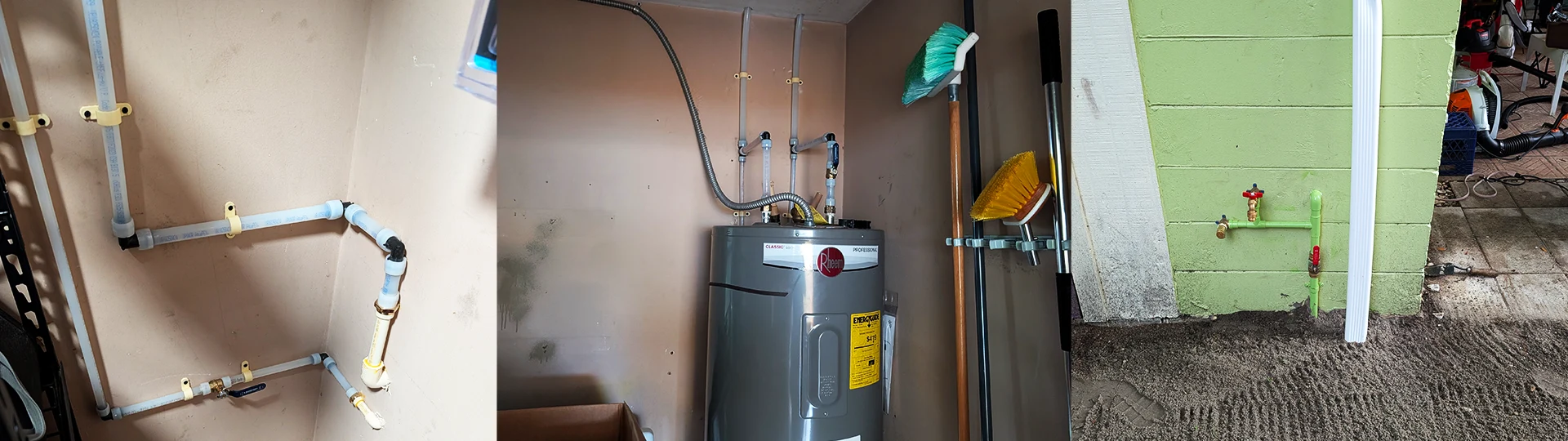
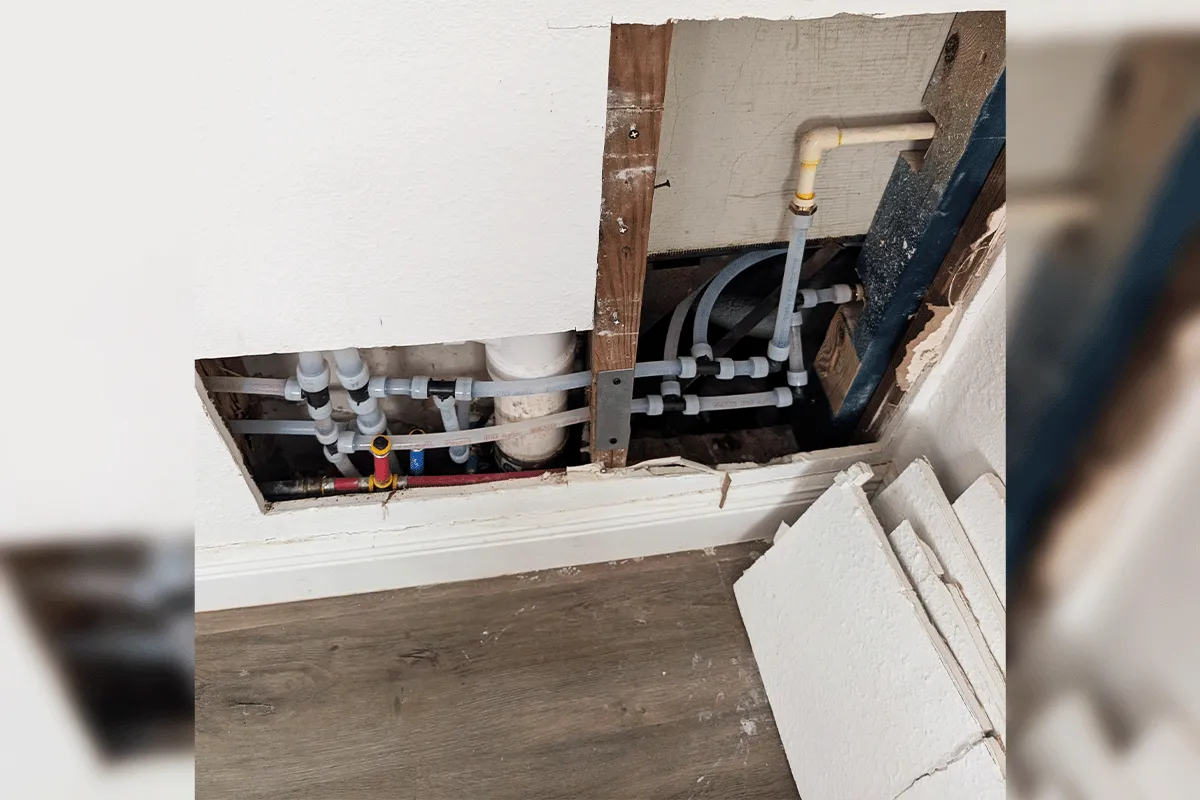
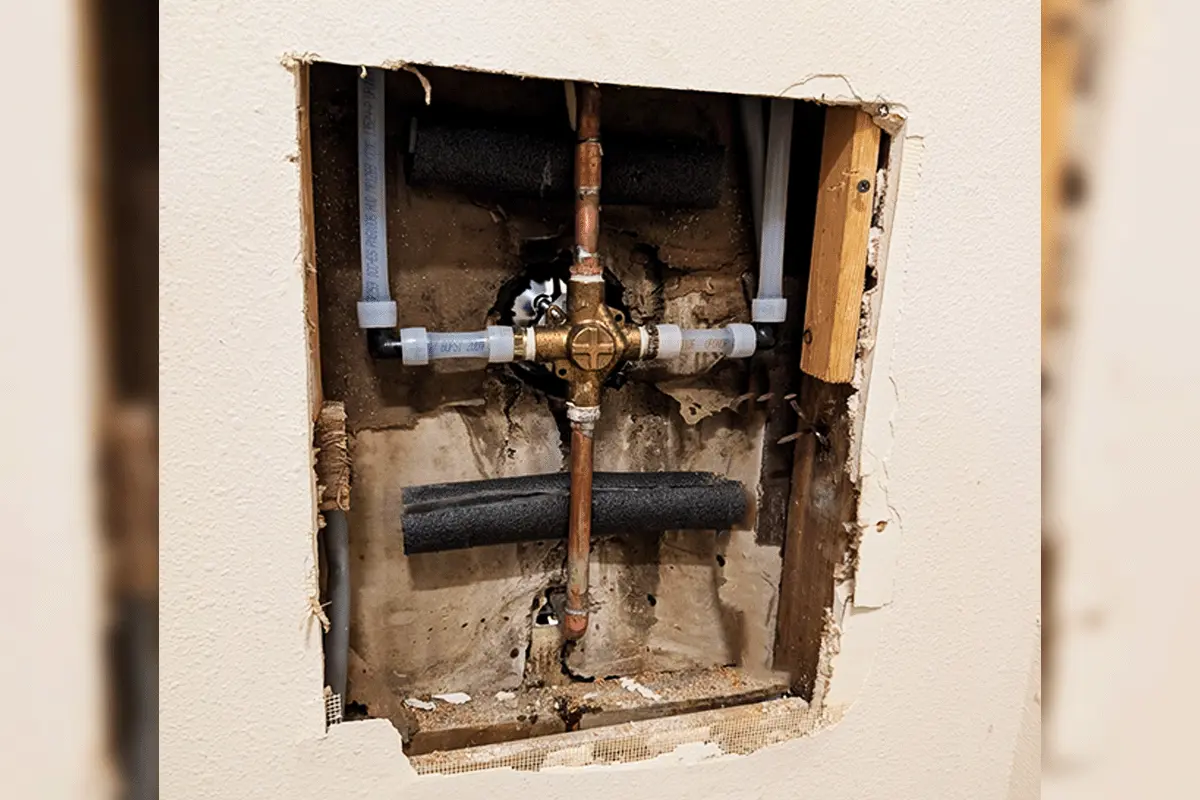
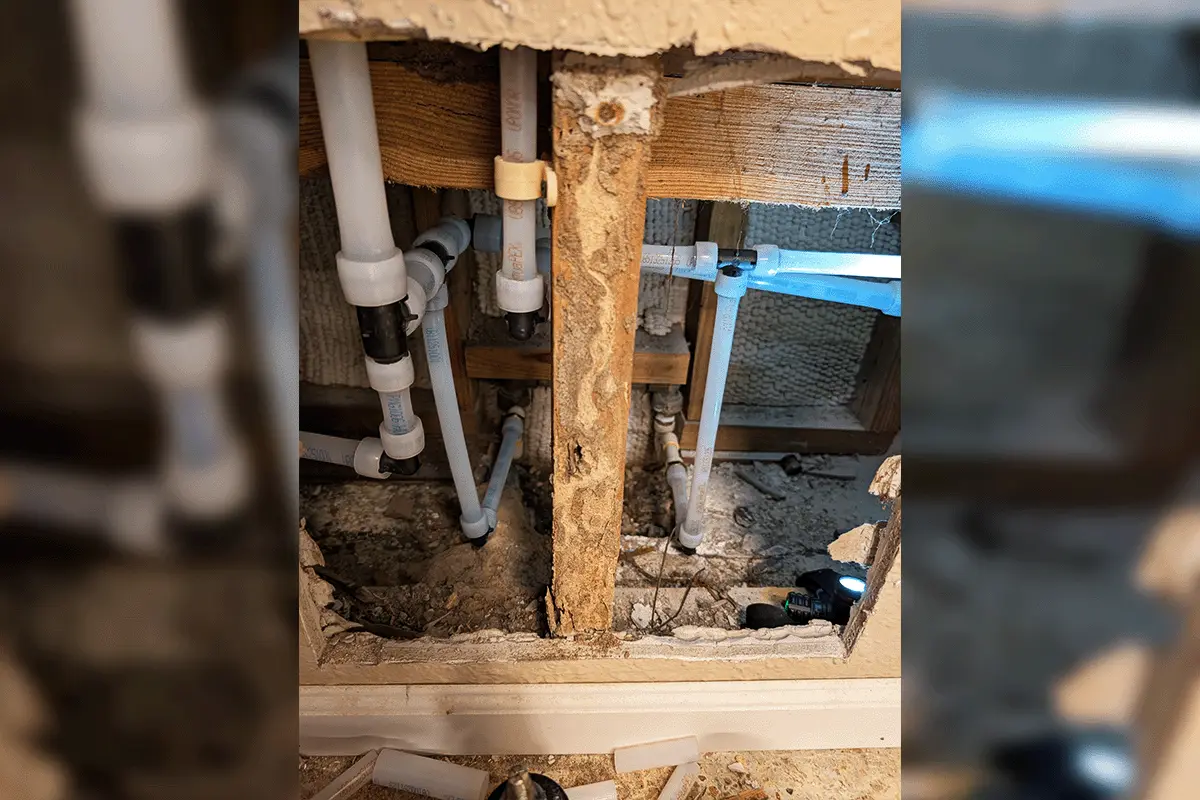
The crew arrives with everything needed to complete the job. We protect your flooring and furniture with drop cloths and plastic sheeting before any work begins. Small access holes are made in drywall at strategic locations to route the new Uponor PEX-A lines. The existing supply lines are disconnected and capped, and the new system is installed from the main shutoff through every fixture in the home.
- We strive to restore running water at the end of each working day — we try to ensure you are never without water overnight
- All new fixture shutoff valves and supply lines installed
- New main shutoff valve installed where the existing valve is corroded or failing
- System pressure-tested before any access points are closed
Step 4 — Inspection & Cleanup
After installation, we schedule the municipal inspection through the county. The inspector verifies that the new system meets code requirements and signs off on the permit. After inspection approval, our team leaves the worksite as clean and tidy as possible.
The job is complete when the permit is closed, the site is clean, and you have documentation of the inspection approval. That documentation matters at resale — a buyer’s inspector will ask whether the repipe was permitted, and you’ll have the answer.
Financing Your Tampa Bay Repipe
A whole house repipe is a significant investment — and it’s one that most homeowners don’t budget for in advance. EVERYDAYPLUMBER.com offers flexible financing through GreenSky, a leading home improvement lending program, so you can protect your home’s plumbing without having to absorb the full cost upfront.
Financing a repipe makes practical sense: you’re replacing infrastructure that protects your home, your belongings, and your family from water damage. Deferring that work because of upfront cost often means paying more later — in emergency repairs, water damage remediation, and increased insurance premiums. Financing lets you address the problem on your timeline, not the pipe’s.
WHEN to Apply
Financing is discussed and initiated during or after your comprehensive in-home repipe estimate. There is no obligation to apply at the estimate visit — it’s simply the most convenient time since we’ll have the full scope of work and pricing in hand. The application process is straightforward and decisions are typically returned quickly.
Financing + Insurance Considerations
If your insurance company has flagged your polybutylene supply lines and is threatening non-renewal, financing a repipe becomes a different calculation entirely. The cost of replacing polybutylene pipes financed over 15 months with no interest may be significantly lower than the increase in your homeowners insurance premium — or the cost of finding a new insurer willing to cover the home at all. EVERYDAYPLUMBER.com can complete a polybutylene repipe quickly and provide documentation that satisfies most insurer requirements.
Common Questions About Whole House Repiping
How much does a whole house repipe cost in Tampa Bay?
Repipe cost varies based on home size, number of bathrooms, pipe accessibility, foundation type (slab vs. raised), and scope of work. Most residential repipes in Tampa Bay fall in the range of several thousand dollars. EVERYDAYPLUMBER.com provides in-home estimates with upfront pricing before any commitment is made — the price quoted is the price on the invoice. We never provide phone estimates because a number without a site assessment is a guess, not a quote.
Will my homeowners insurance cover a repipe?
Homeowners insurance generally does not cover a whole house repipe as a planned maintenance item. However, it may cover water damage caused by a burst pipe or sudden leak — which is a compelling reason to repipe proactively before that event occurs. Some insurance carriers will offer premium reductions after a polybutylene repipe is completed and documented. Check with your insurer directly about what documentation they require.
Do I have polybutylene pipes and what should I do about it?
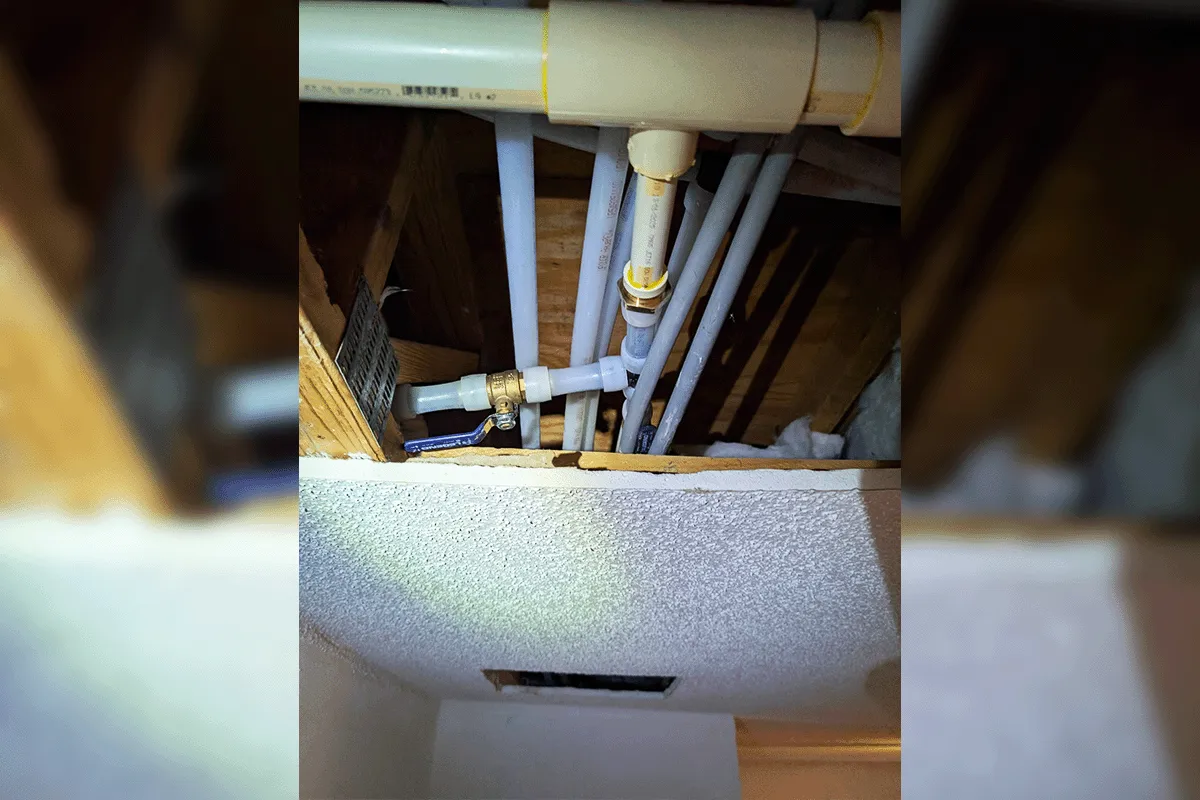
Polybutylene is a gray or blue-gray flexible plastic pipe, typically 1/2 inch or 3/4 inch in diameter. If your home was built between 1978 and 1995, it is worth having a plumber visually inspect the accessible supply lines — under sinks, in the attic, at the water heater connections, and at the main shutoff. If polybutylene is confirmed, the only reliable solution is replacement. EVERYDAYPLUMBER.com can inspect for polybutylene and provide a repipe estimate at the same visit.
How do I know if my galvanized pipes need to be replaced?
The most common indicators are rust-colored water (especially in the morning), significantly reduced water pressure throughout the home, visible orange staining on fixtures, and a history of pinhole leaks or corrosion at pipe connections. A plumber can inspect accessible galvanized lines and assess wall thickness. In practice, galvanized pipe in a Tampa Bay home that is 50 years old or older is almost always past the point where repair is cost-effective — the corrosion is typically systemic, not localized.
Do I need to leave my home during the repipe?
Most homeowners stay in their homes during the repipe. The crew works room by room and the disruption is manageable. Water is shut off during active installation and we strive to restore running water at the end of each working day. The main inconvenience is noise and the presence of the crew, typically for two to three days. If your home is particularly small or the scope is unusually large, we’ll discuss the logistics at the estimate visit.
What should I expect when the repipe crew is done?
EVERYDAYPLUMBER.com treats your home with respect throughout the entire job — drop cloths and protective coverings on floors and furniture before any work begins, and a thorough cleanup before we leave. The access openings in your walls will be left clean and ready for your drywall contractor. We will walk you through everything that was done, hand you the permit documentation, and make sure you know where every new shutoff valve is located before the crew packs up.
Will a repipe fix my low water pressure?
If your low water pressure is caused by mineral buildup and corrosion inside your supply lines — which is the most common cause in homes with galvanized or aging copper pipes — then yes, a repipe will restore full pressure. New PEX-A supply lines have smooth interior walls with no scale buildup and the full interior diameter the system was designed for. Pressure issues caused by other factors (municipal supply pressure, pressure-reducing valve failure, undersized meter) are separate from the pipe condition and are not corrected by a repipe alone.
Should I get a repipe or just keep fixing leaks as they appear?
The honest answer depends on the pipe material and the leak history. One pinhole leak in a copper system that is otherwise in good condition may be a legitimate candidate for targeted repair. Recurring pinhole leaks in galvanized steel, any confirmed polybutylene, or copper pipe with widespread thinning from Tampa Bay water chemistry are different situations — where continued repair spending is going toward a system that will keep failing. EVERYDAYPLUMBER.com will tell you which situation you are in after evaluating the accessible pipe. If repair is the right call, we will say so.
Service Areas — Repiping Across Tampa Bay
EVERYDAYPLUMBER.com provides licensed whole house repiping services throughout the Tampa Bay Area. Our repipe crews operate out of our Tampa headquarters and cover all of Hillsborough, Pinellas, and Pasco counties — from the pre-war galvanized neighborhoods of Hyde Park and Seminole Heights to the polybutylene-era developments of Wesley Chapel and New Tampa, and every neighborhood in between.
Cities and communities we serve for repiping:
Tampa | St. Petersburg | Clearwater | Brandon | Wesley Chapel | Riverview | Lutz | Land O’Lakes | Largo | Dunedin | New Port Richey | Spring Hill | Temple Terrace | Plant City | South Tampa | Carrollwood | Seminole Heights | Hyde Park | Town ‘N’ Country | Valrico
Emergency service available in all areas. Call anytime for fast, friendly scheduling.
Why Choose EVERYDAYPLUMBER.com for Your Tampa Bay Repipe?
Tampa Bay has no shortage of plumbing companies willing to quote a repipe. Here’s what separates a repipe done right from one that creates problems years later:
Florida Master Plumber License — The Highest Level in the State
Florida Master Plumber License #CFC1428537. The master plumber license is required to pull commercial permits and oversee large residential repipe projects in Florida — it’s not a credential that every company sending crews to your home actually holds. EVERYDAYPLUMBER.com has held this license since 2012 and every permitted repipe we complete is signed off under it.
Uponor PEX-A — Not the Cheapest Pipe, the Best Pipe
Some repipe companies use PEX-B because it’s cheaper and faster to work with. EVERYDAYPLUMBER.com uses Uponor PEX-A with ProPEX expansion fittings on every job because it’s the most chlorine-resistant, most flexible, and most durable PEX material available — and in Tampa Bay’s hard, chloramine-treated water supply, material quality matters more than in most markets.
Lifetime Labor Warranty
An unmatched lifetime warranty on all repipe labor. No expiration. No fine print about what qualifies. EVERYDAYPLUMBER.com has been at the same address in Tampa since 2012 — we’re here to honor it.
Permitted, Inspected, Documented — Every Time
Every repipe is permitted through the appropriate county jurisdiction and inspected by a municipal building inspector before we close the job. You receive permit documentation that proves the work was done to code — documentation that protects you at resale and with your insurance carrier.
Emergency Service — 365 Days a Year
Pipe failures don’t wait for business hours. EVERYDAYPLUMBER.com provides emergency plumbing service 365 days a year. If a supply line has burst or a slab leak has developed, call (813) 872-0200 and reach a live dispatcher, not a voicemail.
Over a Thousand Five-Star Google Reviews
Over a thousand five-star reviews on Google and an A+ BBB rating — built over thirteen years of residential and commercial plumbing work across Tampa Bay. We’ve replaced galvanized lines in Seminole Heights, polybutylene in Wesley Chapel, and corroded copper throughout Carrollwood and South Tampa. Our reputation isn’t a marketing claim. It’s a track record you can read.
Ready to Schedule Your Comprehensive Repipe Estimate?
EVERYDAYPLUMBER.com is Tampa Bay’s licensed, insured, and experienced repipe specialist — serving Hillsborough, Pinellas, and Pasco counties since 2012 with Uponor PEX-A, lifetime labor warranty, and fully permitted, inspected work on every job.
For repipe estimates and non-emergency service: Book online or call (813) 872-0200.
For plumbing emergencies: Call (813) 872-0200 — live dispatcher available 365 days a year.
EVERYDAYPLUMBER.com
3912 W South Ave, Tampa, FL 33614
Florida License #CFC1428537
A+ BBB Rated | 1,000+ Five-Star Google Reviews
EVERYDAYPLUMBER.com is a family-owned Tampa Bay plumbing company providing licensed whole house repiping services across Hillsborough, Pinellas, and Pasco counties since 2012.